Brand New at the Library!

Wednesday, September 30, 2015

 Sense and Sensibility by Joanna Trollope

Review by Gerti

Let me start by saying that it takes enormous cheek for a writer of any reputation and ability to name her book after one which is already considered a classic. I think Jane Austen’s “Sense and Sensibility” qualifies as such, and Austen is a popular enough author that many people know of the novel, even if they haven’t read it. So for Joanna Trollope (who?) to name her novel the same thing, and to use many of the same characters, is an outrage to me.

I’m sure Trollope, a popular author of many other books and an Austen fan, would say that she has just modernized Austen’s story, and therefore has the right to use the characters and just loosen things up a bit, morally speaking, and throw in some modern tech, like computers and Facebook. Since I’ve read many other Austen-homage books, I should be comfortable with that sort of thing, done successfully in “The Jane Austen Book Club” and “Austenland”, among other texts. But none of those authors were bold enough to just call their books “Pride and Prejudice” or any of Austen’s other well-known titles, and I don’t think Trollope should have taken that liberty, either. Her work pales by comparison.

As for the story Trollope writes, it follows the direction of Austen’s work, even if Trollope has added embellishments, like giving first names to characters like Mrs. Dashwood, the mother of Elinor, Marianne and Margaret, and to Colonel Brandon. While Brandon retains most of his dignified character from the original, “Belle” Dashwood comes off as an unlikeable, selfish hippy. Her imprudence (at not marrying Mr. Dashwood in the first place) sets up the fall from grace for the family of four women, as they are sent from their house at Norland when Henry Dashwood’s son (by his real wife) inherits the estate. Elinor is still the sensible daughter, and she recognizes the need to get work when they are sent packing, but neither Belle nor Marianne, the younger daughter, are grounded enough in reality to feel the need to contribute financially to the family’s survival. Marianne is young, which makes her sin of selfishness more forgivable, but it is intolerable to have middle-aged Belle simply live off the charity of a relative (Sir John Middleton) or her daughter’s paycheck. Belle also tries to mooch off of Mrs. Jennings when country living gets too boring for her, but fortunately the old lady is wise to her manipulative ways and does not ask her to join her in London.


But is the story worth reading? Yes, I suppose it is, for desperate Austen fans, but mainly for the ending, where Trollope goes beyond Austen’s story and has Edward’s mother forgive him for his youthful indiscretion with Lucy Steele, and give him a little money. The end also finds Fanny Dashwood getting a comeuppance by her mother, whom she is trying to manipulate so she’ll cut her brother Robert out of her will, as she did with her brother Edward. The mother doesn’t fall for it, which makes this reader for one cheer to see Fanny thwarted in at least one of her greedy escapades. As for “Trollope’s voice” which is vaunted by a cover blurb praising the author, I find it sadly unequal to Austen’s original.

Monday, September 28, 2015

I am Legend and Other Stories by Richard Matheson

Reviewed by Gerti

If you’re like me, you've heard of the movie with Will Smith called “I Am Legend”, but you've never heard of author Richard Matheson. That’s why his collection of short fiction is a delightful discovery. Not only do you find the short novel that was the impetus for the Hollywood blockbuster (although the plots are very different), you will also find another horror classic – the story of the Zuni fetish doll made famous by Karen Black in “Trilogy of Terror”. Yes, that’s Matheson’s story, too.

Spanning from 1951 to 1987, this collection of one short novel and 10 short stories penned by Matheson is a fascinating look at the author’s twisted takes on what it means to be human. Just about every story contains death, often with the main character killing others, but there is also a hint of the paranormal. One story features 7 beautiful teen-aged witches who kill men in horrible but unique ways; another has a witch doctor’s curse which threatens the life of a successful New York City man. Each story contains an extraordinary conflict – my favorite being between an author and his “Mad House”, a home which he has filled with so much anger and frustration that the inanimate objects in it conspire to kill him.

I am bothered that the headlining story “I Am Legend” is actually more like the 1964 Vincent Price film “The Last Man on Earth” and the even campier 1971 movie “The Omega Man” than Will Smith’s movie. Robert Neville in Matheson’s novel is not plagued by fast zombies so much as by a form of infected but evolving humans, and they are angry that he has been killing them, so they send in a “healthy” decoy to kill him. Even though Neville is suspicious of her, he has been alone (and lonely for female company) for so long, that he wants to believe she is human, like him. While she can’t kill him, she instead warns him that the others will come for him, because they are setting up a new society and his very existence threatens their world. I far prefer the unknown Hollywood script writer’s version with Smith where Neville is not a sex-crazed creep, but a charming hero who eventually comes up with an antidote to cure those infected by this disease.

There are psychological depths to the Zuni fetish doll story, “Prey”, which features a female protagonist - Amelia. She has purchased a birthday gift for her boyfriend, Arthur, but her controlling mother wants to spend that Friday evening with her instead. The doll, called “This is He Who Kills” when she takes him out of his wooden coffin, represents her pent-up rage at being treated like a child by her mom, and the gold chains around him are her frustrated struggle for independence. When she is finally possessed by the doll’s warrior spirit before the old lady comes to visit, we are almost pleased that Amelia has found some form of internal strength and a way to fight back.


In all, these short works make worthwhile reading for science fiction fans. While some are sexist and old-fashioned, Matheson has an engaging writing style, and his tales themselves are all uniquely twisted versions of a very strange world.

Monday, September 21, 2015

Product DetailsMovie Review: The English Surgeon: One Doctor’s Personal Mission to Save Lives in Ukraine 

Review by Gerti
This movie is a real rarity – an exciting documentary. “The English Surgeon” tells the story of neurosurgeon Henry Marsh, who recently penned a book ironically titled “Do No Harm”, which tells the story of his long career performing brain surgery in England and elsewhere. I call the title ironic, because much of the book in fact involves the harm he does patients, whether they live or die.
Those who have read the book will find the movie more interesting, as it shows us the doddering old man behind the stories. Marsh is a middle-aged fellow who likes to work with wood and take used medical equipment to his friend in the Ukraine. The drama only begins in the Ukraine, where Marsh has gone for 17 years, as we see how desperately that country and its citizens need the British cast-offs. Marsh takes part in clinic days in Kiev, where people line the hallways in order to sit for a few minutes before Marsh with their x-rays on a light box.

It is very affecting to see him tell patients their fate. Although we mostly follow the case of one young man named Marion who is able to get an operation and is saved, it is the other mini-cases which are heart-breaking. Marsh and his fellow doctor from the Ukraine, whom he calls Igor, debate whether to tell a 23-year-old beauty that she has only 2 years left to live, but first she will go blind. In the end, they send her to get her mother, so she doesn’t receive the terrible news alone.

Another scene of wrenching human tragedy involves a grandmother who brings the x-ray film of her grandchild, but the great English doctor has no hope for her. “What can we do?” she tearfully asks through a translator. Marsh says that they must prepare themselves that the child will die. It is too late. That is the real tragedy here – that many of these patients could have had a better prognosis, but the government-run process to get x-rayed and then see a doctor is so lengthy that their surgical window has closed. This peek at medicine in the former Soviet state is both fascinating and frightening at the same time.


In short, just as Marsh’s book is a terrifying glimpse at the limits of medicine, so is this look by filmmaker Geoffrey Smith at the efforts Marsh has made in the Ukraine. There are glimpses of the humanity of the Ukrainian people, as when Marsh and Igor visit the mother of a little girl who is now dead, but was wrecked by brain surgery. There is video of her before, a sweet and shy child with a large tumor on her face, and after surgery, where she is virtually helpless but yet alive. They visit her village, and her mother, friends and neighbors set out a spread of food and drink for them. It is obvious how deeply all of them are affected by the visit. But the most enduring picture is as Marsh sits alone by the child’s grave, with the gravestone a sculpture of her face. It is then that the viewer can truly see that Marsh regarded at least one patient as a real human being, and feels her loss deeply. This film will make you cry and give thanks that you are in the USA. 

Monday, September 14, 2015

Do No Harm: Stories of Life, Death, and Brain Surgery by Henry Marsh

Reviewed by Gerti
It is a popular misconception that the phrase "First do no harm" is a part of the Hippocratic Oath which doctor’s take. The phrase does not appear in the oath, but a similar phrase is found in “Epidemics”, Book I, of the Hippocratic school: "Practice two things in your dealings with disease: either help or do not harm the patient". The exact phrase is believed to have originated with 19th-century surgeon Thomas Inman, but it is used here as the ironic title of this memoir by neurosurgeon Henry Marsh. While “Do No Harm” tells the story of his career in brain surgery in England and elsewhere, I call the title ironic, because much of the book in fact involves the harm he does patients, whether they live or die.
For example, there is the time when he has an assistant start a surgery because it is an “easy” one with which the man is familiar, and after all, students need to learn. Dr. Marsh only comes in once it has been botched completely, and then realizes he should have been there to watch the procedure from the beginning. Nice realization for Marsh; death sentence for the patient.

Another time Marsh is visiting a long-term care facility for patients who are in comas or vegetable-like states and need constant care. These patients have ceramic name plates outside their doors (since they reside there for years) and Marsh notices with shame that at least 4 of the people housed there are former patients of his. He has “wrecked” them, to use the vernacular he says doctors use to describe a patient whose surgery has been left them debilitated.

The book is divided into sections, based on what type of tumor or symptoms the patient is having. Many are bleak with a poor prognosis, but there are some success stories as well. Marsh goes to the Ukraine to help doctors there with their neurological patients, and actually flies a few people to England to see their surgeries occur under the best conditions possible. This peek at medicine in the former Soviet state is both fascinating and frightening at the same time.


In short, much of the book is terrifying, as Marsh talks about how similar normal brain tissue is to diseased tissue, and explains the state of the NHS (National Healthcare System) in England, talking about a room with 20 patient beds in it, something we would never see here in modern US facilities. Enlightening also is how well Marsh himself is treated when he has a detached retina, since he has private insurance and can afford to go to a private healthcare facility. It made me understand why concierge medicine is so popular. The book “Do No Harm” is an inside look at brain surgery that I think few people will be able to stomach. Well written, but with bad outcome scenarios which are scary as hell.

Monday, September 7, 2015


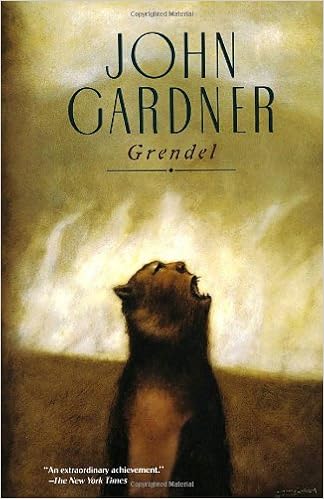
Grendel by John Gardner

Review by Gerti


Beowulf” is an Old English epic poem that many of us had to read in high school or college. Esteemed writer John Gardner takes the classic work, and turns it on its head here in “Grendel”, much in the way “Wicked” retells the story of “The Wizard of Oz.” Like that novel, Gardner takes the monster of the story, Grendel, and allows him to tell the tale, and like “Wicked”, once the bad guy starts talking, the heroes and villains are not as black and white as they appeared.

We see the humans around King Hrothgar after we've already met Grendel, and after Grendel has already established that he is more than your ordinary monster. Gardner sets him apart from the animals early, but instead uses animal terminology when referring to the humans in the story. Like vermin, Grendel is always seeing them with rat faces, or acting like snakes. And just as humans find it easy to kill rats, it is believable and nearly forgivable that Grendel would have little trouble killing them when the time came.

Grendel is conflicted about his role in the universe, and Gardner sometimes shows him to be a superman character since he is much stronger than humans and can even see in the dark. Grendel himself, however, has heard the humans talk about how he is an outcast, the descendant of the Bible story’s murderous brother, Cain. Humans, he hears, are from another lineage altogether. It is during a scene where Grendel tries to approach the humans in friendship that they begin their attack on him, as they don’t understand his form of language, even though he keeps crying out “friend”. He is so strong, even his fingernails are capable of killing the humans, and the survivors of the Danes drive him away from their gathering place, the mead hall.

Grendel is a tormented soul, for although he has other creatures with whom he can speak, namely his mother and a dragon (who calls him son and treats him with more civility than the humans do), he wants to be accepted among the humans, and that’s just never going to happen. He is obsessed by the humans, and spends most of his life watching them from mountain tops and in the shadows of their village. He sees how badly they treat animals, how they kill for sport, how they set careless fires in the forest. He begins to think that nothing matters, and this novel becomes a nihilist anthem. Finally, hero Beowulf arrives to fight Grendel, but the creature has already lost his will to live.


Among other adjectives of praise heaped on the book, the cover blurbs call “Grendel” original, poignant, witty, intelligent and delightful. It is all those things, and will most definitely appeal to a teen audience, as well as to anyone who share the mindset of one of society’s outsiders. Grendel is a modern “Frankenstein” and I highly recommend this memoir of his, created by the very talented writer, John Gardner.

Thursday, September 3, 2015

Movie: Fifty Shades of Grey

Movie Review: “Fifty Shades of Grey”
Reviewed by Gerti

A movie that has gotten a lot attention is “Fifty Shades of Grey,” based on the blockbuster book of a few years back by EL James. It stars Dakota Johnson as the hapless college student Anastasia Steele who was just helping out a sick roommate when she agreed to interview communications industry titan, Christian Grey. He is played by Jamie Dornan, and in true Cinderella fashion, he instantly falls for the guileless Steele, who is also being pursued by several other young men, but doesn’t know that either. Besides being clueless, all she’s lacking here to make her less sexy is coke-bottle thick nerd glasses. She’s a disaster!

Grey tries to charm her by meeting her at the hardware store where she works. Perversely, he picks up some sado-masochistic supplies while she’s helping him shop – rope, duct tape, etc. She doesn’t get the clues. Then he sends her a first edition of “Tess of the D’Urbervilles”, because she told him she was an English major because of the works of Thomas Hardy. He says he would have suspected Jane Austen, which will give Austen lovers a laugh. Then he gets her a new laptop, and eventually a car. Nice boyfriend!

With the story closely following the book, Grey gradually seduces Steele into his “singular” lifestyle, where she would be his submissive and he her dominant. And while she engages in a few introductory episodes with him, she whines frequently about their just being a normal couple, and doing normal dating things, like going out to dinner and the movies. But she also sends him mixed signals, like agreeing to a business meeting alone in his office and going over the “contract” that he wants her to sign to make their relationship official. She goes through the contract pages with him, having him take out things that are objectionable to her, but then teases him about signing it, and leaves without doing so.

Yes, there is a good amount of nudity, mostly hers, as he introduces her to all kinds of sexual behavior (apparently, she’s a virgin in the story). Thanks to Danny Elfman who did the music, it treads the thin line between sexy and silly, as his soundtrack makes it all seem romantic. Dornan plays Grey as conflicted about this relationship, first not wanting to drag Ana into the lifestyle, but then breaking his own rules whenever they are together. If only Ana could project the allure that has caught him in her spell… She generally comes across as cow-eyed and bumbling. We do hear that Grey had an abusive mother, and was then seduced by one of his mother’s friends. Yes, I guess that could all mess him up pretty good where romance is concerned.

Ultimately, however, I thought the movie actually handled the sex more tastefully than the book. I heard that audiences laughed at certain parts, but I’d love to know when, because I found the sex scenes more appealing than some of the dialogue. The film was more Cinderella soap opera than flat-out porn. But the themes here are not for kids or young teens.

Tuesday, September 1, 2015


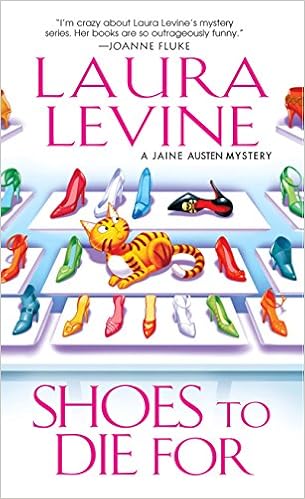
Shoes to Die For (Jaine Austen Mystery Series book 4) 

by Laura Levine

Reviewed by Gerti


I’ll admit it. I’m hooked on the books of author Laura Levine, who writes the Jaine Austen series. Calling them mysteries is a bit far-fetched, for the mysterious aspect to their murders is always just an excuse for protagonist Jaine to put herself into awkward, embarrassing and of course amusing situations. I like this book better than some of the other efforts in this series, as she has toned down the amount of time she spends with her cat, Prozac, and the flaming personality of her next-door neighbor, Lance, which for me marred some of the other books.

In this novel, the LA freelance writer falls into a job for the exclusive clothing store “Passions”, where despite her double-digit dress size, she has conned the former model/owner into letting her do their ad campaign. This way the reader gets to meet the staff, including stereotypical mean girl Frenchie, nice-but-ditzy Becky, and heart-throb/hunk Tyler. Tyler and Jaine have a lot in common – they are both writers, but Tyler is taking a writing class and it’s his alibi when Frenchie turns up dead after scamming the owner out of her own business. Everyone else left standing is a suspect, including a customer Frenchie was mean to, and the accountant, who had a crush on Frenchie.

Laura Levine is a comedy writer from way back and is doing very nicely writing this series of funny mysteries. While not the most hysterical book in the series, “Shoes to Die For” is funny enough to spend some time with, as TV-land writer Levine shows off her comedic skills. Unlike some of her other books, however, she doesn't seem to make as much use of Jaine’s parents, which is a mistake, as they tend to provide a comic subplot and write about it in hysterical e-mails to their daughter, in the style of Seinfeld’s parents.


I love heroine Jaine Austen, who has thoroughly modern problems and gets into relatable situations, like having weight issues or having to endure a man she met through speed dating. Levine’s language is a treat to read, her characters a delight to meet, and oh the world inside Austen’s head! I love her sense of humor. She’s like having a girlfriend who is smart enough to catch crooks, and crack wise at the same time. While “Shoes to Die For” is not my favorite Levine novel, it’s an easy bubble-bath read, something to which protagonist Jaine Austen would definitely give a thumbs up.