Brand New at the Library!

Showing posts with label Adult Fiction. Show all posts

Tuesday, September 1, 2015


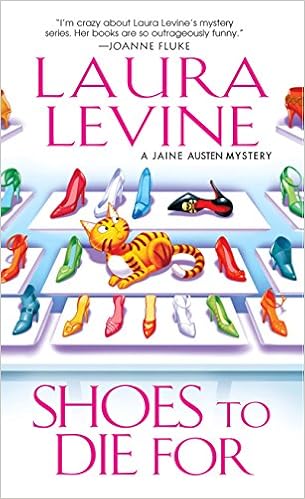
Shoes to Die For (Jaine Austen Mystery Series book 4) 

by Laura Levine

Reviewed by Gerti


I’ll admit it. I’m hooked on the books of author Laura Levine, who writes the Jaine Austen series. Calling them mysteries is a bit far-fetched, for the mysterious aspect to their murders is always just an excuse for protagonist Jaine to put herself into awkward, embarrassing and of course amusing situations. I like this book better than some of the other efforts in this series, as she has toned down the amount of time she spends with her cat, Prozac, and the flaming personality of her next-door neighbor, Lance, which for me marred some of the other books.

In this novel, the LA freelance writer falls into a job for the exclusive clothing store “Passions”, where despite her double-digit dress size, she has conned the former model/owner into letting her do their ad campaign. This way the reader gets to meet the staff, including stereotypical mean girl Frenchie, nice-but-ditzy Becky, and heart-throb/hunk Tyler. Tyler and Jaine have a lot in common – they are both writers, but Tyler is taking a writing class and it’s his alibi when Frenchie turns up dead after scamming the owner out of her own business. Everyone else left standing is a suspect, including a customer Frenchie was mean to, and the accountant, who had a crush on Frenchie.

Laura Levine is a comedy writer from way back and is doing very nicely writing this series of funny mysteries. While not the most hysterical book in the series, “Shoes to Die For” is funny enough to spend some time with, as TV-land writer Levine shows off her comedic skills. Unlike some of her other books, however, she doesn't seem to make as much use of Jaine’s parents, which is a mistake, as they tend to provide a comic subplot and write about it in hysterical e-mails to their daughter, in the style of Seinfeld’s parents.


I love heroine Jaine Austen, who has thoroughly modern problems and gets into relatable situations, like having weight issues or having to endure a man she met through speed dating. Levine’s language is a treat to read, her characters a delight to meet, and oh the world inside Austen’s head! I love her sense of humor. She’s like having a girlfriend who is smart enough to catch crooks, and crack wise at the same time. While “Shoes to Die For” is not my favorite Levine novel, it’s an easy bubble-bath read, something to which protagonist Jaine Austen would definitely give a thumbs up.

Thursday, August 27, 2015

Revenge of the Homecoming Queen

Revenge of the Homecoming Queen by Stephanie Hale
Reviewed by Gerti


This is the third book I have read by author Stephanie Hale, and I like it a lot. I had previously read “Austenland” and “Midnight in Austenland” because of my love of writer Jane Austen’s works, to which those books pay mild tribute. I liked the former book, didn’t like the latter. I picked up this book, “Revenge of the Homecoming Queen”, because I needed something to break that tie about the author’s talents. This book proves again that Hale is a very good writer with a fabulous sense of humor and a gift for creating likeable characters.

Perhaps more YA than the other two books, this book centers around high school senior Aspen Brooks. Perhaps that implausible name is a tip of the hat to the name of heroine “Cher” in every teen girl’s favorite film, “Clueless”. Like Cher, Aspen is a dream girl, an A-lister popular girl with all the right clothes, attitudes, and even friends. She dates the quarter back, of course, and is all teed up to become Homecoming Queen. That is until the principal, Miss Hott, calls the name of her nemesis, Angel Ives.

Quarterback boyfriend Lucas is also not chosen to be Homecoming King, but that’s his own fault, as he started a campaign to elect a nerdy boy named Rand whose parents are impossibly rich. Lucas explains to Aspen that he did it because he thought she and Rand had a lot in common, and thought she would be elected queen. Angel is none too happy about Rand being her king, either, and that’s the only fact that saves Aspen from being heartbroken.

Aspen starts to have very bad days at school, after her tire gets slashed and someone stuffs her locker with porn. She thinks its Angel, but it turns out Angel is only after her boyfriend, and when she sneaks away during a party to be with Lucas, Angel accidentally gets kidnapped. The rest of the story involves trying to track down the Homecoming Queen, and the other people who end up getting kidnapped after her. But the ending is satisfying and gratifying, as we find out that the kidnapper was only out to punish Aspen and keeps nabbing the wrong girls!

This book was terrific fun, and not just for teens. I thoroughly enjoyed how Aspen grows up, from selfish teen/queen to a girl who is capable of caring for others (and the environment!), even putting her own life in danger to save her mom. It’s a rollicking good time filled with plot twists, humor, and a little naughtiness to keep it all interesting. I thoroughly enjoyed this book and was sorry to see it end.

Monday, August 24, 2015

Death of a Neighborhood Witch

Death of a neighborhood witch 
Death of a Neighborhood Witch by Laura Levine
Reviewed by Gerti


Death of a Neighborhood Witch” is another funny mystery from the author of the Jaine Austen mysteries, Laura Levine. However, unlike so many other authors who have gleaned inspiration from the famed British novelist Jane Austen, Laura Levine’s only connection with the original author, her plot, and characters, is that the heroine’s name. It is not even a running joke in this book, as it was in Levine’s first novel, “This Pen for Hire.” Perhaps author Levine has realized that not that many people who read mysteries know who Jane Austen is, or perhaps she feels the joke has run its course. Either way, I don’t mind.

Levine uses the Austen name to reel in new fans, because once they read one of her hysterical books, they will be hooked, as I am. Laura Levine’s comedy background is impressive - Levine wrote for such classic TV shows as “The Bob Newhart Show” and “Laverne and Shirley” and her skills are one display here, as heroine Jaine solves yet another murder, after being the chief suspect first. Her comic antics are laugh-out-loudable, but also plausible, which is what makes them so fun! These comic turns are what I really love about the book, and the series.

However, I dislike that she has changed the personality of her nosey neighbor Lance to make him flaming in this book, and I liked him better when he could just hear through her paper-thin walls. He is positively nasty in this book, and his double-crossing her after they pick out Halloween costumes (he changes her flapper outfit to a gorilla suit at the last minute) is the reason she becomes a murder suspect at all. No one needs friends like that!

I also dislike the frequent references to Jaine’s cat, Prozac, but I understand that is part of Levine’s schtick, just as Joanne Fluke‘s cat is an important character in all her Hannah Swensen food-related mysteries. It is Prozac running into the yard of the neighborhood witch Cryptessa Muldoon (and inadvertently killing her bird!) that sets the wheels of the mystery in motion. Cryptessa is an irascible old lady who in her youth used to star in a short-lived TV series called I Married a Zombie. Think of her as analogous to Morticia Adams or Lily Munster.

Cryptessa is hated by her neighbors for being cranky and nosey, as she takes pictures of her neighbors, who are engaged in some pretty wild stuff for middle-class middle-aged people. So when she is found dead with a “Do Not Tresspass” sign staked through her body, everyone is a suspect, and Jaine has to figure out who done it. In the end, it doesn’t really matter who did it, because the mystery is just an excuse for Jaine to butt into everyone’s lives and find out their dirty little secrets. Lucky for us, Levine’s comic writing talents and easy writing style make it a pleasure to go along for the ride. This book is a hoot!

Thursday, August 20, 2015

The Poet

The poet. 
The Poet by Michael Connelly
Reviewed by Gerti


Even before I started reading “The Poet”, Stephen King’s gushing forward let me know that it was something special. He praises Michael Connelly for the enticingly clever first line, “Death is my beat”, which comes from the mind of journalist, Jack McEvoy, who is struggling with his emotions after the death of his homicide detective brother, Sean. King praises the book as a marvelous piece of storytelling, and it is, including “a series of surprises that go off like well-placed dynamite charges”. I’ve found those unexpected twists in plot to be typical of Connelly’s writing. Although his comments were written in 2003, King calls this book “the best work Michael Connelly, a prolific writer, has done up to this point, and marks(s) him as an important voice in the genre at the turn of the century.” With high praise like that, what can I say, but that Connelly has written another great book filled with memorable characters and a sizzling storyline?

Connelly’s writing never fails to impress me. Since I was once a journalist, I really like his realistic characterization of newspaper reporter Jack McEvoy, and the problems Jack faces within and without his newsroom. He believes that his twin brother’s death was not a suicide, but has difficulty convincing others that it’s more than wishful thinking. He breaks the big story, however, when his research reveals a pattern to the supposed suicide deaths of several homicide detectives across the country, and the FBI is called in to investigate. Soon, Jack finds himself on the trail of a serial killer called The Poet, with a taste for Edgar Allan Poe (who else?) There is the obligatory romance with a tougher-than-nails female agent, until Jack begins to suspect that she may be behind some of the deaths. But the true killer’s identity is that dynamite blast Stephen King was referring to… so I won’t spoil it for you!

Suffice it to say that I agree with Stephen King that this is a great book, complicated but satisfying. I love the way McEvoy follows the clues wherever they lead, even if they sometimes lead him astray for a while. I even like his relationship with FBI agent Rachel Walling, as it seems more natural here than her “romance” in another book (“The Narrows”) with another of Connelly’s favorite protagonists, sometime LAPD detective Harry Bosch. This book is irresistible, and I finished it in a day, despite it being over 500 pages long. If the writing weren’t so good, I might even have to complain about how much Connelly writes!

I strongly recommend “The Poet” to anyone who likes a crime story where the good guys win, almost. But just like students in college take psychology classes to figure out what is wrong with them, this book shows that the FBI (and journalism – LOL) is riddled with broken people, some of whom can’t be fixed.

Monday, August 10, 2015

Plum Lucky

Plum lucky 
Plum Lucky by Janet Evanovich
Reviewed by Gerti


I had never read a book by Janet Evanovich before, so picking up this book was a little like getting on what I thought was an elevator and finding out it was a rollercoaster. “Plum Lucky” is a comic thrill ride, filled with quirky characters that were both horrible and hysterical at the same time. I had a great time reading it!

The protagonist is a woman named Stephanie Plum, who works for her uncle in the bail bonds business. The story is told from her point of view, which sounds as though it might limit the amount of information coming in to the reader, but that is by no means true. Stephanie has a funny family, led by her Grandma Mazur, who has just found a duffle-bag filled with money. The problems come in as the original owner of the money, and the man who stole it from him, both try to get their money back from Grandma. She however has taken the windfall, bought a Winnebago, and gone from Trenton to Atlantic City to gamble.

Since Stephanie is good at tracking down scofflaws, her mother enlists her aid in finding her errant grandmother, but Stephanie is “Plum Lucky” to have a bunch of people who help her out. Those people include the other staff of the bail bond business, office manager Connie and former whore now (almost) high fashion model Lula. The cast rounds out with a cop boyfriend for Stephanie, another sexy people tracker named Diesel, a mad mobster named Delvina, a leprechaun thief named Snuggy, and a racehorse headed for the glue factory named Doug. There are people who talk to horses, people wearing tinfoil on their heads, and people shooting rocket launchers. It’s a mad romp as Stephanie and her crew try to bring Grandma back home alive and well, return the money to the mobster, but also have enough money left to pay for Doug’s operation so he isn’t put down.

Does “Plum Lucky” make me want to look for another book by Evanovich? Yes, because it’s so plum crazy, but also very entertaining. No brain cells died in the reading of this book, meaning it was as easy to digest as a bowl full of Cool Whip. And while there was very little mystery involved in the novel, it was as much fun as a girl’s night out. To top it off, I read this St. Patrick’s Day themed book the day before the holiday, so it seemed like Evanovich and I are meant to be. Can’t wait to see if she can keep up the manic action and wit in her next book! I feel “Plum Lucky” to have finally found this author!

Friday, July 17, 2015

This Pen for Hire

This pen for hire : a Jaine Austen mysteryThis Pen for Hire, a Jaine Austen mystery by Laura Levine
Reviewed by Gerti


When I say this book was recommended to me by author Joanne Fluke, I mean that in the introduction to her latest book, Fluke thanked author Laura Levine “(who writes the Jaine Austen series)” for helping her with the “Double Fudge Brownie Mystery”. I was so moved by that statement that I had to track down one of Levine’s books immediately. I did so because I love the famous British author Jane Austen, and wondered who would possibly be cheeky enough to borrow the famous lady’s name to write a mystery series, and then misspell it (yikes!)

Unlike so many other authors who have gleaned inspiration from Jane Austen and her hundred-year-old romance novels, Laura Levine’s only connection with the original author, her plot, and characters, is that the heroine of “This Pen for Hire” was named Jaine Austen (misspelling intentional) by her novel-loving mother. That’s it. So her name is a running joke in this book.

That said, you would think I would hate this novel and that it was crap. But that’s not correct. Laura Levine is a comedy writer from way back who has uncovered herself a hell of a hook for her mystery series. It may have little to do with my favorite author, but that doesn’t mean “This Pen for Hire” isn’t a hysterical little book. Levine, who wrote for such classic TV shows as “The Bob Newhart Show” and “Laverne and Shirley”, trots out her comedic skills here, and it’s a hoot.

I love heroine Jaine Austen, even though she’s a thoroughly modern woman with thoroughly modern problems. Yes, she is a freelance writer as the title implies. But she’s also caught up in a mystery here, when a love letter she penned for a hapless schlub named Howard Murdoch gets him arrested for a murder he didn’t commit. To save the poor bugger, Jaine starts investigating the crime, and runs into a comic cast of characters, each seemingly more bungling than the last. She is helped by the victim’s neighbor, a delicious-looking man named Cameron who owns an antique shop. Is he gay? Is he straight? Can he possibly be interested in Jaine?

Yes, I knew who the killer was early on, and understood his motives, but that doesn’t mean that I didn’t love the ride Levine took me on. Her language is a treat to read, her characters a delight to meet, and oh the world inside Austen’s head! I love her sense of humor, and her intense need to bathe to take away her stress. She’s be a girl after my own heart, except for her cat (a trait this author shares with Fluke’s own Hannah Swensen). Nothing at all in this book for a Jane Austen fan, but I definitely want to spend more time in the world of Jaine Austen. She’s like having a hysterical girlfriend, who is smart enough to catch crooks, and that’s a big wow. Loved it!

Wednesday, July 15, 2015

Double Fudge Brownie Murder

Double fudge brownie murderDouble Fudge Brownie Murder
by Joanne Fluke
Reviewed by Gerti


This is the third book I have read by Joanne Fluke, and I liked it, but I find her writing to be uneven. I was underwhelmed by the first book of hers I read, “The Carrot Cake Murder”, but liked the “Chocolate Chip Cookie Murder”, which is the first book in her multi-book series of Hannah Swensen mysteries. Lake Eden, Minnesota-based baker/crime fighter Hannah Swensen also does something I love, which is include her recipes into the book. And no, I haven’t tried to bake any yet, but they do sound delicious!

In this book, Hannah is supposed to go to jail for unintentionally killing someone with her cookie delivery truck. She goes to the courthouse with her lawyer, and sits in the judge’s anteroom while her lawyer is out of the room on the phone. Hannah hears a thump, and wonders if the elderly judge has met with an accident. She enters the room to find that the judge is dead, but it was no accident. It was murder! Hannah is a suspect at first, but gradually proves to the town’s detective, her boyfriend Mike, that she just has “slaydar” – which is what they call her ability to find dead bodies!

As in all of these mystery books, Hannah interviews and investigates her own list of suspects. So much so, that she is hardly ever at “The Cookie Jar,” her shop. But luckily, she has some helpers there, as well as in her crime-solving endeavors. Her younger sister Michelle accompanies her when Hannah meets the suspects, including the dead judge’s ex-wife, ex-mistress, and his kids.

What this book has that the other Fluke’s I’ve read are missing, is real romance. Hannah is a curly-headed carrot top, and while she has a few men interested in her, she has not felt a spark with them. In this book, Hannah accompanies her two sisters to Las Vegas for her mother’s wedding, and in the process meets up with her old college boyfriend, Ross. That’s when the fireworks go off! Hannah does things that readers familiar with her Midwestern lifestyle would not imagine a sweet young thing from Minnesota even thinking about, let alone doing! I found that a little off-putting, and out of character for this well-known cookie lady.

I was also tired of Hannah’s constant discussions with her cat, Moishe. Here, he practically speaks to her. Hannah seems to find trying to interpret his various “Rrrowws” charming. I did not, perhaps because I’m more of a dog person. I wish this cat would just take a nap! In more than one scene, Fluke describes how Moishe and his companion (Cuddles) race around the dinner table, making the diners lift their legs. Irritating. It just gets old to hear about the cat all the time!

I also felt cheated when the judge’s murderer was practically a new character in the story. But I did love the sound of Hannah’s new recipes, and that’s why I’ve finally purchased one of these books. Hope the recipes are better than the plot!

Friday, July 10, 2015

The Three Weissmanns of Westport

The three Weissmanns of WestportThe Three Weissmanns of Westport 
by Cathleen Schine
Reviewed by Gerti

The Three Weissmanns of Westport” is Cathleen Schine’s take on Jane Austen’s classic novel, “Sense and Sensibility.” If you are unfamiliar with the hundred-year-old original, it was about two sisters, one practical and the other emotional, who have to survive their father’s death and their subsequent poverty. Being single women, they also look for and find romance, although the road to that isn’t smooth either. Likewise, Schine has two female protagonists in this story, Annie (the practical sister) and Miranda (the impulsive one). Both girls move to a cottage in Westport, CT, from New York City not because of their father’s death, but because he has found a mistress and decided to divorce their mother, Betty. She receives a kind offer from her wealthy Cousin Lou to move into an unrented beach property of his after Joseph Weissman freezes the couple’s assets and she can no longer afford their Central Park West apartment.

Seventy-eight-year-old Joe met his young mistress, Felicity, at work, and while he feels he is being generous to his wife, it is obvious to his step-daughters that he is not. Annie knows all about bad men, since she has been divorced before, but she also has two grown sons whom she loves, and a great job at a bookstore in the city. In fact it is Felicity who introduces her to her famous author brother, Frederick Barrow. He does a wonderful reading of his literary work’s there at the bookstore, and Annie and Frederick have a secret tryst. When Frederick’s snobby grown children try to keep Annie away from their father, little do they suspect an even worse fate is in store for him, thanks to a minx of a house sitter named Amber. Fans of “Sense and Sensibility” will recognize that Amber is the reincarnated Lucy Steele, who in the Austen book “steals” an eligible man away from the sensible sister while pretending to be her friend.

Miranda’s life is also falling apart in parallel with that of her mother. She has never been able to settle down and marry (since she likes falling in love so much) but has built a successful career as a literary agent with her own agency. Now however, it seems some memoirs she has published were mere fabrications, and her reputation and her business falter, bankrupting her. She runs away to live with her mother in Westport, only to fall in love with a handsome local actor named Kit Maybank. He saved her during an ill-fated kayak trip during a thunderstorm. Unfortunately, he has a young son named Henry and seems to use Miranda more as a babysitter than a love interest. He leaves as soon as a good part becomes available in LA, and Miranda realizes she loved being a mother to Henry more than she loved Kit. So when the child’s mother Leanne comes on the scene, Miranda naturally falls in love with her, too.

Schine’s story is charming and modern. Austen fans will recognize who each character is meant to be, but I don’t know whether the ending will satisfy them, or me! I did think Schine’s writing was very good. She used very clever phrases and seems, like Austen, to understand human emotion and evil motivations very well.

Wednesday, July 8, 2015

Gray Mountain

Gray MountainGray Mountain by John Grisham
Reviewed by Gerti


Gray Mountain” is the newest offering by famed legal writer John Grisham. It tells the tale of a well-educated New York lawyer named Samantha Kofer who is forced by downsizing at her huge law firm to head to the wilds of Virginia coal country. Her Wall Street law firm promises that if she works for free at a legal aid clinic for a year, her job may be waiting when she returns. So she does the only reasonable thing, and moves to Brady, Virginia.

Samantha whines a lot about missing life in Manhattan, but she manages to make a home for herself at the Mountain Legal Aid Clinic. It was not her first choice, but the other options for pro bono work have been filled by other “lucky” associates of her firm and others downsized by the 2008 recession. The clinic is run by Mattie Wyatt, life-long resident of Appalachia who knows firsthand the troubles of the region and the people who live there. The two become friends and Samantha learns how to be a real lawyer, preparing a lawsuit, going into a courtroom, and getting caught up in the human drama of the region.

One of the first people she meets in Brady is Donovan Gray, Mattie’s nephew and an appealing but unscrupulous local lawyer. His reason for living is fighting big coal companies devastating the landscape by strip mining, including the land his family owns at Gray Mountain. Donovan takes Sam up in his plane to show her what the mountain looks like after Big Coal is done with it, and it ain’t pretty. But just like she has fears of working for her father, who was a mass tort lawyer before getting disbarred, Sam has problems with Donovan’s do-anything-it-takes-to-win mentality. She finds out he has stolen incriminating documents from Krull Mining. When his private plane crashes and he is killed, the FBI swoops in to try to get them back, but the papers are hidden deep under Gray Mountain.

Sam eventually helps Donovan’s sexy brother Jeff get those papers to another law firm that has been working with Donovan to sue the company for delaying black lung cases. Donovan’s death also has another coal company dragging its feet over paying the million dollar settlement he got in a case against them right before he died – but it was only a handshake agreement and since the ladies can’t find anything in writing, the coal company reneges on the deal. Sam eventually agrees to take the case to the Virginia Supreme Court for Mattie, and in the process promises to stay around Brady for another year or two.

Gray Mountain” really opened my eyes to the problems of the Appalachian region and the games coal companies play to keep deserving miners from government mandated settlement money once they get sick. Big coal companies find it more economical to fight the miners’ health claims than pay them, because the men are rarely rich enough to hire lawyers, and besides, they don’t live long with black lung. “Gray Mountain” has a fascinating cast of characters, an unusual plot and a female protagonist which make this an interesting read.

Monday, June 8, 2015

Still Alice

Still Alice : a novel 
“Still Alice” by Lisa Genova
 Reviewed by Gerti


Still Alice” by Dr. Lisa Genova is a fabulous book, well worth buying for your own library. It tells the story of Alice Howland, a Harvard psychology professor for whom being the smartest person in the room is very important. She has a husband and grown children, but they are all secondary to her career and status at the University at the outset of the story. Then it all starts to unravel.

As the book begins, Alice has been asked to speak at one of those conventions where professionals within a certain field get together to discuss innovations, slap each other on the back and drink too much. She loves public speaking. The first sign the reader has that something is wrong with Alice is when she forgets a word during her speech, and has to substitute “thingy.” A bit embarrassing, but which of us has not forgotten a word, especially in a stress-filled situation? This relatability makes it all the more terrifying what happens to Alice next.

She’s out on a jog, and forgets where she is just a few shorts blocks from home. Again, few of us have a perfect memory for places seldom seen. I often forget which exit to take off the highway to get to a rarely visited restaurant, or a store that I haven’t shopped at in a while, but I always know how to get home. This lapse bothers Alice enough that she heads to her family doctor, who sends her to a neurologist. And the diagnosis is devastating – Early Onset Alzheimer’s.

Her downward spiral now begins in earnest, although she handles the situation better than her spouse, who uses his scientific background to find the right combo of drugs to stave off her disintegration. By now, the reader sees that Alice’s perceptions are not entirely accurate, and as the book is written from her point of view, it makes us question whether we can trust her narrative voice.

The heart of the book is how people react to Alice. The daughter Alice understood the least, the one who decided to eschew her advice and forgo college for an acting career, is the one who takes care of Alice best. She is also the one who adjusts her plans to accommodate the deepening needs her mother has for a supportive caregiver. The husband, on the other hand, plans to plow on with his successful career, ready to head to NYC even against Alice’s wishes, saying that by the time they leave, she won’t even know where they are living. While it is true, it is also cruel, and shows his callousness in the face of this family tragedy.

Even though Alice’s thoughts and language skills regress, by the end of the book her understanding of nature and the true meaning of life grows, and she comes to know that her career was never as important as the people she loved. Her desire to live in the present is represented by her decision now to wear a butterfly necklace, something previously only worn on special occasions. She recognizes that every moment of life and every emotion that goes with it are precious. This is a story that will make you cry as well as question the meaning of your own life.

Friday, June 5, 2015

Charity Girl

Charity girl 
“Charity Girl” by Georgette Heyer 
Reviewed by Gerti


I have always respected Georgette Heyer, and read many of her books when I was younger. I also love the Regency period in England, as it was the setting of Jane Austen’s novels, in which I have a particular interest. Even with both of those factors coming into play, I have to say that I hated “Charity Girl,” and I’ll tell you why.

It wasn’t the setting, as I mentioned, because I love Regency England. It wasn’t the plot, which was a fairly typical setup of a girl under the influence of cruel and conniving relatives, who meets up with a hero under pressure by his relatives to marry. Finally, romance blooms where the hero least expects to find it. I liked the storyline, although I must admit I saw the “twist” coming a mile away. I even liked the characters, including protagonist Viscount Desford, called Des by his friends (and Ashley by his mother), who is intelligent, kind to his mother, and even tolerant to his cranky old dad. He’s so nice, he picks up a poor runaway on the side of the road and takes her to London, even though it imperils his reputation, and hers.

The girl in question is the “Charity Girl”, Ms. Charity Steane, who is running away from her cruel aunt’s house to find her grandfather, although he’s a renowned skinflint, and had earlier rejected her because her father married the wrong woman. Charity, who likes to call herself Cherry (internal cringe here), is of course a beautiful young woman with a passive, pleasing personality along the lines of Jane Austen’s Fanny Price. She looks younger than she is, due to the lack of food and age-appropriate clothing she received at her aunt’s house, where the aunt is more concerned about getting her own daughter’s married than about the needs of this little Cinderella.

Desford takes Charity to her grandfather’s house in London out of the goodness of his heart, but finds the house shut-up. No one there knows where the girl’s grandfather has gone, so Des makes it his mission to find out. However, he still needs to provide for the girl, as she can’t keep riding along with him, so he takes her to the home of his old gal pal, Henrietta Silverdale. Although their families had hoped they would marry, the pair have instead become best friends, and Hetta and Des work out a plot where Charity takes care of Hetta’s mother, who is a hypochondriac. This works well, as Charity just wants someone to appreciate her.

Desford has to travel all over England to solve the problem of what should happen to Charity, and of course has to deal with several bad characters along the way. Finally, one of Hetta’s old beaus takes a shine to Charity, and the problem is solved. Except I still haven’t told you what I disliked about this book, and what made it so painful to read.

It was the language! While Heyer is an unchallenged master of Regency slang, I think every page had about 10 instances of archaic language, and it made this book the verbal equivalent of the Tour de France. Every day’s read was a physical test of endurance, to see how many instances of “Turkish treatment,” “mifty, “skitterbrains” and “jackanapes” I could stand before I put the book down again to recover my sanity. It is so bad, I almost started making a list of all the wacky phrases she used, but I was too far in by that point to want to start reading it again. So, dear reader, only pick up this book if you want to feel as though you’ve been dropped into a foreign country where you don’t know the language. It will make you suffer!

Wednesday, June 3, 2015

The Memory Keeper's Daughter

The memory keeper's daughter“The Memory Keeper’s Daughter” by Kim Edwards 
Reviewed by Gerti

Kim Edwards’ novel “The Memory Keeper’s Daughter” is a strange book for me. I have been reading it compulsively, drawn in by the alternating narrators, who include a doctor named David Henry, his wife Norah, and his former nurse Caroline Gill, who has taken the couple’s Down’s syndrome daughter to be raised out of town. That fact is the heart of the story, but the wrinkles occur when you realize that the couple is on an unequal footing, because the Doctor told his wife that their daughter died at birth, and only the nurse knows that the baby girl survived. The couple also have a son, named Paul, who was the baby Phoebe’s twin. He grows into a moody, alienated teenager, abetted by his bitter mother.

Edwards’ writing is lyrical, almost poetic in places, and easy to read for the most part. But the problem for me is that I don’t like Norah, or her sister Bree, with whom the author seems most sympathetic. Norah creates a distance between herself and her husband over the death of their child, and then blames him for putting up a wall. Dr. Henry’s act stemmed from medical best practices back in the 1960s, and also because he saw how his sister’s death affected his mother when he was young. He doesn’t want the wife he loves to have to experience that grief. So he makes a choice.

It is only as the years go by that the enormity of that mistakes are seen. The doctor asked his nurse to take Phoebe to a local facility where children with Down’s Syndrome were cared for, but Caroline visits the facility and finds it wanting. In love with Dr. Henry, and having little else to stay in town for, she takes the infant and starts a new life in Pittsburgh. The doctor’s mistake is compounded by this act, whether selfish or not, because once he has seen the folly of his decision, he can’t bring Phoebe and her mother together, because he doesn’t know where the nurse has taken her.

The family reunites and attempts, decades later, to repair the damage that has been done. But by then, the Doctor himself is dead, and although he tries to repair his error over the years, Caroline has kept the child away from him, fearful that he would take her back. Dr. Henry has been sending money (when she provided a PO Box), and has set up a trust fund for the child, although the author doesn’t dwell on things like that. It seems that she, along with Norah, is eager to condemn Dr. Henry for his choice during a stressful moment, and all the actions on Norah’s side that divide the couple, like her careless affairs and catty behavior, are laid at his feet for making the initial breach of trust in the marriage.

The book gives me an understanding of how my birth parents could have made a choice that caused me so much pain, and yet seemed so reasonable to them. This book more than anything should be a lesson about not judging people, whether they are disabled or not, without walking a mile in their moccasins. It’s only the author’s prejudice toward Dr. Henry that ultimately mars the book for me.

Monday, May 18, 2015

Pretend You Don't See Her

Pretend you don't see her : a novel 
Pretend You Don’t See Her by Mary Higgins Clark
Review by Gerti


By now, I’ve gotten used to Mary Higgins Clark writing books based on old songs, but this is one song I’ve yet to look up on YouTube. It seems an odd title, though, for the story of realtor Lacey Farrell who goes into witness protection after seeing a murder at a client’s condo in New York City.

There is more wrong with this novel than just the title, however. One of the things that stands out early is that the killer, who uses a false name to get Lacey to show him a NYC apartment, allegedly steals the key to the place from the front hallway table there in order to come back and kill the owner. But after the murder, when Lacey shuts him out by locking the door, he somehow can’t open it to get back in, even though he has the key. Big continuity flaw.

I also dislike how stupid Lacey is in the novel. Through the witness protection program, the authorities move her from NYC to Minneapolis after she sees the killer’s face and they figure out from his prints that he’s a wanted mobster they thought was dead. But Lacey can’t help telling her ditzy mom where she has been moved to, even though she knows it threatens her own safety. She also can’t keep away from the things she did in New York – working in real estate and going to health clubs. It seems that would be Witness Protection 101, try to do different things in your new location, so you’re not so easy to track down. But Lacey follows old patterns, and with her loose lips, it’s no wonder the murderous mobster finds his way to Minnesota to finish the job by killing her.

I also disliked how she felt unable to make new relationships in her new town, afraid that she was putting them in danger. It seems odd that she is unwilling to put strangers in danger, when she seems to go out of her way to put herself in harm’s way. The only sensible thing she does is choose a fake name – Alice Carroll – this is similar to her real name, so she can remember and respond to it.

The back story in this novel – that actress Heather Landi’s mother never believed she died in a car accident, but that she was murdered, and that elderly lady confides in Lacey and gives her Heather’s journal – is interesting. But all of it seems far-fetched and strains credibility. I always like Clark’s writing, but this seems like one of her early writing efforts which could have used a few more read-throughs by a conscientious editor. Now the only mystery is the song…

Friday, May 15, 2015

The Walking Dead: The Fall of the Governor - Part 1

The fall of the Governor, part oneThe Walking Dead: The Fall of the Governor – Part 1 by Jay Bonansinga
Review by Gerti


I love the television series “The Walking Dead” on AMC, but I don’t like reading graphic novels, so Jay Bonansinga’s novelized books about “The Walking Dead” with Robert Kirkman are a wonderful way to check in on my favorite characters and settings, as well as see some action the TV series ignores or changes to make it more palatable for a wide audience.

For example, in “The Walking Dead” on AMC, the treatment of the katana-wielding female character Michonne is very different than what happens to her in the graphic novels, and also here in “The FOTG – Part One”. I understand why, because the sex and violence in these books is way beyond what you could or would want to show on TV, given the wide age-range of the series’ fans. There are several protracted scenes here where the Governor, Philip Blake, takes revenge on Michonne after she, Rick and Glenn stumble into Woodbury. When she is finally freed by one of the Governor’s henchmen, instead of escaping, she sets out to find the Governor and gets her own perverse payback from him. It’s that kind of a world after the zombie apocalypse, but it’s definitely more “Fifty Shades of Gray” than the made-for-TV revenge viewers get on AMC.

This book also stays true to the graphic novel plot, where the Governor takes off one of Rick Grimes’ hands, which also does not happen on TV. In this book, Rick spends time in the infirmary with Dr. Stevens and nurse Alice, who show him that Woodbury is an evil place, and the Governor is a madman. Therefore when the opportunity to escape arises, the whole group follows Martinez, the Governor’s unhappy henchmen, out of the complex after rescuing Glenn and Michonne.

A character completely ignored by the TV series is Lilly Caul, who takes center stage in Bonansinga’s “Descent”, which shows Woodbury after the Governor. In this book, unlike others by Bonansinga, she is lulled into a false sense of security by the Governor, and spends her time sleeping with her boy toy, and getting pregnant. I’ll have to read “The FOTG – Part Two” to see why she isn’t pregnant in “Descent”. Here, however, she is not a likeable character at all, and could have been completely written out without me missing her.

The Fall of the Governor – Part One” is a terrific read, although like so many “part one’s” these days (Harry Potter and The Hobbit, for example), there is a sense of dissatisfaction when it ends. Bonansinga writes in a clear, exciting way, and I felt swept along with the action, although the graphic sex and violence are not for pre-teen or sensitive readers. I can’t wait to read “Part Two”, but still resent that what should have been one book was split into two parts, probably just to garner the authors more money. It’s a great storyline and they deserve to be paid for their creativity, but why rip off the audience?

Wednesday, May 13, 2015

The Burning Room

The burning room : a novelThe Burning Room by Michael Connelly
Review by Gerti


Former reporter turned crime writer Michael Connelly is one of my favorite authors, and I could hardly wait to get my hands on “The Burning Room.” The only disappointment I felt when it was over, was that it was over, and I had no more Connelly to read! Don’t worry about me, though. I’m already halfway into one of his old books!

In this book, LAPD cold case detective Harry Bosch (hurrah!) is on the case of a man who died 10 years after being shot. He was Orlando Merced, a musician performing in Mariachi plaza in LA a decade before with his band, looking for work, when a bullet pierced his spine. The crime was always considered a gang drive-by gone bad, and Merced was paraded around by a political candidate to show how out-of-control LA crime had become. But Bosch and his new partner, Lucia Soto, soon realize that another band member was actually the intended victim, and that the murder weapon was a hunting rifle, which puts an entirely different spin on the investigation.

As always, Bosch is hampered in his efforts to find the truth by the political workings both inside and outside the police department, but now he has to even question the commitment of his partner, a young Hispanic woman who appears to be lying to him about where she is spending her time, and which case she’s really working on. When confronted, Lucy reveals that she was the victim of a neighborhood building fire as a child, and is hoping to find out who set the Bonnie Brae fire, which killed several of her childhood friends. Bosch agrees to help her, and soon realizes that that case is related to that of the Mariachi musician, as well as to a bank robbery down the street.

In typical style, Connelly weaves a brilliantly complicated story, filled with interconnected plotlines which make it real thrill when everything comes together at the end. For long-time Bosch fans, an FBI agent and former love interest of Bosch’s even puts in a guest appearance, and we get to see Bosch’s daughter working toward her own career in law enforcement. Can you say “passing the torch?” Connelly has thankfully even gotten over his young writer’s habit of making Bosch sleep with someone in every novel. Here Bosch resists getting back into a relationship with the coroner, and starts seeing a female crime reporter. It will be a sad day for Connelly readers when Harry Bosch decide to retire from the force! At this point, as long as Connelly keeps writing, I’ll be there, excited to read the next installment!

Monday, May 11, 2015

My Gal Sunday

My Gal Sunday 
My Gal Sunday by Mary Higgins Clark
Review by Gerti


I’ve gotten used to Mary Higgins Clark writing books with titles based on the popular culture of her youth, but this title was a new one for me. Apparently back in the day, there was a radio soap opera called “My Gal Sunday,” so it makes sense (to Clark) for the characters here to reference that now obscure show and call the former president’s wife “Sunday” when her real name is Sandra. However, it seems an odd reference to the modern reader who has never heard of the original, but I guess it’s no more unusual than the Preppy Handbook from the ‘80s recommending women be nicknamed “Bunny” or “Buffy.”

The real meat of this collection of vignettes by Clark is that there is a mystery-solving couple comprised of a former president (with another impossible name – Henry Parker Britland IV) and his lovely young Congresswoman wife, Sandra “Sunday” O’Brien. As seemingly mismatched as Dashiell Hammet’s detective and socialite pairing, Nick and Nora Charles from the Thin Man series, the Britland’s first mystery is whether or not his friend and (former Secretary of State Thomas Shipman) murdered his young lover, Arabella. Strangely, Shipman doesn’t even remember her death, although it happened in his house, in his library, with his gun, right after their relationship broke up. The Britlands believe Shipman is being set up, but whodunit? This first mystery is so easy this reader solved it even before the evildoer is revealed.

In the second vignette, Sunday is kidnapped, which drives her husband and the secret service who still protect him crazy. They think an international terrorist is behind the act, but it turns out the terrorist is just using the situation to improve his living conditions in jail and knows nothing about the crime at all. The true criminal is the brother of someone Sunday couldn’t keep out of jail back when she was a public defender. But the good guys manage to rescue Sunday just in the nick of time, thanks to a canny media message she manages to send her husband, who we find out here also happens to be a pilot. Yes, sometimes these people are so talented it defies credulity, and that weakens the stories.

Speaking of which, the third story involves a little French-speaking boy who also gets kidnapped by a bad babysitter and escapes during the Christmas season. Luckily, Jacques finds the Britland’s home, and they treat him to a glorious holiday celebration (having no children of their own) until the mystery of his origin can be solved. Another case goes back to Britland’s own childhood and involves a murder on the presidential yacht. Sunday is determined to solve it, and so she does, bringing a foreign head of state to justice for the crime.

These four stories of Clark’s are fun to read in a “Movie of the Week” way, where you leave common sense behind and just enjoy the ride. No secrets of the universe are revealed, no Nobel prizes won or lost, but if you are looking for a bit of escapist fun to brighten your day, these stories provide just the right touch.

Friday, May 8, 2015

The Walking Dead - Book 7

The Walking Dead – Book Seven by Robert Kirkman
Review by Gerti


I have been a fan of the AMC series “The Walking Dead” since it first premiered a few years ago. That said, however, I am not a fan of the graphic novel format, preferring Kirkman’s story on the screen to the bleakly colored page. But this season, where Rick Grimes and his ragged group of survivors entered Alexandria outside of Washington DC, had me too anxious to wait for the next televised episodes to find out if yet another post-apocalyptic Eden was too good to be true.

As a result, I chose to read “The Walking Dead – Books 6 & 7” in graphic novel format, hoping that I would be far enough along in the series to catch Rick’s group as they entered the zombie-free Virginia enclave. My timing was just right. It is in Book Six where the survivors I have come to know and care about approach DC. But this review is about Book Seven.

Reading “ahead” like this showed me that the little paradise that Rick and his people stumble onto does not stay one – and that is their fault to some extent. Former law enforcement officer Rick comes to find that one of the inhabitants of Alexandria is being abused by her doctor husband. Of course, it doesn’t hurt that that is the same lady that widowed Rick is attracted to. And knowing Rick as fans of the story do, it is not at all surprising that the situation between the two men comes to a head, with violence being the only solution. He is, after all, “one-strike Rick” now. There are no second chances for these people who have been living with violence and death for so long.

The other fact that is revealed in Book Seven is that the walls that looked so secure early on are much like Alexandria themselves – partially illusory – as the survivors from outside find out too late that some of the posts holding the walls up were not sunk in concrete, and therefore, likely to come down if a herd of zombies large enough pushes on them. We’ve seen the solution they try here before at the Georgia prison where the group holed up, parking trucks against the sagging walls, and therefore readers know the walls will eventually come down before the characters do.

Disaster strikes, and Rick and company try their best to fight off the un-dead interlopers, but Carl is seriously injured in the last few pages. I’m not sure what that means for the show this season. Carl has already been shot once, a few seasons ago, so perhaps they won’t shoot him again on TV. In the comic-book storyline, Rick has one arm and his baby is dead too, so the print world may be more brutal than the producers are willing to show their vast television audience. But I anxiously await both the arrival of Books 8 and 9 for me at the library, and Sunday night, so I can see what twists and turns Kirkman’s story has next.

Wednesday, May 6, 2015

No Place Like Home

No place like homeNo Place Like Home by Mary Higgins Clark
Review by Gerti

One of the better Mary Higgins Clark books, even though one of the "surprises" was pretty evident from the beginning. It involves a woman names Celia whose husband buys her a house for her birthday, a house in which she killed her mother when she was a child and bore a different name. I accept the fact that a child who becomes famous for a crime would want to change her name in order to reclaim her anonymity, but I don't see a husband EVER buying a house for wife that she hadn't seen and approved. And a house with such a terrible history for her? Too great a coincidence to believe, and that makes him an immediate suspect in my book!

Celia, however, has no such suspicions, even though creepy things start happening almost immediately. Those include someone vandalizing the lawn in front of the house and their heavy wooden front door, works which prove to be more than the actions of teenage ne'er-do-wells. Then the realtor who sold the house to her husband is found dead near some spilled paint that was used to write "Little Lizzie's Place. Beware!" on the lawn. Liza Barclay was Celia's childhood name, and the press dubbed her "Little Lizzie" after infamous parent killer Lizzie Borden. But in Liza's case, she accidentally shot her mother, Audrey, while trying to protect her from Ted Cartwright, her sexy but violent stepfather.

Celia hasn't told her new husband, Alex Nolan, about her past, but any fan of old movies know this plot - where the creepy husband tries to make his rich new wife feel like she's losing her mind, possibly even get her convicted of some crime. And that's where it's headed in this book, as the bodies begin to pile up, and Celia seems to be strangely close to each location! After the realtor, the lawn boy is found shot to death, then a riding instructor of Celia's who is also linked to her father and stepfather. One local detective in on the verge of matching Celia's fingerprints to those of Little Lizzie, but luckily, the Morris County prosecutor thinks the finger-pointing has gone too far and that Celia may in fact be more victim than crazed criminal.

All through the plot twists, Celia tries desperately to remember what her mother shouted while fighting with her stepfather, and when it finally comes back to her, she is able to put the pieces together herself. A bullet pulled from a tree decades ago and a yellowing press clipping also help knit the story together, and soon all the non-deceased baddies are behind bars, including Celia's current spouse, who just wanted her for her money.

A fun book to read, like most of Clark's efforts. "No Place Like Home" would make great reading around Halloween, when all the spooky vandalism would fit right into the season of ghosts and goblins. I'm glad I bought this book at a local book sale.

Friday, May 1, 2015

The Walking Dead - Book 6

The Walking Dead – Book Six by Robert Kirkman
Review by Gerti Zaccone

I have been a fan of the AMC series “The Walking Dead” since it first premiered a few years ago. That said, however, I am not a big fan of the graphic novel format, preferring Kirkman’s story on the screen rather than on the bleakly colored page. But this season, where Rick Grimes and his group enter Alexandria, had me too anxious to wait for the next episodes to find out if this post-apocalyptic Eden was too good to be true.

As a result, I chose to read “TWD – Book 6”, hoping that I would be far enough along in the series to catch the group of survivors as they enter the zombie-free Virginia enclave. My timing was just right. It is in Book Six where the survivors I have come to know approach DC.

What I find fascinating about this graphic novel is not so much the story, however, but how this story differs from the one being told on TV. I’ll wander into fan-talk when I say that I was interested that the leader of the oblivious village of Alexandria is a man in this story, while on TV it is a woman, named Deanna. Several characters that I love who have died on the series, like Dale and Andrea, are still here in Book Six, while others that I love on the series like Carol and Darryl, don’t appear in this book. Other decisions are also different – here Michonne is the one who creates a scene at the cocktail party, while on AMC it is Sasha who begins to shout.

I don’t know why the creators of the TV series decided to make these changes, but I would love to know. I think any fan of the show would also like to read this graphic novel. However, I prefer the portrayal of Rick on TV. Who wouldn’t prefer sexy British actor Andrew Lincoln to the skeletal one-handed Rick drawn in these pages? I think of reading these books as a supplement to my enjoyment of the show, but it truly makes me appreciate the genius that went into casting the actors who bring my favorite characters to life every Sunday night.

Wednesday, April 29, 2015

You Belong to Me

You Belong To Me 
You Belong to Me by Mary Higgins Clark
Review by Gerti

There is a great and plausible plot in Mary Higgins Clark’s offering “You Belong to Me” up until a sour note sounds when the killer is revealed at the end. The novels tells the story of a man who targets lonely women on vacation. The whack-job (and I think I can call him that!) uses the old song as the basis of his killing spree. If you don’t know the tune, it goes – “See the pyramids along the Nile. Watch the sunset on a tropic isle. Just remember darling all the while, you belong to me.” There are other verses, but you get the point. He takes women away from their tour groups and to the places named in the song, and then they disappear. Oh, and being freaky, he gives them all identical rings, which is what makes him easier to catch.

Dr. Susan Chandler is a radio psychologist like Dr. Fraser Crane. Hoping to warn women against being victims, she has a guest on her show who wrote a new book about women who disappear and have become victims of crimes due to their loneliness. That on-air discussion puts Dr. Chandler in the swirling heart of danger. She is contacted by the mother of one such victim, Regina Clausen, a wealthy successful woman who found romance on a cruise and then was never heard from again. Other women begin to call the show with clues about a ring that reads “You Belong to Me”, but when Chandler tries to track it down, she finds both that girl caller and the New York maker of those custom rings are dead. Is the killer someone Susan knows? Has he been listening to her show? Or is it the author of the book himself?

Like most Clark stories, there are red herrings thrown into the plot before the true killer is revealed. There are also other evil characters, male and female, who give spice to the action, including Susan’s man-hungry sister, Dee. In the end, however, I find that Clark’s killer choice seemed wrong. He was the least likely suspect, and even at the dramatic conclusion of the story, seems like a square peg shoved into a round hole for the sake of Clark’s being unpredictable. The rest of the writing was in Clark’s usual easy-going style, which made “You Belong to Me” a pleasure to read, although I did get tired of hearing about the lyrics to the title song! Not her best, but still fun.