Brand New at the Library!

Friday, November 25, 2016

Finding Colin Firth


Finding Colin Firth by Mia March
Reviewed by Gerti

I had never heard of author Mia March before picking up this book, "Finding Colin Firth", for the title.  But her raison d'etre becomes clear when you see that her previous work was called "The Meryl Streep Movie Club."  This is an author who wisely or wickedly want to get published, and to do that, she links her story to an actor with a legion of fans in order to get that fan base to purchase the book.

Why do you think she doesn't really love Colin Firth, you might ask?  The evidence is there in one of the early chapters, as one of the primary characters, Veronica Russo, quotes Colin Firth as peaking love words, as Fitzwilliam Darcy, to Elizabeth Bennet in "Pride and Prejudice."  The problem is, these works are not spoken in the film adaptation of the book starring Colin Firth.  Rather, they are spoken by Matthew MacFayden in a more recent version of Pride and Prejudice, and only a true Firth nerd would know that.  I knew that.  So on page 23, author March had already lost all credibility with me.  I was so mad, I couldn't read "Finding Colin Firth" again for weeks.

Finally, I forced myself to pick it up again and finish it.  So about the story and characters, yes, it is a pleasant read because of the charming tale of Veronica Russo, her magical pies, and her long-lost daughter, Bea.  Bea Crane is in Boothbay Harbor, Maine, trying to track down her birth mother and learn her story.  Firths is in Maine filming a movie.  Other characters in the book, including writer Gemma Hendricks, are introduced to the glory of Firth by watching all his movies (and there are a lot of them!) which I suspect is what this author did when her editor (or agent) suggested she write a book with Firth's name in the title.

But in the plot, Gemma is writing a story about a home of unwed mother in town, and both Veronica and Bea are connected to that place, since Veronica gave birth to Bea in the parking lot 22 years before.  There are other characters--Bea has a pseudo-romance with a charming producer from the film crew, and tutors another crew member's sister on "To Kill a Mockingbird" (of course, since this author seems determined to make her fortune on iconic things).  Veronica teaches a pie-making class in town and there is a love interest/conflict for her there, too; one of her students is a high school friend of the guy who got her pregnant in the first place, and then denied the baby.

The narration shifts from one of the 3 main female characters to the other (sometimes irritating), as they deal with issues surrounding pregnancy, having kids, and mother/daughter relationships.  But the male characters are like whipped cream on pies; the women decide whether they want them in their lives or not.  I would have enjoyed this book more if I felt the author wasn't just using Colin Firth and my love for him (and Jane Austen's "Pride and Prejudice") in order to sell books.  march's ignorance about him made me angry and sad, and tainted the book for me, even though her writing is clever and honest.


Friday, November 18, 2016


The wonderful, horrible life of Leni Riefenstahl

2-disc documentary review of: The Wonderful, Horrible Life of Leni Riefenstahl directed by Roy MillerReviewed by Gerti

I can't help but compare famed German film maker, Leni Riefenstahl with the protagonist of the recent movie, "Woman in Gold."  Both are strong women, both had to live through WWII and changes their respective countries went through as a result of the war, including the political and social upheaval that came about before and after it.  However, Maria Altmann in WIG was Jewish, so her story included emigrating to the US.  In contrast, Leni Riefenstahl was an actress and director who knew German leader Adolf Hitler, and as such, her life's work is surrounded by criticism and controversy.

While writer/director Roy Muller calls this a documentary, it is not an impartial one, showing a real agenda on his part.  It doesn't deal at all with LR's childhood or early days in Berlin, beginning only when she was an actress starring in mountain climbing movies for her mentor and lover, director Arnold Fanck.   It doesn't even discuss her nude work in other movies, as Muller seems determined to get to her film for the 1934 Nazi party congress as quickly as possible.  As a result, most of the 3 hours is spent discussing LR's work on "Triumph of the Will" and "Olympia", a look at the 1936 Olympic Games in Berlin.

Her cinematic innovations are amazing, and both of those black and white movies look modern and dynamic today, although shot eight decades ago.  Riefenstahl puts cameras in places (like up flagpoles) no one had ever thought of before, and used moving camera work with an amazing number of angles, totally changing the way sports were filmed.  Of course, the move she made about the Nazi congress in Nuremberg looks stirring and monumental as well, hence the critiques that continue to dog her reputation, even after her death.  I've recently watched both movies, and I believe her when she says that even when TOTW was finally edited, the clearest message she heard was one of renewal and peace.  It's not naive on her part, for Hitler speaks often of peace, and only in hindsight are his intentions for seizing control of the German nation clear.

The second disc is made up of Riefenstahl's time after WWII, and includes her fascination with African culture and undersea photography.  It seems a waste of time to me to dwell on these at length, as she didn't make movies out of either topic, despite shooting endless reels of film.  It is only her movies that are most worthy of discussion.  For those who haven't seen TOTW or Olympia, the scenes Muller chose to share here are representative of Riefenstahl's artistic prowess.  But most revealing are the many hours of interviews, as it shows LR to be a feisty subject and eternal filmmaker, even when in front of the lens.  She directs Muller regarding how she should be framed for shots, with the mountains in the background, etc.  This is a reasonable overview of a great, but controversial artist.  Contains enough nudity, though, to make it inappropriate for younger viewers.


Friday, November 11, 2016


The wall

Movie review, The Wall by Julian Poelsler
Reviewed by Gerti

When you think of "The Wall," most likely you think of the album and movie by the British rock band, Pink Floyd.  That's probably why so few people, myself included, have heard of this brilliant post-apocalyptic film of the same name, main in 2013 by Austrian director, Julian Poesler.  It is based on a book by Marlen Haushofer, and stars the unknown-to-me actress Martina Gedeck, who is onscreen almost the whole time.

It tells the story of a woman, played by Gedeck, who accompanies an elderly couple to their hunting cabin in the upper Austrian alps.  The pair decide upon arriving to walk down to the nearest village, but when they fail to arrive that evening, their companion simply thinks they were too tired to return by foot the same day.  By the next morning, however, she fears the worst for them, and rushed down the path they took that afternoon to try and find them, in case one has suffered a heart attack or some other injury.  She takes with her the couple's dog, Lynx, who the day before had curiously refused to accompany them.

What she finds is that an invisible wall, clear as a window, cuts her off from the rest of humanity.  She feels along its length like a mime, and eventually tries driving the couple's Mercedes into it.  The car crashes; the wall is that strong.  She spends much of the early film trying to test its limits in size and strength, seeing if she can go down the other side of the mountain to get past it, but she cannot.  She and Lynx are trapped, but trapped in such a paradise, that it seems as though loneliness is her only enemy.

Over time, she and Lynx meet a pregnant cow, who has a calf and keep them supplied with milk.  Their party of survivors grows larger when a stray cat turns up in a terrible rainstorm.  That cat also has a kitten, but things turn out badly for both young animals.  As the months and years go by, you see the woman's life through her diary written on the reverse sides of calendars she finds at the cabin.  She narrates her story for the viewer, an impressive one of hope and despair, fear, and ultimately survival.

The story and the movie are uniquely Austrian.  Breathtaking Alpine scenes are shown to the most beautiful violin music, in contrast to the harsh, insipid rock 'n'roll the older couple played on their way to the cabin.  The woman has deep and poignant thought about the meaning of life, the relationship of man to nature, and her relationship to her animal companions.  In this apocalypse, she learns to plant and harvest food, caring for her small group and interacting with the other animals of the forest.  She regards herself as a "one off", sole survivor in a world without other humans, until one day something terrible happens.  

The movie is a love letter to the Alps, and a deep conversation about what it means to be human, for good or evil.  It is haunting and spectacular all at once.

Monday, October 24, 2016


Roseland Poster

Movie Review: Roseland a film by James Ivory

Reviewed by Gerti

This Merchant/Ivory production from 1977 is a bit of an anomaly. It has nothing to do with India, and nothing to do with England! Helena Bonham Carter is not even in it! That’s what “Roseland” is not. But what it is, is a lovely series of three vignettes about the ladies who frequent a New York dance hall by that romantic name. Like the name, the place is old-fashioned, almost a locale stuck in time.

The first vignette “The Waltz” is about May, an older lady who is a remarkable dancer, and very well looking for her age. But partners soon tire of her because every word out of her mouth is about her late husband Ed, and what a fabulous person he was. She is at first upset when the vulgar Stan wants to partner her in a waltz, until she sees a remarkable thing as they whisk past a mirror. Reflected there is an image of her husband and herself as young people, dancing. But this vision only appears when she dances past the mirror with Stan. Of course, her overwhelming love for her dead spouse forces her to seek Stan out, until finally she realizes the nature of the apparition. Her dead husband is telling her he’s picked out the man who will make her happy in the present, and that is Stan.

The second vignette stars famed actor Christopher Walken as a slick male dancer at the Roseland Ballroom named Russel who has sold his soul, if not his body, to a wealthy older woman named Pauline. The segment captures the events between Pauline’s two birthdays. At the first, she has introduced a recently-divorced friend named Marilyn to the dance hall. Russel takes an instant shine to the younger woman, their romance watched carefully by his dance teacher, Cleo. Although Pauline seems oblivious to developments between Russel and her friend, the couple finally decide to live together on the sly, with Marilyn paying for Russel’s dance lessons so he can become a star. Of course, when Pauline gives Russel an expensive gold watch after he takes care of her during a short illness, her money trumps any love he may feel for the now crushed Marilyn. “The Hustle” is more like a mini-film called “Dancehall Gigolo.”


The final vignette, and the most heart-breaking one for me is called “The Peabody”, which despite years of watching Dancing with the Stars I’d never known was a dance move. In it, Rosa, a woman from Vienna, sets out to win the dance competition with her frequent partner Arthur. He is a terrible dancer, and Rosa looks terrible, with garish, poorly applied makeup. But Arthur loves her for her spirit, as when they’re not dancing, she tells him all her dreams of singing opera, even though she’s a cook who sings covers of throaty Marlene Dietrich songs. Arthur proposes, but Rosa is too much of a fool to accept him, and admits she’s never even been to his home. When his health suffers, she complains about having to visit him at the hospital to the ladies room attendant. In the final scene, the thrilling young MC asks her to dance the Peabody, and like so many others who’ve danced it, she falls into a death swoon. It’s a very sentimental end to this Ruth Prawer Jhabvala screenplay. 

Monday, October 17, 2016


Me before you : a novel

Me Before You by Jojo Moyes

Reviewed by Gerti

I wanted to see the movie when it came to theatres, but didn’t get the chance. So what’s left to do but read the book? So that’s why I picked up Jojo Moyes novel “Me Before You”, and I can tell you, that I haven’t cried so much since I read “The Fault in Our Stars.” The book’s protagonist is Louisa Clark, an odd British girl living an ordinary life until she loses her job at her little town’s café. She tries unemployment, but all their jobs are pretty unpalatable, like working at a chicken processing plant. So she interviews for a job as a caregiver to a quadriplegic, never thinking she’ll get it. But she does.

She’s hired by Will Traynor’s mom, but it is with Will that she will spend many hours. Tentatively at first, they begin a relationship that will end in love, but not in marriage. Will was a very successful businessman before a tragic accident while hailing a cab left him wheelchair bound. He used to be tremendously active, like sky-diving and mountain-climbing active, and resents Louisa for being able to do those things, but living her life in a small way – by sitting in front of the TV eating chips during her hours off. He wants her to live larger and experience more, but her life isn’t that sad. She has a long-time boyfriend who she’d marry eventually, but working for Will allows her to see that chaps even more selfish than is Will.

Will’s mother hired her to keep Will from killing himself, because although he can watch movies and write and search the internet with special attachments to his wheelchair, that’s not the life he wants to lead. It’s not enough for him. Even Louisa’s love is not enough. And that’s where the heartbreak comes in. Everyone wants Will to live and be satisfied with his lot, but he refuses. As a result, the book brings up a lot of big questions – what makes a worthwhile life? Is it the same for everyone? Louisa visits quadriplegic blogs and learns what activities might keep Will engaged and alive, trying to get him to change his mind about dying during the 6 months in which they are together. And the reader hopes fervently it will all be enough… but Will still decides to kill himself.

Deep issues, surrounded with controversy and human pathos. That’s the essense of Moyes seemingly light-hearted story. Will devastates his parents and his girlfriend by his choice, and I hate him a little for making it, but I have strong feelings about suicide. And while I can understand his choice, it ultimately seems the wrong one. I was much more sympathetic when the heroine in “Still Alice” heroine decided she would rather die than lose her mental faculties. But Will’s mind is still sharp. It’s his heart and humanity that are broken.


This novel is well written, and I love the character of Louisa. Her eccentricities and her relationship to her family seem blissfully normal. Memorable scenes include Will’s trip to the racetrack on a rainy day, and his ex-fiance’s wedding to his former best friend, where the pair “dance” in his wheelchair. Moyes has written a humane, thought-provoking book, even if I don’t buy her conclusion.

Tuesday, October 11, 2016


Storm front

Storm Front by John Sandford

Reviewed by Gerti

I usually don’t read books about ancient treasures or the political implications of found relics. That’s why I avoid writers like Clive Cussler and Dan Brown. But John Sandford snuck one in on me, using protagonist Virgil Flowers as the lure. And I’m glad I did read it, even if I enjoyed the characters more than the plot.

Minnesota Bureau of Criminal Apprehension agent Virgil Flowers is called on to help retrieve a relic stolen from Israel. It’s an ancient stele uncovered during an archaeological dig involving some professors and enthusiasts from America, including Dr. Elijah Jones, professor emeritus from Gustavus Adolphus College in Mankato. Realizing its immense value, Jones uses stealth to bring it back to the US, hoping to sell it and pay for his Alzheimers-afflicted wife’s long-term nursing care. Jones has terminal cancer, so he doesn’t really care what happens to him, but he needs the millions of dollars the object would bring. But Jones is closely followed by bad guys and girls from various international organizations, because the object shows that King Solomon, mentioned in the Bible, was a myth, and the stories about him were really referring to a Pharoah named Siamun (a real historical person).

Virgil travels around with a woman named Yael Aronov, supposed to be from the Israel Antiquities Authority, who ends up being Mossad. When the real investigator (of the same name) arrives from Tel Aviv, Flowers’ realizes he’s been had, and how important and complicated the case really is if these groups who want the stone could delay her flight for days. There are other guys with guns, generally bumblers played for comic relief, and a few “Indiana Jones” wannabes who are looking to find this artifact so they can keep their lucrative TV shows. But the most interesting thing going on in this novel has to do with Virgil Flowers himself, and a local lady con-artist named Ma Nobles. She is a big-busted beauty with a bevy of sons by different fathers (hence the nickname), and Flowers started the book trying to find out where she was aging local lumber to sell it to East Coast snobs at a huge profit.


Instead, the pair begin working together, and against each other, each with their own motivation. Nobles knew Jones as a child, when he was a big, burly preacher who helped her family out of poverty. Flowers’ father was also a local pastor, and that gives Flowers an edge on information about the Holy Land, but he wants to catch Jones and get the stele back to Israel before anyone gets killed, including Jones’ daughter Ellen. I hate the plot, but I love the characters, and Sandford always injects enough humor to keep everything interesting. I would recommend the book, even if you don’t like ancient mysteries, because it’s as exciting as riding a dune buggy over ancient sands, modern fun on ancient ground. Another Sandford winner.

Monday, October 3, 2016


Mad River

Mad River by John Sandford

Reviewed by Gerti 

My John Sandford obsession has been going on for a few weeks now, and his “Mad River” is the first of his novels that has sounded a sour note for me. It’s the story of 3 teens, dysfunctional as all get out, who begin a crime spree ala Charlie Starkweather because they are just flat broke. The girl, Becky Welsh, knows a local Shinder girl who married well and wore diamonds to a recent party in the town, which Becky helped cater. Becky wants those stones. Her boyfriend, the impotent (or possibly gay?) Jimmy Sharp, was born mean, and he figures out a way to get those diamonds, and make some extra cash on the side by committing a murder for hire. The pairs’ ride-along buddy is named Tom McCall, who at first seems the best natured of the trio, but then turns into a cop-shooting rapist. These 3 inspire a manhunt the likes of which Minnesota has never seen.

Enter Virgil Flowers. While I love this crime-solving character in other Sandford novels I’ve read, he seems a little flat in this book. At one point, he gets the snot kicked out of him by two thugs and ends up with a concussion, but he almost seems to be handicapped from the start! Lucas Davenport, his boss and the subject of several other Sandford novels, also makes a short appearance here in this book, but he also seems toned down. It’s almost as though Sandford is tired of writing cute paragraphs to decribe his two most famous protagonists for those who haven’t read the series before, and so there is very little background information given on the pair. Which is a shame, because in previous books, it has been the details Sandford uses to describe these clever employees of the Bureau of Criminal Apprehension that have really made his novels sing!


I’m also missing Johnson Johnson, Flowers crazy fishing buddy who always livens up the storyline with his lunacy. Instead, here we have a tight-knit Catholic family of doctors (yawn) and a former high school girlfriend with whom Virgil finally scores. Just like the book itself, the investigation into the spree killers seems to stall. This is the first Flowers novel in which Virgil does not get his man. Several convictions fall through, that of 2 of the kids, and of the local good-old-boy sheriff who ordered their car fired on in ambush style while they were giving themselves up. As a result of that event, Virgil never does get enough evidence against the man who ordered the hit on his ex-wife, so the book, while providing closure in the end, doesn’t provide much satisfaction. It’s like Virgil’s high school relationship with Sally Long – all talk and not enough action. Sandford has written far better books than this one, and fans should seek them out. The journey on this “Mad River” leaves me high and dry.

Monday, September 26, 2016


Bad blood


Bad Blood by John Sandford


Reviewed by Gerti

In “Bad Blood”, Minnesota Bureau of Criminal Apprehension superstar Virgil Flowers takes on a religious cult in which sex has taken the place of spirit in worship services. The book opens with a non-descript high school kid beating an older man to death at his job, and no one knows why he would do such a thing. When the kid is found dead in his jail cell, the suspicion falls on the errant deputy who was on duty when his death occurred. But then something awful (and wonderful) happens to that deputy. Exactly what is going on in Warren County?

That’s what the ever-entertaining Virgil Flowers is sent to find out, and with his nose for trouble (and the ladies) he works his way through witness after witness until he winkles it out. Oh, and he starts dating the local lady Sheriff, too.

This novel is rich with humor and depravity. There is enough description of deviant sexual behavior (including child sexual abuse) to make this a book I would only recommend to consenting adults. While the perversion and violence make it interesting, it is a vast departure from other Flowers books, which tend not to go down this path. So be forewarned: if descriptions of gang rape offend you, you will not enjoy this book.

On the other hand, the tale that Sandford tells about this farming community is pretty complex and fascinating, peopled with a large panoply of eccentric characters, although I object to his notion that this wild sex cult existed for hundreds of years in Germany and then was brought to the US by immigrants. However interesting the story, Sandford does not seem to like these small, insular farming communities that he writes about, and at times the book seems almost like a way for him to slam them in the nastiest way possible. But does that make it interesting for the reader? Sure, you betcha.


The final chapters, including a shootout that could not be more dramatic if you were watching it rather than reading it, are riveting. Even when you think it’s all over and the bad guys have been vanquished, the plot takes another twist. I have to say that this is the most interesting of the latest spate of Sandford novels that I have tackled, even if it is the least savory. From the verbal artistry of the first chapter to the life-and-death drama of the last, Sandford is obviously a writer in

Monday, September 19, 2016


Shock wave

Shock Wave by John Sandford

Reviewed by Gerti

John Sandford has already written more than a half dozen Virgil Flowers’ novels, and I feel the need to show you why I love, love, love this character. John Sandford paints Flowers as a surfer-dude-looking detective with an attitude to match. His penchant for wearing vintage rock band T-shirts and charming the ladies belies his razor sharp skill at winkling out criminals. Given your own personal taste, that can leave you interested or high and dry.

But the gift of a really good writer is that even if you don’t like the protagonist, relate to him, or want to date him, the plots are peopled with other fascinating people, and in Sandford’s case, those other people are clever as hell. Witness a line from an angry book-store owner at a city council meeting: “You and that g-d crook you’re married to would sell your children for ten dollars and a rubber tire…” Or here again, from the billionaire owner of a Walmart analog chain of stores: “Virgil, we’re clean as a spinster’s skirt on this thing.” And with an ensemble cast like that, Sandford’s “Shock Wave” is pretty near irresistible.

This is really one of Sandford’s best works. The plot is amazingly complex, like Flowers himself, as Sandford runs a convoluted shell game with suspects in a series of bombings. He gets you breathing hard for one supposed villain, and then shows you how that fellow was only set up by the real bomber. And then he does it again. It’s a strip-tease of suspects, with Flowers constantly convincing you it’s one guy, and then getting a feeling that he’s been led astray. Then you’re off on the trail of another fellow who looks good to be the killer. And then Sandford pulls the rug out from under you again. It’s thrilling, and all-consuming. How can you put down a book like that?

I’ll summarize the plot quickly. Willard Pye owns a chain of Walmart-like stores, and plans to open another in tiny Butternut Falls, Minnesota. But first a bomb goes off at Pye’s birthday party, right before a board meeting. Then another goes off at the Butternut Falls work site. Before long, Virgil’s even got a pipe bomb go off in the boat he took with him to town to run the investigation, just so he can think while he fishes. Other people are killed by bombs, there is a scandal with the city council and the mayor who accepted payoffs from the large corporation to change some zoning. Everyone is sleeping with everyone else’s wife (except for Virgil, who gets dumped by his sheriff girlfriend, Lee Coakley) and Virgil has some real inspirational moments in the investigation. But the bomber is too smart for him for a long time, until he starts following the money…


It is rare for me to find books that are so good I want to read them again immediately, but “Shock Wave” is one of those books. I find it fascinating that Virgil befriended the bomber early, and want to re-read those scenes of their conversations for clues. One thing is certain, though. The strength of this “Shock Wave” will keep me following Virgil Flowers novels for some time to come.

Tuesday, September 13, 2016


Deadline

Deadline by John Sandford

Reviewed by Gerti
My John Sandford obsession has been going on for a few weeks now, but until this book, “Deadline,” I had sought out books with protagonist Lucas Davenport. While I will not stop reading the Sanford “Prey” series in which Lucas is the hero until I’ve read them all, I’m gonna put those on hold until I’ve finished all the Sandford books about Davenport’s goofy subordinate at the Bureau of Criminal Apprehension in Minnesota, a man named Virgil Flowers.

Lucas is rich and suave and talented at what he does, which is track down bad guys. Virgil’s tracking skills are almost as good, but he is flat out funny (which I really like in a man!) and his friends, at least those he makes in “Deadline”, are comedy gold. They run from the curiously named “Johnson Johnson” (whose parents were obsessed with boat motors, which is why his brother is named Mercury), to backwoods savant Muddy (whose musician father is obsessed with, you guessed it, Muddy Waters), who is helping Virgil track down some dog-nappers. Sandford finds a way to make the most bizarre details sound authentic.

A book about a bunch of low-rents kidnapping dogs has no right to be as entertaining as this novel is. But Sandford is an awesome writer whose stories and characters take the best aspects of an author like John Grisham, and add just a sprinkling of the ridiculous. So you’ve got a fascinating, unpredictable storyline, enhanced by a troop of characters who would not be out of place in an old-fashioned freak show. And it’s the unique twist that Sandford gives these characters, their quirks and shameless individuality, that makes the book seem so real, and that ultimately makes it “the most fun I have had reading in a long time.” Yes. I’m quoting the critic from the Huffington Post, because he’s so right!

While it seems as though the stolen dogs will provide the crime story here, the dog thieves are also cooking some meth in their backwoods hideaway, and one of them gets picked off by an even nastier group of people – the local school board, which is working overtime to get rid of evidence of their crime – stealing millions from the annual budget. Ex-reporter Sandford is spot on as he describes how the group of middle-class achievers on the board vote, after their official business is handled, to kill the newsman on their trail. The juxtaposition is genius!


Sandford is clever and his plots are intricate, with humor an added bonus. His characters seem authentic, whether he’s writing about police, politicians, or the good old boys in this hilly region of Minnesota. Don’t miss “Deadline”! It’s the most fun you can have with a book in your hand, as Virgil Flowers might say.  

Thursday, September 8, 2016


Bac si : a novel

Bac Si: a novel by Tom Bellino

Reviewed by Gerti

“Bac Si” is a “good news, bad news” scenario. First the good news for author Tom Bellino. His story, of protagonist Tommy Staffieri’s time as a Navy psychologist thrust into the intrigues of the Vietnam War is fascinating. For someone only acquainted with the war as the subject of TV news stories, it was interesting to hear a first-hand account of those trauma-inducing times. It was also wonderful the way Bellino introduced the words of that culture, like “Bac Si” (meaning doctor) and “Cam on” (meaning thank you). I enjoyed reading how compassionately Staffieri dealt with patients, even Vietnamese ones, whether on American soil, or on the “Angel of the Orient”, the hospital ship Repose.

Also interesting were the details about naval life for an officer, including terminology like BOQ (for Bachelor Officer’s Quarters) and BuPers (the Bureau of Personnel). Since I knew ROTC officers back in college, some terms were familiar to me, and others completely foreign. But watching the highly-biographical character progress from being a naïve Junior Lieutenant in the Navy to a man honored with a Silver Star because of being stabbed while gaining intel in Vietnam, was largely a rewarding trip. I also enjoyed hearing about the Montagnard’s, the native mountain people of North Vietnam, and how they helped US soldiers there survive during the war against the Viet Cong.

Bellino has interesting insights. He feels, for example, that the conflict in Vietnam was their Civil War, with brothers often fighting on opposite sides, comparing it to the American conflict that occurred roughly a hundred years earlier. That helped put things into perspective for me. It was also a revelation that our military used LSD in order to extract information from enemy combatants, because apparently one can’t lie when one is under the influence of that drug. Those passages in the book were both humorous and mild-blowing in many different ways.

But the bad news is that this book needed the firm hand of an editor, which is supposed to be part of the package when you work with vanity publisher “Outskirts Press,” but this author got gipped. I caught a number of misspellings, and the comma usage was crazy. There were a lot of them, and they weren’t always in the right places. Some sentences suffered from too many, others from too few, and that poor flow ultimately detracts from the book’s storyline.


My other critique, and it is common in first books by male authors, is that there is too much sex! I understand about PTSD in soldiers, but I’m stressed out from reading about the hero’s love affairs. It’s almost always self indulgent, whether its John Grisham writing about how young attractive women fall for lawyers (“Pelican Brief”) or Michael Connelly detailing how young ladies get the hots for cops (in his early Harry Bosch novels). In the end, I just don’t care who’s in bed with the protagonist, whether it’s a sexy French model or his long-time love. The real emotional impact of the book comes from the terrible days spent “in country”.

Friday, September 2, 2016


Movie Review: Tuck Everlasting

Reviewed by Gerti
It isn’t often when I read the book and watch the movie that I prefer the cinematic version, but “Tuck Everlasting” is one of those exceptions. Writer Natalie Babbitt’s story is charming, and asks some big questions, like who wouldn’t want to be immortal? But for me, the movie fixes some of the flaws in the book, yet also changes some other things that did not need changing! For example, moviemakers changed the plot elements regarding how the man in the yellow suit is injured – but it makes more sense in the book. The plot involving Mrs. Tuck’s jail break is also more believable in the book, while in the film the event is almost played for comic relief. But I am glad the movie version left out the details of the eternal life toad, since that was pretty annoying in the book.

Heartthrob actor Jonathon Jackson plays the teenaged boy Jesse Tuck, who causes all the trouble by letting a young girl named Winifred Foster see him drinking from the fountain of youth. The Foster family doesn’t know it, but that fountain is located under a tree in their forest. Winnie gets peevish one day and runs away to the woods, just as young Jesse is taking a refresher sip. He doesn’t need it, because he’s already been immortal for a long time. He tells her he’s 104, and he’s not joking! But the rest of the family, Jesse’s mom especially in the book, and his brother here in the movie, think that means Winnie needs to be silenced.

In the book, she is only 10 that August. But in this movie version by director Jay Russell, she is in her mid-teens, and that makes more sense to the story line, which has Jesse asking her to drink the water in a few years and be his eternal bride. It seems awkward in the book for a 17 year old to fall for a 10 year old, even a little creepy. In the Disney movie, their teen romance is natural and comprehensible, even while obviously designed to sell movie tickets to teens!

Famous Hollywood people lend their talents to this film, including William Hurt (who does a weird Scottish accent), as well as an always charming Sissy Spacek as his wife and the mother of the boys. Ben Kingsley stars as the man in the yellow suit, but the character is more menacing in the book. BK seems overly creepy in the movie version. Maybe it’s the hair? Amy Irving is also lovely (if less than charming) as Winnie’s overly protective and snobbish mother. Winnie is played by an unknown to me actress, but she plays her part well, and adds to the magic in the scenes she shares with teen hottie Jonathon Jackson.


You will enjoy the 90-minute movie, whether you’re a mother or teenager, especially if you’ve already read the Babbitt book, and it will certainly spark household discussions about whether living forever, trapped at one age for all time, is a good or a terrible idea. Don’t miss the short film “A Visit with Natalie Babbitt” for an inside look at the author, and her most famous novel. 

Monday, August 29, 2016

As time goes by : a novel

As Time Goes By by Mary Higgins Clark

Reviewed by Gerti

It’s a sad thing for this fan to admit, but Mary Higgins Clark is old. She has been writing thrillers for a very long time! And although “As Time Goes By” is a thrilling story written in her usual vein, it has some inaccuracies and idiosyncracies that I can only attribute to Clark not being “with it” in the modern sense. She probably isn’t on Facebook or Instagram, and it’s that sort of thing that sinks a book for the modern reader who is more acquainted with those technological advances than is Clark. For example, I had a hard time listening to her discussing TV journalist Delaney Wright’s job because I had worked in the broadcasting and many aspects of TV reporting and anchoring were portrayed clumsily here, as though Clark had little experience of it.

Another false note for me was the character named Singh Patel. Those are two last names from the Indian subcontinent, and it seemed odd that a character would have two last names, the English equivalent of naming your child “Smith Jones”. Perhaps it happens, but it is odd enough to make me think that Clark doesn’t know any people of Indian or Pakistani descent, and therefore just picked these names because they sounded foreign to her. Since she didn’t catch the awkward name herself, an editor should have caught and changed it.

But now that I’ve revealed my pet peeves, on to the highly implausible plot – A beautiful widow named Betsy Grant is accused of having murdered her wealthy older husband, a famed local surgeon laid low by early-onset Alzheimer’s. Delaney Wright is supposed to cover the trial, but is suddenly promoted to evening anchor. However, since she’s so great at reporting, they don’t want to take her off the court beat. And yet the news stories that Wright delivers about the trial are anything but fair! Wright would get fired for biased reporting if she really filed the news stories as Clark writes them here!

As a side plot, Delaney is obsessed with finding her birth mother. She was adopted illegally, so it’s hard to research, but those loveable lottery winners, Alvirah and Willy Meehan, are around to do the work for her. And as luck would have it, the accused murderess is her birth mother! Delaney was conceived at senior prom (could it be any other way?) and the boy didn’t even know Betsy was pregnant! Delaney stops reporting on the trial again, as now she would really be biased! And in another clumsy plot twist, Betsy just reconnected with her old prom date – and Delaney’s birth father – before her husband died, and they are again in love. But that info sounds awful when revealed during the murder trial!


There are other possible suspects in the doctor’s death – the other doctor’s in his practice, his shiftless son who is deeply in debt, that sort of thing. But the real problem with ATGB is that there are so many different “important issues” fighting for center stage here, the drama gets lost. Too many implausible coincidences and not enough fact checking turns NYC into Fantasy Island in this Clark novel.

Monday, August 15, 2016

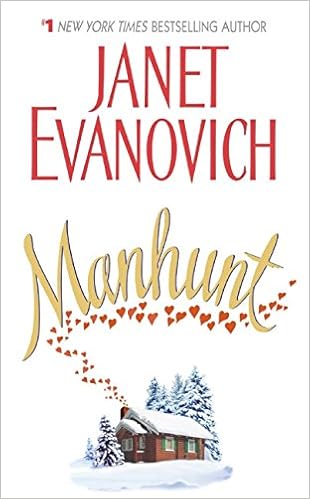
Manhunt by Janet Evanovich

Reviewed by Gerti

Janet Evanovich has the ultimate recipe for writing success in her numbered series of novels about bounty hunter Stephanie Plum (“One for the Money”, “Two for the Dough”, etc.) She tries to use a similar formula here in “Manhunt” - take a sexy but hapless career woman and put her in the craziest situations imaginable. In this book, successful NYC stockbroker Alexandra Scott decides to pitch it all, all her money and all her success, and head to Alaska on a whim to find a husband. Perhaps it is my status as a housewife, but I don’t believe that story for a minute. It is utterly implausible that a modern woman would trade her gorgeous clothes, fancy condo, etc. for an uber-rustic cabin and a broken-down store in the wilderness in order to catch herself a man.

While that may have worked as the plot of a 1950s Doris Day/Rock Hudson film, it is in fact the setup for the novel “Manhunt”, originally published as a Loveswept paperback in 1989. The 2005 re-issue (which is the edition that I read) is in slightly larger print, which is pretty easy on my over-50 eyes, which is why I chose it as a beach book. I wasn’t really looking for a romance book, but knowing its origins does explain the few steamier love scenes in the book which differ from the other half-dozen Evanovich books I’ve read already. Thankfully, the humor with which she writes is unchanged, and it is in fact the writer’s humor and charm that gilds this highly implausible turd of a tale.


I know I’m not alone when I admit that I read Evanovich books because they are great fun, and “Manhunt” is no exception. Her characters are vastly entertaining and appallingly unique. Her books are as easy to digest as a Twinkie and just as substantive, but I don’t care when I’m reading one because sometimes I don’t want to work that hard with a book. This one goes down easy, and I enjoyed reading about the Alaskan version of Mr. Darcy, hero Michael Casey, who saves Alex’s dog, gives her shelter after she burns down her own outhouse, and eventually proposes, because who doesn’t love a broke, beautiful airhead with spunk? Or maybe there really are no women in Alaska! Lucky for Alex, he’s rich and hunky, so all’s well that end’s well. You won’t be placing this book on your classics shelf next to Dickens or Tolstoy, but it will certainly warm up your beach blanket for a few hours! Read it and laugh, thankful that all the misfortunes that Alex has to face are not yours! 

Monday, August 8, 2016

Extreme prey

 Extreme Prey by John Sandford

Reviewed by Gerti

Meet the latest author with whom I am obsessed! John Sandford is a gifted storyteller and his protagonist Lucas Davenport is every bit as thrilling as the renegade cop Harry Bosch created by Michael Connelly. And Sandford is proving to be an even more prolific writer, as he’s already cranked out 26 “Prey” novels, which is how you recognize this series when you see them on the library shelf.

“Extreme Prey” is the perfect story for this election year, as there is a strong female candidate running for president, and just like with Hillary Clinton, there are those fanatics out there who dislike her strongly. Members of one family dislike her enough to want to kill her, and when the radical group they are part of refuses to back any so-called “direct action”, Marlys Purdy and her son Cole prepare to do it on their own. And they’ve got the skills – Cole is a former military man who not only can shoot any number of weapons accurately, but he is also able to construct an IED. Candidate Michaela (Mike) Bowden is alerted to the threat, but she’s counting on Davenport to neutralize it before she walks unguarded around the Iowa State Fair.

Although Davenport is originally from Minnesota, he makes himself at home in the politically active state of Iowa, and gets help from all sorts of police agencies as he tracks down the attempted assassins. He’s got a number of other crimes to solve, too, as the leader of one radical organization, the Progressive People’s Party of Iowa (and his girlfriend) die when the Purdy’s see them as threats. Another PPPI org member knows too much about a dairy bombing decades earlier, and he also gets iced. His death is the work of another group member (who has her own reasons for the murder). Davenport interviews a ton of people, and it’s only Sandford’s clever writing and the fact that Davenport is such a brilliant but likeable scoundrel that keeps it all flowing.

Finally the day of the fair arrives, and although Davenport knows his chief suspects by sight, they allude him and set up camp before he gets there. Then it’s a race against time before the bloodbath begins. I won’t ruin the ending for you, but I will say it is worth reading, as every Sandford book I’ve touched seems to be so far. The ending is even a little ironic, as good and bad people die, yet no one second guesses the candidate on her decision to attend the Fair even though it cost innocent bystanders their lives. The reader is left with a moral question about where the fault for their death lies. Of course the assassins did their damage, but if Bowden hadn’t been stubborn and insisted on going to the event for PR reasons, blameless people would not have been injured or died.


Sandford is clever and his plots are intricate. His characters seem real, whether he’s writing about the police detectives, the politicians, or the people who lives on hard-scrabble farms. Don’t miss “Extreme Prey”! It’s a page-turner! 

Monday, August 1, 2016


Coraline

Coraline by Neil Gaiman

Reviewed by Gerti

Like Neil Gaiman’s “Fortunately, The Milk”, “Coraline” is a book the famed author has written for young readers, 8 and above. However, unlike the former book, “Coraline” is a real treat for adults to read, and the creepy illustrations by artist Dave McKean, while few, set the tone for the scary little book perfectly. It is short on words – 162 pages in my copy – but long on imagination, including a mouse band (in training), a theatre filled with dogs, and a talking (sometimes) cat.

It’s the story of what happens when a young girl named Coraline (not Caroline!) moves into a new apartment with her very distracted parents. There are fascinating ladies downstairs (Misses Spink and Forcible) who apparently were successful actresses way back when, and the attic is occupied by a weird old fellow (who we eventually learn is named Mr. Bobo) who is working very hard at teaching mice to play music. Coraline is left to her own devices, which is how her attention is caught by a door in the drawing room behind which is a brick wall. Only sometimes, that wall isn’t there, and the adventure begins…

Coraline unlocks the door after her mother refuses to buy her the day-glo gloves she wants. When the mother goes to the market because there is no edible food in the frig, Coraline enters a passageway to a doppleganger world, where she finds an “other mother” with plentiful food and lots of imagination. The only strange thing, this mother’s eyes are buttons. As Coraline continues to visit, the woman’s appearance becomes even less appealing. In this other flat, which the mother created to look like the real world, Coraline finds friendship with the talking cat who tells her secrets about the place. The cat plays a critical role in her survival there.


After eating and sleeping in the shadow world, Coraline returns to find that her parents have disappeared. The actress ladies downstairs say Coraline is in danger, so they give her a magic rock with a hole in it as protection. It’s up to Coraline to bring her parents back to the reality, as well as to save the souls of all the other children who have gotten trapped in the spider’s web construct of the other world. A number of gruesome adventures follow, but Coraline is triumphant in her attempt to save them all. But did something evil follow her back through the door to the real world before she could lock it again?

Monday, June 27, 2016


Product Details


Unfed by Kirsty McKay

Review by Gerti

This is the second book in the series of zombie novels that Kirsty McKay has penned. This one is called “Unfed”, and the original book is “Undead”, or in my case, unread, but I have definitely put it on my reading list due to the quality of this book.

While the review blurb on the frontcover reads that “Unfed” is “fast, furious, freaky, (and) funny…” I would have to go with funny, although not LOL hilarious. The protagonist of the book is a teen-aged girl named Roberta, aka Bobby, and her mother is one of the scientists who set the zombie virus upon the UK. Right now, Scotland has been quarantined, and Bobby has been saved from a school bus crash caused by the undead. What she doesn’t realize at first is that although she is at a hospital, it is underground, and run by Xanthro, the company that “built” the virus. Oh yeah, and now they’ve improved on it, so that the zomb’s one runs across are now able to learn, which is pretty terrifying!

Bobby meets some other survivors of the crash at the hospital, including golden girl Alice, and white-mohawked intellectual Pete. Another kid who claims to have survived the bus crash is Russ, but Bobby has her questions about him, since she doesn’t remember him from before the accident. Still, he’s pulling his weight during the group’s attempt to get out of Dodge, and out of danger. The Xanthro pharmaceutical goons attempt to recapture them, and they try to outrun them, despite the ever-present danger of zombie adults, kids and even barnyard animals!

Bobby is trying to find her mom and her best friend, Smitty. Apparently he has the antidote inside of him, and she thinks she is a carrier of the disease, and wants to be cured. Her cell phone holds the answer to the location of both people, and some clever thinking enables the group to go to the Elvenmouth Lighthouse to signal for rescue. The Xanthro baddies make it there, too, and eventually they discover the boat where Bobby’s mom has been hiding. I won’t tell you who is saved (and who is the mole for Xanthro within the group), but suffice it to say that once you start reading, you will want to finish this book. It is fun, and all the British sayings just add to its charm.


Unfed” made me want to read McKay’s first book in the series, and to eagerly await her third book, since the ending of “Unfed” is a cliffhanger which sets the reader up for more adventures with Bobby and her zombie-killing cohorts. Bravo to McKay for infusing a youthful spirit into a genre that is often deathly serious. 

Monday, June 20, 2016


A Civil Action by Jonathon Harr

Reviewed by Gerti

It’s been quite a week for the legal profession in my house. First I finished Jonathon Harr’s “A Civil Action” and then watched Charles Dickens “Bleak House.” Together, those stories would convince any sane person to stay out of court, no matter what the personal cost!

The eponymous civil action in the Harr chronicle (which won the National Book Critics Circle Award for Nonfiction) involves the deaths of several children in Woburn, MA, ostensibly caused by chemical pollution of the water wells while they were growing up. One mother begins to question why her child has leukemia, and links it to the news that two wells have been taken off line. While medical doctors still claim no one knows what causes leukemia, this mom finds it astonishing that half a dozen children in her neighborhood have the disease. She gets a Boston law firm involved, and that’s when the fireworks start.

The story is mostly about attorney Jan Schlichtmann, a personal injury lawyer living the high life until this case begins to obsess him. He sees Beatrice Foods and another multinational corporation called W.R. Grace behind the water pollution, and thinks his firm will bring in millions for the plaintiffs. Instead, he gets embroiled in a case where the judge (Judge Skinner) is Harvard friends with one of the attorneys for the defense, and when that attorney tells Schlichtmann during the deposition phase that the families will never get to tell their stories on the stand, he’s right. Judge Skinner rules that before the families can testify, Schlichtmann and his firm have to prove that the wells were contaminated by the defendants. It turns what should have been a heart-breaking case of human health and happiness versus evil companies who are trying to make a profit, into a courtroom ecology lesson. Needless to say, the jurors let Beatrice, the company of the judge’s friend, off without a fine, and the case goes on only against W.R. Grace.

When Grace is finally found to have caused the well pollution, the settlement is so tiny the families are left with about $300K each and without the apology and acknowledgement of guilt they were initially seeking. But bringing the case to trial at all costs Schlichtmann and his law firm everything – they are nearly bankrupted by the medical and geological tests they needed to prove to the judge they had a case at all. When it’s discovered that the defendants didn’t provide all the documents they should have to the plaintiffs, the case goes to appeal – but even then there is no justice. The appeals judges send the case back to the already corrupt and fallible Judge Skinner, and he does nothing good.


“A Civil Action” is a brilliantly researched and written story about very bad people and a justice system that has anything but justice in mind. It terrifies me to think of all the pollution that exists in our water and in our soil, and only reaffirms that those people most responsible for ruining our environment never have to pay. 

Friday, June 17, 2016


Picnic by William Inge

Reviewed by Gerti

No one seems to remember William Inge, although back when our parents were seeing plays, he was producing classics that we would know, like “Come back, Little Sheba” and “Bus Stop”. “Picnic” is another stereotypical play from the ‘50s, where repressed womenfolk are just waiting to get a glance at a man with his shirt off. How times have changed!

The setting is a Labor Day Weekend, and we’re privy to the back yards of two middle-aged widows, one who has to take care of her cranky, elderly mother, and the other of with 2 daughters to get married off. The latter is named Flo Owens, and she knows her elderly daughter’s value; Marge is a beautiful girl, and Flo is hoping to marry her to a local rich boy. The other woman is Helen Potts, who gets the prefix Mrs., although she was only married for a few hours before her mother had the union annulled. Since this also happens in “The Last Picture Show”, I was familiar with the scenario. As a result, though, Mrs. Potts is, shall we say, interested in having young men help her around the yard. Hal Carter is one of those sexy young men, and as he prances around shirtless, all the ladies in the area get a thrill.

Among those who turn on him when he rejects her advances is a spinster school teacher who has given her all to a local salesman, and is just waiting for him to marry her. Her histrionics are painful to the modern reader. Mrs. Potts satisfies her lusts just feeding Hal and watching him work, but young Millie, Mrs. Owens’ tomboy daughter, is getting ready to become a woman and has her first crush on Hal. She starts drinking (for the first time) to loosen some inhibitions, but ends up getting ill. It’s her lovely older sister Marge who snags the preening Hal, who we learn went to school with her intended fiancé. The two were even in the same fraternity, but Hal turned out bad, since he didn’t have any family money.

The play ends as you might imagine from the work of a male author in the ‘50s; Marge falls so deeply in love with Hal, thinking him a kindred spirit, she throws over her sure-thing boyfriend, much to the chagrin of her scheming mother. But Inge wants us to cheer that action, like anyone in 2016 believes that a woman will fall so much in love within a few hours’ acquaintance that she’ll ruin her entire life for a shirtless man based on a kiss and some muscle-flexing. It’s pretty nauseating that women were once considered so simple and sex-starved. It’s about as based in reality as an episode of “Catfish”.


So I would advise modern readers to pass up this time capsule of a play. I could see how it could be updated, but why? I guess Inge’s attitudes are the reason I can never watch Marilyn Monroe in “Bus Stop” either. The “Picnic” seems in it’s own way to be more old-fashioned than Shakespeare’s “Romeo and Juliet”, in which the poetic language also makes the out-of-date attitudes palatable.

Monday, June 13, 2016


Neverwhere Neil Gaiman

Reviewed by Gerti

The book “Neverwhere” by popular author Neil Gaiman did not disappoint. I thought when I finished “The Ocean at the End of the Lane” that the rest of Gaiman’s works would be too “science fictiony” for me to enjoy, but I was wrong. While “Neverwhere” does rely heavily on fantasy for its plot and setting – there is a hidden world under the streets of London, populated by angels, monsters and rat-speakers – it was a convincingly real and well-fleshed out place that left me staring at subway maps of London for a long time after I was done, wondering if it was all possible.

The protagonist in this book is Richard Mayhew, a boring young man engaged to an even more boring, but beautiful young woman. She is rushing him to dinner with her wealthy boss when Mayhew stumbles upon an injured girl on the sidewalk. As opposed to his ambitious girlfriend Jessica, Mayhew can’t just step over a bleeding person and carry on with his plans. He picks her up and takes her back to his apartment, which starts the entire adventure in motion. The girl is the Lady Door, who is supposedly the surviving member of a noble family in the Below London world, and she strives to avenge their deaths and solve the mystery of why they were murdered, even though she is currently being hunted by two dangerous characters by the names of Mister’s Croup and Vandemar.

Although Mayhew turns the two killers away from his apartment, they know Door is inside, and cut Mayhew’s phone line. It’s the first and most literal “cut” from the real world that he suffers, although soon his ATM card doesn’t work, taxis won’t stop for him, and people at work fail to recognize him and are busy cleaning out his cubicle. After a rental agent shows the apartment while Mayhew is still taking a bath, Richard realizes he needs to pack up and find Door in order to get his real life back.

Pretty soon, Mayhew is in underground London, travelling with a young rat-speaker named Anaesthesia to a Floating Market where he hopes to find Door. Like an innocent abroad, he asks dangerous questions of everyone he meets and is often in peril. He spots the Lady Door auditioning body guards to help her stay safe. She is soon joined by “The Hunter,” a mythical figure underground who secures the job protecting her from Croup and Vandemar. What no one knows at this point is who hired the killers, and that revelation is at the heart of who killed Door’s other family members from the House of Arch.

There is betrayal, mystery, and lots of adventure among very strange people in fantastical places as Mayhew comes into his own in the underground world, becoming there the hero he can’t be in modern London. Almost a “coming of age” novel, Mayhew does in fact grow up as he meets every challenge he faces, including his fear of heights, as a member of the troop of characters helping Door stay safe. Like in classics of literature like “The Hobbit” and “The Wizard of Oz,” this group of misfits faces monstrous evils in order to reach the truth, never knowing whom to trust or what will emerge around the next corner.


I can’t praise Gaiman highly enough, as he created this world around the underground system of London, using even obscure and closed Victorian train stations to set his scene and create characters like “The Black Friars.” “Neverwhere” is so good, and Gaiman’s language and style so easy and accessible to even this reader (who dislikes fantasy books as a rule) that I look forward to reading more by him, and thank him for the pleasure it’s been to read the two (this and “The Ocean at the End of the Lane”) that I have already read. Gaiman creates a world that is both wonderful and terrifying, and that almost makes me want to lift a metal sewer cover and start exploring the world below. I can see why he has gained such a rock-star reputation among modern writers of this genre. Like Joss Whedon, he makes you want more of each world he crafts.

Friday, June 10, 2016


Product Details

The Thin Man by Dashiell Hammett

Reviewed by Gerti

I saw many of the “Thin Man” movies when I was young, and thoroughly enjoyed them. Who wouldn’t love Nick Charles, the dashingly sauve detective, and his lovely wife Nora? And of course, their little dog Asta was always comic relief. The plot was never as important as the chemistry between the couple, and the humor found in the dumber-than-dirt cops and convicts who peopled the movies. So when I started reading Dashiell Hammett books a few months ago, I knew I eventually had to read the novel that started it all.

Unlike “The Maltese Falcon”, the book that Hammett will be remembered for, and its famous protagonist Sam Spade, whom I found terribly sexist, I really like Nick Charles, but I didn’t realize till reading this book that he was supposed to be Greek! Wonder if they left that fact out of the black and white movies for a reason? In this story, Nick is wealthy because he’s married a wealthy woman, Nora, and now spends his time drinking and visiting with friends in the Big Apple. Oh, and he solves mysteries even without being paid for it. He’s just in the know about crimes because he knows so many people of all social classes.
There is no point even talking about the plot here, because it is really just window-dressing to the charming banter and hectic lifestyle of the Charles couple. They have friends who drink too much, who fool around too much, and friends who shoot them, but are very apologetic afterwards. The book is terribly sophisticated, and even dead bodies are hardly worth a mention in the urbane circles in which the Charles’ move.
I think “Red Harvest” is the best Hammett novel I’ve read, but “The Thin Man” is by no means his worst. While it is still a time capsule of an era in which women occupy a certain place in society, I find Nora Charles to be a very modern heroine, and love how she tries to keep up with the sharp chat and sharper deductive skills of her husband. Other female characters in this book are more stereotypical – the grasping ex-wife who fell for a gigolo who will leave once her money runs out; the sad wife who puts up with her wealthy husband’s affairs because she likes the lifestyle his money buys, and of course, the mutton-headed daughter who does nothing but cry and run around hysterically.

Still the novel is quite interesting to read, and it isn’t until the end (once Nick has uncovered the real killer) that it gets a little tedious. Hammett has to explain everything that has happened in the last 200 pages in quick order, and that is a little rushed for me. I guess I don’t really care whodunit as long as the writing is enjoyable and the characters interesting. This books has those things, but I still think I’m gonna go back and see the movies again to see how closely they follow this plotline.