Brand New at the Library!

Showing posts with label Book Giveaway. Show all posts

Monday, September 14, 2015

Do No Harm: Stories of Life, Death, and Brain Surgery by Henry Marsh

Reviewed by Gerti
It is a popular misconception that the phrase "First do no harm" is a part of the Hippocratic Oath which doctor’s take. The phrase does not appear in the oath, but a similar phrase is found in “Epidemics”, Book I, of the Hippocratic school: "Practice two things in your dealings with disease: either help or do not harm the patient". The exact phrase is believed to have originated with 19th-century surgeon Thomas Inman, but it is used here as the ironic title of this memoir by neurosurgeon Henry Marsh. While “Do No Harm” tells the story of his career in brain surgery in England and elsewhere, I call the title ironic, because much of the book in fact involves the harm he does patients, whether they live or die.
For example, there is the time when he has an assistant start a surgery because it is an “easy” one with which the man is familiar, and after all, students need to learn. Dr. Marsh only comes in once it has been botched completely, and then realizes he should have been there to watch the procedure from the beginning. Nice realization for Marsh; death sentence for the patient.

Another time Marsh is visiting a long-term care facility for patients who are in comas or vegetable-like states and need constant care. These patients have ceramic name plates outside their doors (since they reside there for years) and Marsh notices with shame that at least 4 of the people housed there are former patients of his. He has “wrecked” them, to use the vernacular he says doctors use to describe a patient whose surgery has been left them debilitated.

The book is divided into sections, based on what type of tumor or symptoms the patient is having. Many are bleak with a poor prognosis, but there are some success stories as well. Marsh goes to the Ukraine to help doctors there with their neurological patients, and actually flies a few people to England to see their surgeries occur under the best conditions possible. This peek at medicine in the former Soviet state is both fascinating and frightening at the same time.


In short, much of the book is terrifying, as Marsh talks about how similar normal brain tissue is to diseased tissue, and explains the state of the NHS (National Healthcare System) in England, talking about a room with 20 patient beds in it, something we would never see here in modern US facilities. Enlightening also is how well Marsh himself is treated when he has a detached retina, since he has private insurance and can afford to go to a private healthcare facility. It made me understand why concierge medicine is so popular. The book “Do No Harm” is an inside look at brain surgery that I think few people will be able to stomach. Well written, but with bad outcome scenarios which are scary as hell.

Monday, September 7, 2015


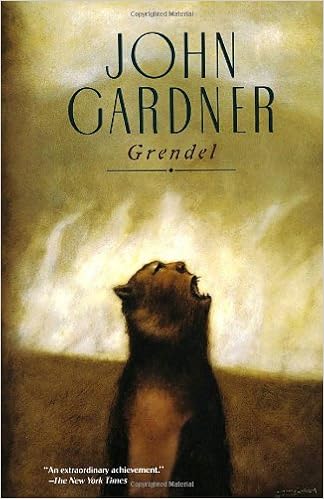
Grendel by John Gardner

Review by Gerti


Beowulf” is an Old English epic poem that many of us had to read in high school or college. Esteemed writer John Gardner takes the classic work, and turns it on its head here in “Grendel”, much in the way “Wicked” retells the story of “The Wizard of Oz.” Like that novel, Gardner takes the monster of the story, Grendel, and allows him to tell the tale, and like “Wicked”, once the bad guy starts talking, the heroes and villains are not as black and white as they appeared.

We see the humans around King Hrothgar after we've already met Grendel, and after Grendel has already established that he is more than your ordinary monster. Gardner sets him apart from the animals early, but instead uses animal terminology when referring to the humans in the story. Like vermin, Grendel is always seeing them with rat faces, or acting like snakes. And just as humans find it easy to kill rats, it is believable and nearly forgivable that Grendel would have little trouble killing them when the time came.

Grendel is conflicted about his role in the universe, and Gardner sometimes shows him to be a superman character since he is much stronger than humans and can even see in the dark. Grendel himself, however, has heard the humans talk about how he is an outcast, the descendant of the Bible story’s murderous brother, Cain. Humans, he hears, are from another lineage altogether. It is during a scene where Grendel tries to approach the humans in friendship that they begin their attack on him, as they don’t understand his form of language, even though he keeps crying out “friend”. He is so strong, even his fingernails are capable of killing the humans, and the survivors of the Danes drive him away from their gathering place, the mead hall.

Grendel is a tormented soul, for although he has other creatures with whom he can speak, namely his mother and a dragon (who calls him son and treats him with more civility than the humans do), he wants to be accepted among the humans, and that’s just never going to happen. He is obsessed by the humans, and spends most of his life watching them from mountain tops and in the shadows of their village. He sees how badly they treat animals, how they kill for sport, how they set careless fires in the forest. He begins to think that nothing matters, and this novel becomes a nihilist anthem. Finally, hero Beowulf arrives to fight Grendel, but the creature has already lost his will to live.


Among other adjectives of praise heaped on the book, the cover blurbs call “Grendel” original, poignant, witty, intelligent and delightful. It is all those things, and will most definitely appeal to a teen audience, as well as to anyone who share the mindset of one of society’s outsiders. Grendel is a modern “Frankenstein” and I highly recommend this memoir of his, created by the very talented writer, John Gardner.

Thursday, September 3, 2015

Movie: Fifty Shades of Grey

Movie Review: “Fifty Shades of Grey”
Reviewed by Gerti

A movie that has gotten a lot attention is “Fifty Shades of Grey,” based on the blockbuster book of a few years back by EL James. It stars Dakota Johnson as the hapless college student Anastasia Steele who was just helping out a sick roommate when she agreed to interview communications industry titan, Christian Grey. He is played by Jamie Dornan, and in true Cinderella fashion, he instantly falls for the guileless Steele, who is also being pursued by several other young men, but doesn’t know that either. Besides being clueless, all she’s lacking here to make her less sexy is coke-bottle thick nerd glasses. She’s a disaster!

Grey tries to charm her by meeting her at the hardware store where she works. Perversely, he picks up some sado-masochistic supplies while she’s helping him shop – rope, duct tape, etc. She doesn’t get the clues. Then he sends her a first edition of “Tess of the D’Urbervilles”, because she told him she was an English major because of the works of Thomas Hardy. He says he would have suspected Jane Austen, which will give Austen lovers a laugh. Then he gets her a new laptop, and eventually a car. Nice boyfriend!

With the story closely following the book, Grey gradually seduces Steele into his “singular” lifestyle, where she would be his submissive and he her dominant. And while she engages in a few introductory episodes with him, she whines frequently about their just being a normal couple, and doing normal dating things, like going out to dinner and the movies. But she also sends him mixed signals, like agreeing to a business meeting alone in his office and going over the “contract” that he wants her to sign to make their relationship official. She goes through the contract pages with him, having him take out things that are objectionable to her, but then teases him about signing it, and leaves without doing so.

Yes, there is a good amount of nudity, mostly hers, as he introduces her to all kinds of sexual behavior (apparently, she’s a virgin in the story). Thanks to Danny Elfman who did the music, it treads the thin line between sexy and silly, as his soundtrack makes it all seem romantic. Dornan plays Grey as conflicted about this relationship, first not wanting to drag Ana into the lifestyle, but then breaking his own rules whenever they are together. If only Ana could project the allure that has caught him in her spell… She generally comes across as cow-eyed and bumbling. We do hear that Grey had an abusive mother, and was then seduced by one of his mother’s friends. Yes, I guess that could all mess him up pretty good where romance is concerned.

Ultimately, however, I thought the movie actually handled the sex more tastefully than the book. I heard that audiences laughed at certain parts, but I’d love to know when, because I found the sex scenes more appealing than some of the dialogue. The film was more Cinderella soap opera than flat-out porn. But the themes here are not for kids or young teens.

Tuesday, September 1, 2015


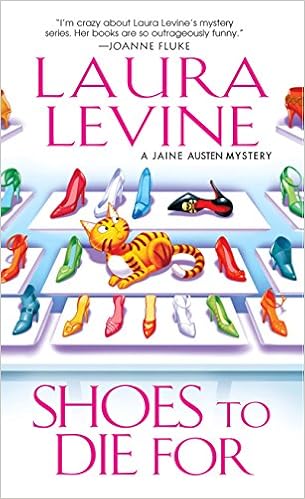
Shoes to Die For (Jaine Austen Mystery Series book 4) 

by Laura Levine

Reviewed by Gerti


I’ll admit it. I’m hooked on the books of author Laura Levine, who writes the Jaine Austen series. Calling them mysteries is a bit far-fetched, for the mysterious aspect to their murders is always just an excuse for protagonist Jaine to put herself into awkward, embarrassing and of course amusing situations. I like this book better than some of the other efforts in this series, as she has toned down the amount of time she spends with her cat, Prozac, and the flaming personality of her next-door neighbor, Lance, which for me marred some of the other books.

In this novel, the LA freelance writer falls into a job for the exclusive clothing store “Passions”, where despite her double-digit dress size, she has conned the former model/owner into letting her do their ad campaign. This way the reader gets to meet the staff, including stereotypical mean girl Frenchie, nice-but-ditzy Becky, and heart-throb/hunk Tyler. Tyler and Jaine have a lot in common – they are both writers, but Tyler is taking a writing class and it’s his alibi when Frenchie turns up dead after scamming the owner out of her own business. Everyone else left standing is a suspect, including a customer Frenchie was mean to, and the accountant, who had a crush on Frenchie.

Laura Levine is a comedy writer from way back and is doing very nicely writing this series of funny mysteries. While not the most hysterical book in the series, “Shoes to Die For” is funny enough to spend some time with, as TV-land writer Levine shows off her comedic skills. Unlike some of her other books, however, she doesn't seem to make as much use of Jaine’s parents, which is a mistake, as they tend to provide a comic subplot and write about it in hysterical e-mails to their daughter, in the style of Seinfeld’s parents.


I love heroine Jaine Austen, who has thoroughly modern problems and gets into relatable situations, like having weight issues or having to endure a man she met through speed dating. Levine’s language is a treat to read, her characters a delight to meet, and oh the world inside Austen’s head! I love her sense of humor. She’s like having a girlfriend who is smart enough to catch crooks, and crack wise at the same time. While “Shoes to Die For” is not my favorite Levine novel, it’s an easy bubble-bath read, something to which protagonist Jaine Austen would definitely give a thumbs up.

Monday, August 31, 2015

Movie Review: The Rewrite

The rewrite 
Movie Review: “The Rewrite”
Reviewed by Gerti 

A movie that has gotten no attention but deserves a look, at least by Hugh Grant fans, is “The Rewrite.” Grant stars as Keith Michaels, a Hollywood screen writer who has fallen on hard times. His desperate agent has finally gotten him a job teaching screen writing at a college in Binghamton, New York. But Michaels nearly ruins that as well, first by sleeping with a co-ed (even before he teaches a single class), and then by insulting another teacher from the English Department. Allison Janney does a great job playing an old maid, Jane Austen-loving professor. She also serves on the college ethics committee, which soon gets wind of Michaels’ affair with the student.

For his second strike, Michaels has never read the 70 screenplays which were submitted by students to gain entry into his class. He simply checked on the school web site and chose the students in his class based on their looks. So he has a bevy of beauty queens in his class, and 2 nerds. And yes, the teacher on the ethics committee figures this little trick out, too, and is none too pleased.

Among these female students is Marisa Tomei, who plays Holly, a single mother of 2 girls who is trying to get a second chance by going back to college. How she manages her time is the most fictional aspect of the story, as she works 2 jobs, one at the school book store and another at a fancy restaurant, to pay for school. With going to classes and sleeping, I’d be surprised if she had any time to see her kids! But she is a bold lady, and shames Michaels into actually reading her screen play, and their interaction thaws his heart. After a few classes (he’s been forced to meet with his students more than once a month) he is interacting with all of them, and actually trying to teach them something about writing.

Wonder of wonders, one of the male students is actually a gifted writer, and turns in a screen play that Michaels sends on to his Hollywood agent. Ironically, the same studio execs who rejected his recent works are thrilled by the modern take on story telling Michaels’ student has. Michaels is also instrumental in helping the other nerdy male student who has been hazed and practically killed while trying to join a fraternity. Michaels stays with him in the hospital until his parents arrive. Witnessing this act of humanity, the female student who was going to bring charges against him for sexual harassment changes her mind, as does the ethics-loving Jane Austen professor.

All right. So I know there is something wrong with a teacher who hits on his students, but Hugh Grant is charming here (as always), and he does break the relationship off as soon as he realizes the school doesn’t allow such a thing. His relationship with Tomei also blossoms (ah, a relationship with an age-appropriate woman!) so his evolution as a man and a teacher is complete. The overall affect, thanks to good writing and charming actors, is a delight. “The Rewrite” is a quirky, heart-warming film on the order of Grant’s “Two Week’s Notice.”

Thursday, August 27, 2015

Revenge of the Homecoming Queen

Revenge of the Homecoming Queen by Stephanie Hale
Reviewed by Gerti


This is the third book I have read by author Stephanie Hale, and I like it a lot. I had previously read “Austenland” and “Midnight in Austenland” because of my love of writer Jane Austen’s works, to which those books pay mild tribute. I liked the former book, didn’t like the latter. I picked up this book, “Revenge of the Homecoming Queen”, because I needed something to break that tie about the author’s talents. This book proves again that Hale is a very good writer with a fabulous sense of humor and a gift for creating likeable characters.

Perhaps more YA than the other two books, this book centers around high school senior Aspen Brooks. Perhaps that implausible name is a tip of the hat to the name of heroine “Cher” in every teen girl’s favorite film, “Clueless”. Like Cher, Aspen is a dream girl, an A-lister popular girl with all the right clothes, attitudes, and even friends. She dates the quarter back, of course, and is all teed up to become Homecoming Queen. That is until the principal, Miss Hott, calls the name of her nemesis, Angel Ives.

Quarterback boyfriend Lucas is also not chosen to be Homecoming King, but that’s his own fault, as he started a campaign to elect a nerdy boy named Rand whose parents are impossibly rich. Lucas explains to Aspen that he did it because he thought she and Rand had a lot in common, and thought she would be elected queen. Angel is none too happy about Rand being her king, either, and that’s the only fact that saves Aspen from being heartbroken.

Aspen starts to have very bad days at school, after her tire gets slashed and someone stuffs her locker with porn. She thinks its Angel, but it turns out Angel is only after her boyfriend, and when she sneaks away during a party to be with Lucas, Angel accidentally gets kidnapped. The rest of the story involves trying to track down the Homecoming Queen, and the other people who end up getting kidnapped after her. But the ending is satisfying and gratifying, as we find out that the kidnapper was only out to punish Aspen and keeps nabbing the wrong girls!

This book was terrific fun, and not just for teens. I thoroughly enjoyed how Aspen grows up, from selfish teen/queen to a girl who is capable of caring for others (and the environment!), even putting her own life in danger to save her mom. It’s a rollicking good time filled with plot twists, humor, and a little naughtiness to keep it all interesting. I thoroughly enjoyed this book and was sorry to see it end.

Monday, August 24, 2015

Death of a Neighborhood Witch

Death of a neighborhood witch 
Death of a Neighborhood Witch by Laura Levine
Reviewed by Gerti


Death of a Neighborhood Witch” is another funny mystery from the author of the Jaine Austen mysteries, Laura Levine. However, unlike so many other authors who have gleaned inspiration from the famed British novelist Jane Austen, Laura Levine’s only connection with the original author, her plot, and characters, is that the heroine’s name. It is not even a running joke in this book, as it was in Levine’s first novel, “This Pen for Hire.” Perhaps author Levine has realized that not that many people who read mysteries know who Jane Austen is, or perhaps she feels the joke has run its course. Either way, I don’t mind.

Levine uses the Austen name to reel in new fans, because once they read one of her hysterical books, they will be hooked, as I am. Laura Levine’s comedy background is impressive - Levine wrote for such classic TV shows as “The Bob Newhart Show” and “Laverne and Shirley” and her skills are one display here, as heroine Jaine solves yet another murder, after being the chief suspect first. Her comic antics are laugh-out-loudable, but also plausible, which is what makes them so fun! These comic turns are what I really love about the book, and the series.

However, I dislike that she has changed the personality of her nosey neighbor Lance to make him flaming in this book, and I liked him better when he could just hear through her paper-thin walls. He is positively nasty in this book, and his double-crossing her after they pick out Halloween costumes (he changes her flapper outfit to a gorilla suit at the last minute) is the reason she becomes a murder suspect at all. No one needs friends like that!

I also dislike the frequent references to Jaine’s cat, Prozac, but I understand that is part of Levine’s schtick, just as Joanne Fluke‘s cat is an important character in all her Hannah Swensen food-related mysteries. It is Prozac running into the yard of the neighborhood witch Cryptessa Muldoon (and inadvertently killing her bird!) that sets the wheels of the mystery in motion. Cryptessa is an irascible old lady who in her youth used to star in a short-lived TV series called I Married a Zombie. Think of her as analogous to Morticia Adams or Lily Munster.

Cryptessa is hated by her neighbors for being cranky and nosey, as she takes pictures of her neighbors, who are engaged in some pretty wild stuff for middle-class middle-aged people. So when she is found dead with a “Do Not Tresspass” sign staked through her body, everyone is a suspect, and Jaine has to figure out who done it. In the end, it doesn’t really matter who did it, because the mystery is just an excuse for Jaine to butt into everyone’s lives and find out their dirty little secrets. Lucky for us, Levine’s comic writing talents and easy writing style make it a pleasure to go along for the ride. This book is a hoot!

Thursday, August 20, 2015

The Poet

The poet. 
The Poet by Michael Connelly
Reviewed by Gerti


Even before I started reading “The Poet”, Stephen King’s gushing forward let me know that it was something special. He praises Michael Connelly for the enticingly clever first line, “Death is my beat”, which comes from the mind of journalist, Jack McEvoy, who is struggling with his emotions after the death of his homicide detective brother, Sean. King praises the book as a marvelous piece of storytelling, and it is, including “a series of surprises that go off like well-placed dynamite charges”. I’ve found those unexpected twists in plot to be typical of Connelly’s writing. Although his comments were written in 2003, King calls this book “the best work Michael Connelly, a prolific writer, has done up to this point, and marks(s) him as an important voice in the genre at the turn of the century.” With high praise like that, what can I say, but that Connelly has written another great book filled with memorable characters and a sizzling storyline?

Connelly’s writing never fails to impress me. Since I was once a journalist, I really like his realistic characterization of newspaper reporter Jack McEvoy, and the problems Jack faces within and without his newsroom. He believes that his twin brother’s death was not a suicide, but has difficulty convincing others that it’s more than wishful thinking. He breaks the big story, however, when his research reveals a pattern to the supposed suicide deaths of several homicide detectives across the country, and the FBI is called in to investigate. Soon, Jack finds himself on the trail of a serial killer called The Poet, with a taste for Edgar Allan Poe (who else?) There is the obligatory romance with a tougher-than-nails female agent, until Jack begins to suspect that she may be behind some of the deaths. But the true killer’s identity is that dynamite blast Stephen King was referring to… so I won’t spoil it for you!

Suffice it to say that I agree with Stephen King that this is a great book, complicated but satisfying. I love the way McEvoy follows the clues wherever they lead, even if they sometimes lead him astray for a while. I even like his relationship with FBI agent Rachel Walling, as it seems more natural here than her “romance” in another book (“The Narrows”) with another of Connelly’s favorite protagonists, sometime LAPD detective Harry Bosch. This book is irresistible, and I finished it in a day, despite it being over 500 pages long. If the writing weren’t so good, I might even have to complain about how much Connelly writes!

I strongly recommend “The Poet” to anyone who likes a crime story where the good guys win, almost. But just like students in college take psychology classes to figure out what is wrong with them, this book shows that the FBI (and journalism – LOL) is riddled with broken people, some of whom can’t be fixed.

Monday, August 17, 2015

Ender's Game

Ender's game 
Ender's Game by Orson Scott Card
Reviewed by Gerti 


My husband read Orson Scott Card’s classic science fiction novel “Ender’s Game” decades ago, and my son a few years ago before the movie of the same name came out. They were both able to scoff when we watched the movie together about how the story was handled by the filmmakers. And while I don’t always trust their taste in literature since it runs more toward science fiction than mine, they were right when it comes to this book. “Ender’s Game” is amazing.

The storyline is dramatic and suspenseful, with a likeable main character, Andrew “Ender” Wiggin, who even though he is not even 10 at the book’s beginning, is nonetheless frightening in his understanding of the world and other people. He is a “Third” child in a world where families are not allowed to have that many children. He has older siblings named Peter and Valentine, and while Peter is a sadist, sister Valentine has always come to Ender’s aid. This is why Ender feels that someone older and wiser will always come to his aid as he goes through his military training, but we learn later that that is not the case.

I don’t want to ruin the plot for you, but let’s just say that Ender kills people. There are two instances where Ender is being bullied by one child in particular, and that child also has a pack of followers. Ender realizes that if he doesn’t decisively win a fight, the bullying will continue and only get worse. So he cleverly defeats his older boy bullies. But what he doesn’t realize until the novel’s end is that he in fact kills those boys, not as Peter would out of cruelty, but out of necessity, as Ender sees it. And while adults are watching, the other boys could just have easily have killed Ender, and no one would have come to his aid.

In incidents like those, Ender proves his strategic intelligence. He is seen as the last hope for humans in a war against alien creatures called “buggers”. He believes he is a student at Battle School, preparing for the coming war against them. He doesn’t realize till the end that each simulation he goes through, he is actually fighting battles against these telepathic creatures. I did, perhaps because I had already seen the movie, but there were enough clues left by the author that Ender has a special connection with the computers at the academy. He was so extraordinary when playing a video game on the school’s machines that his human handlers had not designed the levels on which he was playing.

This book won the Hugo & Nebula awards for writers of science fiction, and the fights between Ender and the other boys, as well as the battle simulations in the special zero gravity rooms, are brilliantly written, so clear and precise in their language that visualizing them was easy even for someone who prefers Regency Romances like myself. My only critique of the book, and apparently it is a common one, is that Ender would be too young to do all this, starting at age 6. I could be wrong, however, as my teenaged son disagrees, and he probably remembers more clearly how young boys think since he’s closer to that age.

Thursday, August 13, 2015

The Pelican Brief

The pelican brief. 
The Pelican Brief by John Grisham
Reviewed by Gerti

John Grisham introduces us to a female protagonist in “The Pelican Brief” who must be his ideal woman. Darby Shaw is a brilliant law student at Tulane, so smart in fact that she figures out who killed 2 Supreme Court Justices before even the government does. And that puts her life in danger.

But more than that, Shaw is Grisham’s dream girl, because besides having a first class mind, she is a younger woman who is sleeping with her older and frequently drunk law professor, Thomas Callahan. I sense a little wish fulfillment here, as not only is she brilliant and willing to sleep around, but Darby Shaw is also gorgeous. So stunning that she literally turns heads when she walks down the street, although being modest (as if!), she wears oversized sweaters that hide her rockin’ bod.

Not to take away from the great plot, which has Callahan and his best friend being killed as part of the conspiracy from the White House down to protect the man who wanted the Supreme Court Justices killed just to make more money. Darby is constantly moving and of course outsmarting the government and the virtual mobsters who are chasing her at each turn in order to get hold of “The Pelican Brief”, which she wrote. But like Jennifer Garner in “Alias”, Darby is able to change her identity quickly, dying her hair, moving around thanks to all the money she has, and basically getting help from other fellows who are looking to get in her pants, namely the reporter Gray Grantham. I don’t think it’s an accident that his name sounds a lot like John Grisham, either.

It is a great story, and the suspense level is high. She is being stalked by all kinds of characters, including one of the world’s most infamous assassins, Khamel, who actually killed the esteemed jurists from the highest court in the land. But everyone is so swayed by Darby’s looks, Callahan, Grantham and even “all-business” assassin Khamel, that this reads more like a teenager’s daydream than a classic thriller. Don’t get me wrong – I loved it. But the character of Darby Shaw was so obviously written by a man, and a love-starved middle-aged man, that it is comical and detracts from what would otherwise be a great and gripping story.

Grisham’s writing is as good as it usually is, but I find it hard to enjoy even a thriller like this when the book is so hamstrung by juvenile lusts. I like to think that Darby Shaw could have been a slightly dumpy but brilliant law student, and still written “The Pelican Brief”. But perhaps Grisham wrote the book with the movie version already in mind. Although I had to laugh when Julia Roberts was chosen to play the female lead in the film, and then so obviously didn’t dye or cut her hair (as Darby does many times in the book) to escape the bad guys. It’s just another decision by male “artists” who changed the storyline in order to cater to their vision of female beauty.

Monday, August 10, 2015

Plum Lucky

Plum lucky 
Plum Lucky by Janet Evanovich
Reviewed by Gerti


I had never read a book by Janet Evanovich before, so picking up this book was a little like getting on what I thought was an elevator and finding out it was a rollercoaster. “Plum Lucky” is a comic thrill ride, filled with quirky characters that were both horrible and hysterical at the same time. I had a great time reading it!

The protagonist is a woman named Stephanie Plum, who works for her uncle in the bail bonds business. The story is told from her point of view, which sounds as though it might limit the amount of information coming in to the reader, but that is by no means true. Stephanie has a funny family, led by her Grandma Mazur, who has just found a duffle-bag filled with money. The problems come in as the original owner of the money, and the man who stole it from him, both try to get their money back from Grandma. She however has taken the windfall, bought a Winnebago, and gone from Trenton to Atlantic City to gamble.

Since Stephanie is good at tracking down scofflaws, her mother enlists her aid in finding her errant grandmother, but Stephanie is “Plum Lucky” to have a bunch of people who help her out. Those people include the other staff of the bail bond business, office manager Connie and former whore now (almost) high fashion model Lula. The cast rounds out with a cop boyfriend for Stephanie, another sexy people tracker named Diesel, a mad mobster named Delvina, a leprechaun thief named Snuggy, and a racehorse headed for the glue factory named Doug. There are people who talk to horses, people wearing tinfoil on their heads, and people shooting rocket launchers. It’s a mad romp as Stephanie and her crew try to bring Grandma back home alive and well, return the money to the mobster, but also have enough money left to pay for Doug’s operation so he isn’t put down.

Does “Plum Lucky” make me want to look for another book by Evanovich? Yes, because it’s so plum crazy, but also very entertaining. No brain cells died in the reading of this book, meaning it was as easy to digest as a bowl full of Cool Whip. And while there was very little mystery involved in the novel, it was as much fun as a girl’s night out. To top it off, I read this St. Patrick’s Day themed book the day before the holiday, so it seemed like Evanovich and I are meant to be. Can’t wait to see if she can keep up the manic action and wit in her next book! I feel “Plum Lucky” to have finally found this author!

Friday, August 7, 2015

The Lost Years

The lost years 
The Lost Years by Mary Higgins Clark
Reviewed by Gerti


I am an enormous fan of Mary Higgins Clark, but had seen the book “The Lost Years” before and chosen not to read it because I didn’t like the plot, which seemed to me to be derivative of the currently popular Dan Brown novels. However, now that I am running out of new MHC books, I finally forced myself to read this book, and I’m glad I did. The derivative part involves a recently discovered letter written by Jesus Christ, a priceless artifact which has scholars and archeologists scrambling. But the human aspect of the tale is about Jonathan Lyons, a very human bible scholar who is having an affair with a much younger woman instead of staying home to care for his Alzheimer’s afflicted wife.

Mariah Lyons is their daughter, and she has her own successful career in New York as a financial planner, which is where she met the sleuthing team of Alvirah and Willy Meehan. Clark has had great success with this pair, whose popularity seemingly rivals that of Nick and Nora Charles. I find them amusing, especially since Alvirah has a pin that controls a secret recording device, which seems in a few cases to also be able to record conversations that happened before it gets turned on! However, they are good for a laugh and a welcome diversion, although they don’t really solve the murder mystery here, and seem as confused as the cops.

The main plot, however, is that when Jonathan Lyons is killed, shot to death in his den, there are many suspects, including his lover Lillian and his memory-addled wife. While the police cruelly assume Kathleen Lyons did it and that her strange behavior and memory lapses are all an act, Mariah fights hard to keep her mother out of jail. Four other suspects are the boys who frequently joined the family for meals, including 2 with a crush on Mariah. Greg Pearson and Richard Callahan are those two, with Greg’s crush being long-standing but not reciprocated. Mariah is warming up to Richard, but is he just being charming now to get the Jesus letter, or does he already have it?

I liked the premise and the story Clark weaves, although the ending wasn’t entirely satisfactory for me. I liked protagonist Mariah, whose character seems pretty consistent, but don’t like how her mother’s personality seems to change by the end of the book. She seemed a harmless Alzheimer’s sufferer to start, but when she is later found to have violent episodes, I almost suspected there was someone goading her at the hospital where she was being observed. I also didn’t like Lillian, the mistress, because her personality seemed inconsistent. She is generally a conniving B-word and then we’re asked to be sympathetic to her plight? I don’t think so. “The Lost Years” isn’t a perfect novel, nor is it my favorite by MHC, but it is quite entertaining if you like that sort of stolen treasure genre.

Tuesday, August 4, 2015

Chocolate Chip Cookie Murder

Chocolate chip cookie murder : a Hannah Swensen mystery 
Chocolate Chip Cookie Murder by Joanne Fluke
Reviewed by Gerti


This is the second book I have read by Joanne Fluke, but it is the first offering in her series of recipe murder mysteries. I was underwhelmed by the last book of hers I read (“The Carrot Cake Murder”), and wondered if the series started out good but weakened over time. The answer to that question is yes!

Chocolate Chip Cookie Murder” is the first of the Fluke’s Hannah Swensen books, and Hannah is the absolutely likeable owner of a bake shop in Lake Eden, Minnesota called “The Cookie Jar.” In this book, her usual delivery of milk from the Cozy Cow Dairy every morning becomes unusual when she goes into the alley to check on her deliveryman, and finds him shot to death in his truck. Sadly, a bag of her cookies is on the seat next to him!

To save her reputation, and that of her food, Hannah goes the extra mile to find out whodunit, and in the process uncovers a number of other mysteries, including the fact that the football coach beats his wife and that one of the richest men in town was in hock to the man who owns the dairy, where murder victim Ron LaSalle worked. Pretty soon, his boss Max is missing, too, and Hannah works with her policeman brother-in-law to tie up the chocolate chip murder mystery before more bodies show up!

I like this book better than “The Carrot Cake Murder” because Fluke presents more background information here than she does in that book. I gave her writing another try because I suspected showing up late in a series might be like trying to jump into a conversation between two high school friends, because “The Carrot Cake Murder” didn’t present enough info on the characters or town, as though the author felt I should have already known those things. Well here, Fluke tells the whole story of the delicious protagonist Hannah, giving a background on who’s dating whom, what the relationship is between Hannah and her sisters (sorry, Woody Allen), as well as some frightening details on what life is like during a Minnesota winter.

The mystery here in “Chocolate Chip Cookie Murder” is also more substantive than in “Carrot Cake”, with a few more twists and turns, and the whole effort feels more thought out. While the other novel was meringue, this book is as hearty and filling as a loaf of zucchini bread. Once you start reading Fluke’s mysteries (with recipes included!) you’ll want another helping, too.

Wednesday, July 22, 2015

Movie Review - Still Alice

Still AliceMovie Review: “Still Alice”
Reviewed by Gerti


The movie “Still Alice” is based on the book of the same name by Lisa Genova. It stars Julianne Moore as Alice Howland, a 50-year-old woman whose life is overturned by Early-Onset Alzheimer’s disease. I read the book several months ago, and therefore was very excited to see the movie version, hoping it would put into poignant pictures what Genova had so terrifyingly described in her book, but the book is much better than the film.

The movie story is pretty much the same, but I am bothered by the petty differences, because I can’t see why they were changed. For example, in the book, Alice is a Harvard professor. In the movie version, she is a professor at Columbia, and therefore lives in New York rather than Boston. My husband thinks the change was made because the New York Film commission offered the movie makers more money, or was more accommodating, but still I find the change disturbing. In the book, Alice’s husband wants to move her to New York where he is offered a better job, so it is jarring for me to see her story start there.

Another change I think occurred because the screenwriter was a man, rather than a woman. The book was devastating to read because as Alice’s condition worsens, her husband draws away from her, saying about his move from Boston where she is comfortable to New York that it wouldn’t matter to her anyway, because she “wouldn’t know the difference” by the time they moved. That was a pivotal moment in the book, because while their kids are horrified that he can even think that way, it is a factual statement. Alice’s degeneration is so rapid, that she eventually doesn’t feel comfortable in the home where she’s spent the last several decades. But the screenwriter doesn’t use that line or that entire scene, and I think its omission is a mistake. While not critical to the action, the line is key to understanding the attitude not only of Alice’s husband about her condition, but about how her family and the world at large views Alice and her disease. With her memory failing, she is reduced by them to the status of an object, not given credit for emotion or decision-making abilities, even about her own care.

The film is also less impactful than the book because the book is written in first-person narrative, and since the film does not share that point of view, it really loses out as Alice’s condition worsens. One of the most poignant things about the book is that the reader sees Alice’s ability to define and describe her world become smaller. Her vocabulary shrinks, her ability to recognize even her family members shrinks, and that is so much more evident in the book than the movie.

Those critiques aside, however, “Still Alice” is a moving portrayal in microcosm of what it is like to lose your memory and hence “yourself”. Alice states in the film that she wishes she had cancer, because the world can sympathize with a cancer patient. Having Alzheimer’s though drives people away, as it takes from her everything it meant to be Alice. The movie’s ending seemed abrupt, and several scenes are not described clearly, but the 101 minutes flew by for me. I wish the film makers had given the book’s telling of Alice’s story more weight. Great acting performance by Julianne Moore, but lacking the depth and heart of Genova’s book.

Monday, July 20, 2015

Dr. Mutter's Marvels

Dr. Mütter's marvels : a true tale of intrigue and innovation at the dawn of modern medicineDr. Mutter’s Marvels 
by Cristin O'Keefe Aptowicz
Reviewed by Gerti


The origins of things are sometimes fascinating. That is the case with “Dr. Mutter’s Marvels” by Cristin O’Keefe Aptowicz, who looks at the background of The Mutter Museum in Philadelphia by discussing the life and career of famed surgeon Dr. Thomas Dent Mutter. Mutter’s collection of human specimens from his years as chair of surgery at the Jefferson Medical College in Philly are housed in the building Mutter’s money paid for. I’d heard of the place before, with its renowned collection of physical oddities not unlike Ripley’s Museum, but I had never heard anything about Dr. Mutter himself. Aptowicz here reveals him to be not only a brilliant and talented man who early understood the need for cleanliness in the operating theatres, but who as a doctor also tried to bring compassion to the practice of medicine, and especially to surgery in those early days before anesthetics were commonly used. In fact, Mutter was one of the first surgeons in Philadelphia to use ether after it was discovered, and it is amazing today that there were other pre-eminent physicians at the time who fought against using it because they only knew by the intensity of the patient’s screams how the surgery was going! What it terrifying time it must have been to be sick!

Mutter was a child destined to be a doctor, since disease made him first an only child, and then an orphan. As the author writes so eloquently, “Thomas Dent Mutter was just seven years old, and every person who had ever loved him was dead.” After his maternal grandmother also dies, Mutter goes to live with a rich relative, a single man in his 20’s named Colonel Carter, who provides Thomas with a home and an education, but was never able to cure Mutter of the physical weakness which would claim his life when he was only in his ‘40s.

Like the proverbial candle that burns half as long, Mutter burned twice as bright during that short life. Even as a school boy, he gained a reputation for wearing outrageously bright suits in a day and age where black and brown were commonplace. He originally attended a small Virginia college before heading to Yale, but was popular everywhere he went for his good looks and great voice. These things made him a popular instructor when he went to Philadelphia’s new Jefferson Medical College, set up to compete with the city’s already established but stodgy Medical School of the University of Pennsylvania. Mutter had learned his plastic surgery technique in Paris, the best place in the world to learn medicine back then, and his goal was always to unmake monsters, that is, to do plastic surgery on people disfigured by burns or tumors, in order to allow them to lead a more normal life. The illustrations in this book show Mutter’s success.

DMM is a fascinating book about a time when medicine was more art than science, and its practitioners were often stumbling around in the dark. Mutter was their light. This well-written book by Aptowicz is a well-researched, but alternately thrilling and terrifying study of a great doctor to whom modern medicine (and every patient!) owes a deep debt of gratitude.

Friday, July 17, 2015

This Pen for Hire

This pen for hire : a Jaine Austen mysteryThis Pen for Hire, a Jaine Austen mystery by Laura Levine
Reviewed by Gerti


When I say this book was recommended to me by author Joanne Fluke, I mean that in the introduction to her latest book, Fluke thanked author Laura Levine “(who writes the Jaine Austen series)” for helping her with the “Double Fudge Brownie Mystery”. I was so moved by that statement that I had to track down one of Levine’s books immediately. I did so because I love the famous British author Jane Austen, and wondered who would possibly be cheeky enough to borrow the famous lady’s name to write a mystery series, and then misspell it (yikes!)

Unlike so many other authors who have gleaned inspiration from Jane Austen and her hundred-year-old romance novels, Laura Levine’s only connection with the original author, her plot, and characters, is that the heroine of “This Pen for Hire” was named Jaine Austen (misspelling intentional) by her novel-loving mother. That’s it. So her name is a running joke in this book.

That said, you would think I would hate this novel and that it was crap. But that’s not correct. Laura Levine is a comedy writer from way back who has uncovered herself a hell of a hook for her mystery series. It may have little to do with my favorite author, but that doesn’t mean “This Pen for Hire” isn’t a hysterical little book. Levine, who wrote for such classic TV shows as “The Bob Newhart Show” and “Laverne and Shirley”, trots out her comedic skills here, and it’s a hoot.

I love heroine Jaine Austen, even though she’s a thoroughly modern woman with thoroughly modern problems. Yes, she is a freelance writer as the title implies. But she’s also caught up in a mystery here, when a love letter she penned for a hapless schlub named Howard Murdoch gets him arrested for a murder he didn’t commit. To save the poor bugger, Jaine starts investigating the crime, and runs into a comic cast of characters, each seemingly more bungling than the last. She is helped by the victim’s neighbor, a delicious-looking man named Cameron who owns an antique shop. Is he gay? Is he straight? Can he possibly be interested in Jaine?

Yes, I knew who the killer was early on, and understood his motives, but that doesn’t mean that I didn’t love the ride Levine took me on. Her language is a treat to read, her characters a delight to meet, and oh the world inside Austen’s head! I love her sense of humor, and her intense need to bathe to take away her stress. She’s be a girl after my own heart, except for her cat (a trait this author shares with Fluke’s own Hannah Swensen). Nothing at all in this book for a Jane Austen fan, but I definitely want to spend more time in the world of Jaine Austen. She’s like having a hysterical girlfriend, who is smart enough to catch crooks, and that’s a big wow. Loved it!

Wednesday, July 15, 2015

Double Fudge Brownie Murder

Double fudge brownie murderDouble Fudge Brownie Murder
by Joanne Fluke
Reviewed by Gerti


This is the third book I have read by Joanne Fluke, and I liked it, but I find her writing to be uneven. I was underwhelmed by the first book of hers I read, “The Carrot Cake Murder”, but liked the “Chocolate Chip Cookie Murder”, which is the first book in her multi-book series of Hannah Swensen mysteries. Lake Eden, Minnesota-based baker/crime fighter Hannah Swensen also does something I love, which is include her recipes into the book. And no, I haven’t tried to bake any yet, but they do sound delicious!

In this book, Hannah is supposed to go to jail for unintentionally killing someone with her cookie delivery truck. She goes to the courthouse with her lawyer, and sits in the judge’s anteroom while her lawyer is out of the room on the phone. Hannah hears a thump, and wonders if the elderly judge has met with an accident. She enters the room to find that the judge is dead, but it was no accident. It was murder! Hannah is a suspect at first, but gradually proves to the town’s detective, her boyfriend Mike, that she just has “slaydar” – which is what they call her ability to find dead bodies!

As in all of these mystery books, Hannah interviews and investigates her own list of suspects. So much so, that she is hardly ever at “The Cookie Jar,” her shop. But luckily, she has some helpers there, as well as in her crime-solving endeavors. Her younger sister Michelle accompanies her when Hannah meets the suspects, including the dead judge’s ex-wife, ex-mistress, and his kids.

What this book has that the other Fluke’s I’ve read are missing, is real romance. Hannah is a curly-headed carrot top, and while she has a few men interested in her, she has not felt a spark with them. In this book, Hannah accompanies her two sisters to Las Vegas for her mother’s wedding, and in the process meets up with her old college boyfriend, Ross. That’s when the fireworks go off! Hannah does things that readers familiar with her Midwestern lifestyle would not imagine a sweet young thing from Minnesota even thinking about, let alone doing! I found that a little off-putting, and out of character for this well-known cookie lady.

I was also tired of Hannah’s constant discussions with her cat, Moishe. Here, he practically speaks to her. Hannah seems to find trying to interpret his various “Rrrowws” charming. I did not, perhaps because I’m more of a dog person. I wish this cat would just take a nap! In more than one scene, Fluke describes how Moishe and his companion (Cuddles) race around the dinner table, making the diners lift their legs. Irritating. It just gets old to hear about the cat all the time!

I also felt cheated when the judge’s murderer was practically a new character in the story. But I did love the sound of Hannah’s new recipes, and that’s why I’ve finally purchased one of these books. Hope the recipes are better than the plot!

Monday, July 13, 2015

If This Was Happiness

If This Was Happiness by Barbara Leaming
Reviewed by Gerti

Rita Hayworth was an actress before my time, but I had seen her in various movies over the years, including films where she acted with top-notch male stars like Gene Kelly and Fred Astaire. I also knew a little of her personal life - she had been married to other famous men, like Orson Welles and Prince Aly Khan, but I never knew that she was married more often than that (and to some real rats!) or that she had been sexually abused as a child by her father. All these things and more are the hot topics in Barbara Leaming’s biography of Hayworth, whose real name was Margarita Cansino.

The title gives away the gist of the book, though, as Hayworth’s life was filled with more unhappiness than one person should have to deal with. Starting with the sexual abuse which started when Rita had to be her father’s dance partner in their vaudeville shows, Rita became the breadwinner for her family after she got into movies. Studio head Harry Cohn tried to control her life after that. She tried to get married thinking that would get her away from being a puppet to her family and Columbia Pictures. However, her first husband, Eddie Judson, used her as a cash cow, as did her last husband, Dick Haymes, part-time crooner and crook.

The only real happiness Rita is said to have had is with second husband Orson Welles, but even he is surprised that she could have considered their short union to have been a happy one. He was quite a playboy, as was her third husband, Prince Aly Khan the millionaire son of the Aga Khan. She had children with both Welles and Khan, but never spent much time with the girls. Welles ignored his daughter with her, Rebecca, almost completely. Aly engaged in seemingly endless lawsuits to see his daughter, Yasmin, but by that point Rita was paranoid about his stealing the girl away since he was abroad more often than in the US.

Perhaps that paranoia was part of her incipient Alzheimer’s disease, but perhaps it was attributable to her drinking. The girls eventually become wards of the state because Rita and her man of the moment couldn’t be bothered to keep them around, and she left them with a babysitter of sorts who let them be dirty and unsupervised. A funny way for a Princess to grow up! It’s strange to see Rita looking disheveled and disoriented in the pictures from this period in her life. But Alzheimer’s would gradually claim her mind, and she became unable to make movies, or even to make public appearances. Fortunately for her, daughter Yasmin took care of her in her later years, as she was unable to care for herself.

The biography is anything but happy reading, as poor beautiful but uneducated Rita is always having terrible things happen to her. It makes you think about what it really means to be a “Love Goddess” (her nickname) and a Hollywood star, with everyone you meet trying to use you for your body, money or fame, rather than helping to make your life happy and fulfilling. A truly tragic story.

Wednesday, July 8, 2015

Gray Mountain

Gray MountainGray Mountain by John Grisham
Reviewed by Gerti


Gray Mountain” is the newest offering by famed legal writer John Grisham. It tells the tale of a well-educated New York lawyer named Samantha Kofer who is forced by downsizing at her huge law firm to head to the wilds of Virginia coal country. Her Wall Street law firm promises that if she works for free at a legal aid clinic for a year, her job may be waiting when she returns. So she does the only reasonable thing, and moves to Brady, Virginia.

Samantha whines a lot about missing life in Manhattan, but she manages to make a home for herself at the Mountain Legal Aid Clinic. It was not her first choice, but the other options for pro bono work have been filled by other “lucky” associates of her firm and others downsized by the 2008 recession. The clinic is run by Mattie Wyatt, life-long resident of Appalachia who knows firsthand the troubles of the region and the people who live there. The two become friends and Samantha learns how to be a real lawyer, preparing a lawsuit, going into a courtroom, and getting caught up in the human drama of the region.

One of the first people she meets in Brady is Donovan Gray, Mattie’s nephew and an appealing but unscrupulous local lawyer. His reason for living is fighting big coal companies devastating the landscape by strip mining, including the land his family owns at Gray Mountain. Donovan takes Sam up in his plane to show her what the mountain looks like after Big Coal is done with it, and it ain’t pretty. But just like she has fears of working for her father, who was a mass tort lawyer before getting disbarred, Sam has problems with Donovan’s do-anything-it-takes-to-win mentality. She finds out he has stolen incriminating documents from Krull Mining. When his private plane crashes and he is killed, the FBI swoops in to try to get them back, but the papers are hidden deep under Gray Mountain.

Sam eventually helps Donovan’s sexy brother Jeff get those papers to another law firm that has been working with Donovan to sue the company for delaying black lung cases. Donovan’s death also has another coal company dragging its feet over paying the million dollar settlement he got in a case against them right before he died – but it was only a handshake agreement and since the ladies can’t find anything in writing, the coal company reneges on the deal. Sam eventually agrees to take the case to the Virginia Supreme Court for Mattie, and in the process promises to stay around Brady for another year or two.

Gray Mountain” really opened my eyes to the problems of the Appalachian region and the games coal companies play to keep deserving miners from government mandated settlement money once they get sick. Big coal companies find it more economical to fight the miners’ health claims than pay them, because the men are rarely rich enough to hire lawyers, and besides, they don’t live long with black lung. “Gray Mountain” has a fascinating cast of characters, an unusual plot and a female protagonist which make this an interesting read.

Monday, June 8, 2015

Still Alice

Still Alice : a novel 
“Still Alice” by Lisa Genova
 Reviewed by Gerti


Still Alice” by Dr. Lisa Genova is a fabulous book, well worth buying for your own library. It tells the story of Alice Howland, a Harvard psychology professor for whom being the smartest person in the room is very important. She has a husband and grown children, but they are all secondary to her career and status at the University at the outset of the story. Then it all starts to unravel.

As the book begins, Alice has been asked to speak at one of those conventions where professionals within a certain field get together to discuss innovations, slap each other on the back and drink too much. She loves public speaking. The first sign the reader has that something is wrong with Alice is when she forgets a word during her speech, and has to substitute “thingy.” A bit embarrassing, but which of us has not forgotten a word, especially in a stress-filled situation? This relatability makes it all the more terrifying what happens to Alice next.

She’s out on a jog, and forgets where she is just a few shorts blocks from home. Again, few of us have a perfect memory for places seldom seen. I often forget which exit to take off the highway to get to a rarely visited restaurant, or a store that I haven’t shopped at in a while, but I always know how to get home. This lapse bothers Alice enough that she heads to her family doctor, who sends her to a neurologist. And the diagnosis is devastating – Early Onset Alzheimer’s.

Her downward spiral now begins in earnest, although she handles the situation better than her spouse, who uses his scientific background to find the right combo of drugs to stave off her disintegration. By now, the reader sees that Alice’s perceptions are not entirely accurate, and as the book is written from her point of view, it makes us question whether we can trust her narrative voice.

The heart of the book is how people react to Alice. The daughter Alice understood the least, the one who decided to eschew her advice and forgo college for an acting career, is the one who takes care of Alice best. She is also the one who adjusts her plans to accommodate the deepening needs her mother has for a supportive caregiver. The husband, on the other hand, plans to plow on with his successful career, ready to head to NYC even against Alice’s wishes, saying that by the time they leave, she won’t even know where they are living. While it is true, it is also cruel, and shows his callousness in the face of this family tragedy.

Even though Alice’s thoughts and language skills regress, by the end of the book her understanding of nature and the true meaning of life grows, and she comes to know that her career was never as important as the people she loved. Her desire to live in the present is represented by her decision now to wear a butterfly necklace, something previously only worn on special occasions. She recognizes that every moment of life and every emotion that goes with it are precious. This is a story that will make you cry as well as question the meaning of your own life.