Brand New at the Library!

Showing posts with label Juvenile Non-Fiction. Show all posts

Wednesday, November 19, 2014

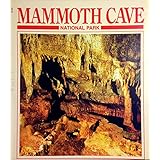
Mammoth Cave National Park

Product Details"Mammoth Cave National Park" by Ruth Radlauer
Reviewed by Gerti

I have never been in a cave, but was recently contemplating a trip south to visit either Boone Caverns in Indiana or Mammoth Caves in Kentucky. Therefore, I read this book as a form of research before deciding which cave system to make the focus of my planned vacation.

"Mammoth Cave National Park" by Ruth Radlauer is a quick introduction to the hundreds of miles of caves found south of Louisville. While I didn't care much for the chapters on caves were initially formed, or why watering the soil above is important to cave dwellers, I was pleased by the many pictures in the book and her use of large print. There is also a pretty cool map that shows the national park to be just off of I-65, which is pretty handy for those of us who live in Northwest Indiana! It also mentions the hiking and camping opportunities available for outdoorsy families and their young ones.

The history of the cave was more interesting to me, and I especially enjoyed hearing about Stephen Bishop, who began life as a slave of the owner of the cave, but would eventually make the first fairly accurate map of many underground miles there, and discovered many of the cave's unique features. Also fascinating is the fact that there were building down below, and even a hospital had been built there, despite the dark and damp that exist so far below the surface. hard to believe a doctor actually thought the place might cure tuberculosis and had people live there...

For children, this book would be perfect introduction to this nearby national treasure. For me, I was hoping for more specifics on the various underground rooms the author mentions, and possibly a map of the cave system. While I did enjoy learning the quick tricks the author used so kids could distinguish between stalactites (spelled with a "c" as in ceiling) and stalagmites (spelled with a "g" as in ground), I still don't think I could recall what a troglobite is. I did like her pictures of the white crayfish and blindfish who live in the very lowest level of the caves, but was pretty grossed out because many of the creatures who live their entire lives in these caves are millipedes, beetles and flatworms.

In summary, the book made me decide that visiting Mammoth Caves was not for me, mainly because of Raudlauer's realistic descriptions of many of those slimy cave dwellers! But hopefully younger readers would not be as grossed out by those things, and this slim volume would spark their interest in the topic of spelunking.

Monday, November 17, 2014

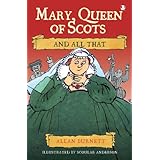
Mary, Queen of Scots... And All That

Product DetailsGerti's Review of “Mary, Queen of Scots… And All That”by Allan Burnett

Author Allan Burnett is a citizen of the United Kingdom. I gathered that from his language choice (no one in the US would call someone a “nutter”) and his ability to put an irreverent spin on the iconic tale of Mary, Queen of Scots. I’ve heard her story since I was a small child, and my son recently did a school report on her, which is why I requested the book. But since it came all the way from Missouri, his report was already done by the time the book arrived, and hence, I’m the one to read it!

For those who are unfamiliar, Mary was the only child of the King of Scotland, James V, but was sent to France as a child to be the bride of a Prince there, who later became King Francis II. Sadly, he was no more hardy than her father, and died about a year after the couple were married, sending her back to Scotland to reclaim her crown there. If you think that’s unlucky, Mary’s life really hits the skids after returning home. While there, she married a couple of jerks, including the royally related Lord Darnley, with whom she had a son named James. Then (does this begin to sound familiar?) Darnley died in a suspicious castle explosion, and Mary quickly got married to the Earl of Bothwell, who unfortunately for her was one of the fellows suspected of planting explosives under Darnley’s castle. Whoops!

Her countrymen turned against her after all this questionable behavior, and rather than remain imprisoned in Scotland, Mary fled across the border to England, which was ruled by her cousin Elizabeth I. Sadly, Elizabeth had her own problems – her country had been torn apart by religious quarrels, and about half the citizens (and nobles!) wanted to be Catholic, and the other half preferred their queen Protestant. Elizabeth was a Protestant, but Mary was a Catholic, and that was the rub. To let Mary run free meant risking her own throne, and Elizabeth was far too clever a girl to let that happen. She kept Mary imprisoned in various castles, but eventually Mary was implicated in a plot to take the English throne, and Elizabeth was forced to cut off her head.

Now that you’ve seen some of the highlights, this book is a much better introduction than I had to Mary, which was the classic work by Antonio Fraser (not child friendly!) Burnett covers all the factual bases, and makes this an accessible intro to Scottish and British history. It is even peppered with cartoons children would find amusing, which makes this text seem contemporary, like a graphic novel. For adults like me, it’s pretty amusing to see John Knox and other historical heavy’s in cartoon form, although I imagine there are those who might be offended. Still, I think children and young teens would find this a quick but comically interesting look at a cultish Queen from way back when.

Tuesday, April 15, 2014

Wicked Bugs – The Louse That Conquered Napoleon’s Army & Other Diabolical Insects by Amy Stewart

Reading Level: Teen Non-Fiction
Submitted by Gerti

This is the 2nd book of Amy Stewart’s that I have finished reading, starting with “Wicked Plants” and here reading her “Wicked Bugs.” I don’t know which she wrote first, but they are very similar in design and execution, although I must admit I like “Wicked Bugs” better. I am still working on a third book of hers, “The Drunken Botanist”, but I haven’t managed to finish it yet. It isn’t nearly as interesting as these other two if you don’t plan to brew your own moonshine!

Like “Wicked Plants”, “Wicked Bugs” is full of strange and unusual facts about insects, arachnids and other creepy crawlies (like scorpions). Like her other book, the creatures descriptions are arranged alphabetically for ease of use, and there is a tab on the upper right corner of the page that indicates whether it fits various categories, like “deadly” or “painful.” While for the plants, I was upset that there were no actual full-color pictures of the plants to help humans avoid them, here I don’t mind the sepia-toned drawings of the insects, etc., mainly because so few of them reside in the US!

Unlike “Wicked Plants,” the drawings in this book don’t bother me, mainly because they are of the creepie crawlie in question, and not of some bizarre nightmare or a psychedelic state the bug bite might cause. It was actually fun showing my kids the pictures of the various bugs, some of which appear to show the creatures actual size, which is pretty creepy when they are 5 inches or larger! I don’t know whether the pictures accurately represent their actual size, only that the size of the drawing of a particular bug seems to mimic the size range the author mentions. Actual entomologists might quibble about it, but I don’t care that much! I’m really just counting eyes and legs when I look at bugs!

Is it worth reading? Yes, like “Wicked Plants”, “Wicked Bugs” is probably even worth purchasing for the home library, since it talks about how dangerous various critters can be. I would especially buy it if I were planning to head to South America or Africa or some other site where the bigger, deadlier things lurk. Fortunately, here in the United States, it seems all I have to watch out for are eating raw pork (she does include a section on parasites) and getting bitten by a brown recluse. Still, this book makes me glad that I spend most of my time indoors!

Thursday, December 19, 2013

Great Scientists by Jacqueline Fortey

Reading Level: Juvenile Non-Fiction
Submitted by Gerti

"Great Scientists" by Jacqueline Fortey is an ambitious overview of a number of scientists from Aristotle in ancient times to Stephen Hawking, so current that he's been the butt of jokes on "The Big Bang Theory" designed for a young audience.  My biggest issue with the book is that I disagree with terming all the people chosen to highlight here as "great" scientists, but that's an issue for intellectuals to discuss in dimly-lit British pubs.  The reason this book exists is to acquaint you readers with the minds and movements of " the pioneers who changed the way we think about our world," as the cover states.  And to a large extent, the book is a good one as it accomplishes that goal.

I enjoyed the information contained in the book, but would quibble with the choice of scientists and "sidebars", the stories of other apparently "less great" (at least to Jacqueline Fortey) scientist who somehow supplemented the work of the great ones.  One example of this is the story of Barbara McClintock, who certainly aided in the understanding of DNA, but who wasn't even a sidebar in the section of Watson and Crick (the team who discovered its structure) but got a blurb on the page devoted to the Nobel Prize.  Having just finished another book on DNA, I knew about her extensive contribution to genetics and the world's understanding on inherited elements, and so felt that she was slighted in this volume.  Another example is Nikola Tesla, who was completely ignored in this books, even though his work on electricity rivaled that of Edison, who gets 2 pages here.

I acknowledge the difficulties inherent in producing a volume like this, but found several omissions of scientists I would consider great, the inclusion of several I would consider minor, and several typographical errors in the sidebar stories, I felt that "Great Scientists" was more of a committee effort, and was surprised today to find that one person was considered the author.  Perhaps that is exactly why the work is uneven-because one person cannot be an expert in all the areas of science that are covered in this umbrella title.  I am willing to admit that my own opinion as a non-scientist is also to be questioned when it comes to making such decisions of inclusion and exclusion, but perhaps DK could have benefited from that committee of scientific intellectuals in order to have more accurately found the 30 scientists who make up the majority of this book.