Brand New at the Library!

Monday, May 30, 2016


Product Details


Salt Sugar Fat: How the Food Giants Hooked Us

 by Michael Moss

Reviewed by Gerti

“Salt Sugar Fat” is the second book this year I’ve read by journalists, and the second non-fiction “issue” book that has impressed me. It’s penned by Pulitzer-prize winning writer Michael Moss, and is impressive on many levels. This work is thoroughly researched and Moss did an amazing job compiling this information and laying it out for readers in a form that doesn’t leave us asleep! There are facts aplenty, and interviews galore, but some of the most interesting parts of the book are where he talks to the scientists who did the studies on sugar, for example, and the folks who came up with the terminology needed to describe taste perfection, like “bliss point” or “mouth feel”. These are wild things to me – that there are labs and office buildings filled with people who study what amount of sugar, salt or fat in a certain food product will best satisfy a hungry public.

But what I find life-altering about the text is the conclusion that I reached, more than Moss. That every household which buys processed food, and has done so since the ‘50s, has been manipulated to some extent by those scientists, by those admen, and by the corporations behind all of it which fight for every consumer dollar. I never understood how I gained weight without being a snacker, and without drinking soft drinks. Now having read Moss’ book, I get it. Everything I buy has more carbs, sodium and fat in it than I think.

I do have several issues with the text, however. I quibble over the sequence of nouns in the title, since the sequence of items described in the book itself goes in the order sugar first, then fat and salt. Still, that is my problem and not his. But unfortunately, the level of in-depth data also peaks with Sugar, then lessens and gets even trimmer at salt. I understand how this can happen, as I’ve seen it many times with student term papers. They start strong on a topic, but if several subjects are being compared, the work falls off over time. I always attribute it (in student papers) to their getting tired as the evening goes on. (Is there a student alive who doesn’t write a 5-page paper with research the night before its due?) However, I’m sure with Moss that wasn’t the case, since there is no way he wrote a 347-page book in one day! Still, less research done on the second two items leaves me with the same feeling – that there was a deadline involved and Moss just rushed through the second two items, since the first had taken so long!


I am not by any means casting aspersions on Moss for this. I never read a book without reading its end notes, and Moss has an impressive collection of them. He’s researched all kinds of corporate archives, including info from meeting notes and unpublished studies. The research time spent must have been astonishing and the depth of study reveals his commitment to the truth. A brilliant text despite it’s small flaws, “Salt Sugar Fat” will leave you thinking about every item you put in your shopping cart, and every bite you put in your mouth. This book will change how you feed your family and yourself, if you let it.

Monday, May 23, 2016


Product Details


Movie review: Magic in the Moonlight

Reviewed by Gerti

I have ignored Woody Allen movies over the last few years, ever since the scandal about his “daughter” came out, and the only reason I was interested in this film was because it stars the inimitable Colin Firth. But I have to admit, all the things that thrilled me decades ago about Woody Allen’s films are still evident here – the clever dialogue, the lovely sets, the time-specific costumes. “Magic in the Moonlight” has a magical quality, and I was like a kid in a candy store while ogling the beautiful cars, the stunning chateaus, and most of all, delightful Colin Firth, even while clad in ridiculous suit jacket/ vest/ tie combinations.

In this film set in the 1920s, Firth plays Stanley Crawford, who opens the movie with his act as an oriental magician. We are first astounded at his skills on the Berlin stage, and then an old boyhood friend of his arrives at his dressing room with an interesting proposition – help him debunk a young psychic who is bamboozling some friends. Crawford is unable to resist, since like the real-world magician Houdini, he’s made it his life’s work to show up fraudulent spiritualists who claim to talk to the dead.

So he joins his pal on the French Riviera to meet psychic seductress Sophie Baker, played here by the somewhat miscast Emma Stone. She immediately gets impressions that he has been to China, but Crawford discounts them. In fact, he is so much of a cynic, that she has to work for weeks at convincing him that her talents are real, and of course in that time they fall in love. Crawford gamely holds a press conference to tell the world she is a real psychic anyway, although she is promised to the son of the wealthy woman she is currently doing readings for. Awash with brilliant writing, Firth’s marriage proposal here will remind many Jane Austen fans of his clumsy attempt at proposing in “Pride and Prejudice”, the production that made the actor a household name. And the plot twist in all this film will come as a surprise to most viewers.


Still, my head is spinning as though I’ve had too much champagne after watching this bubbly comedy. The witty repartee will remind people of George Bernard Shaw’s plays, or even Noel Coward. Firth is perfect for the part, and in his role here he reminds me once again of how talented a creature he is. He takes a suit of clothes that would be absolutely laughable hanging on the racks at Goodwill and turns it into the height of British style. He is a gentleman through and through, but his excellence only serves to highlight Stone’s awkwardness in her role, but I can well imagine it’s difficult to play the romantic partner of a man twice her age. The other actors are spot-on in their depictions, even to the off-tune, stomach-churning singing that accompanies some ukulele playing. This movie is a charmer, and some of the witty lines are worth remembering. I join in with movie critic Rex Reed who declares on the cover, “I loved it madly.” It is well worth watching if you’re a Firth fan.

Friday, May 20, 2016


Product Details

Movie review: An Education

Reviewed by Gerti

In contrast to the 2014 Woody Allen’s “Magic in the Moonlight”, comes this 2010 film called “An Education” by director Lone Scherfig. The movies have a lot in common – they both star lovely young actresses who fall for witty older men. But while the Woody Allen flick comes off as mostly charming, “An Education” takes us on a creepy journey of Lolita-esque proportions which ends badly for the main character Jenny, played convincingly by the brilliant Carey Mulligan.

“An Education” takes place in 1960s Britain, and begins with middle-class school girl Jenny getting a rainy day car ride from a dashing man named David, played with slimy conviction by Peter Sarsgaard. The two engage in some witty banter, and slowly but surely, David draws Jenny into his world of upper-class diversions, first taking her out to a show with his friends. The disparity between Jenny’s school girl attire at the concert and that of David’s pal’s girlfriend is pathetic. Jenny looks (and is) utterly out of place. But gradually, the older girl helps her out with smashing clothes & a different, more mature hair style. Soon Jenny is making overnight trips with David, whose silky charms convince her parents that this June/December relationship is not somehow wrong.

The director allows the viewers, and Jenny, to see beneath David’s shiny façade, and the sense of unease about their romance begins to grow. David lies to her parents about knowing CS Lewis, he lies about having gone to Oxford (which Jenny hopes to attend), and of course, he lies to her about being unmarried. So even though he proposes marriage to the 17-year-old, Jenny tracks down his current wife (with child) and that lady tells her of David’s taste for young girls, grateful that at least Jenny isn’t pregnant like one of the others.

The storyline lives up to the title, for Jenny’s adventure is indeed “an education” in becoming an adult. David is such a coward, he leaves Jenny alone to explain to her parents why there won’t be a wedding and why he can’t date her anymore. To her credit, at least Jenny cuts David off when she realizes he’s married. Then she tries desperately to get back into school so she can take her college entry exams, but her hard-nosed headmistress, played by Emma Thompson, won’t give her a break since Jenny burned that bridge with some cruel but accurate comments while leaving school. Luckily, another teacher helps Jenny succeed so her life isn’t totally ruined, and the movie ends as she enters college, hiding this past misadventure and the hard lesson learned about the way the world works.


Written by Nick Hornby, the dialogue is at times comical and at other times sad. I wanted to scream at the TV when Jenny refused to see the warning signs of David’s shady character, but she emerges smarter and stronger after the affair, even able to see the goodness in her pedestrian father, played effectively by Alfred Molina. “An Education” is a “coming-of-age” movie that every teen who’s “14 going on 40” should see to get an education of their own about evil adults. 

Monday, May 16, 2016


Rogue Lawyer by John Grisham

Reviewed by Gerti

“Rogue Lawyer” is John Grisham’s newest offering, and while I love the author, I couldn’t help finding it derivative. Another author in the genre named Michael Connelly created a character called “The Lincoln Lawyer” who’s shtick is that his office is a Lincoln Continental. That’s similar to what Grisham has going on with his protagonist, Sebastian Rudd, a defense attorney driven around (at the start) in a customized black van. They are not the same, but they are very close.

Both protagonists are criminal defense attorneys who have problems with their ex-wives (both ladies also attorneys), and have a hard time seeing their children, who live with the women. Both men use the excuse of “someone has to defend them” to describe why they go to bat for serial killers, rapists, cop killers, etc. And they are right, of course. But taking those clients to court comes with a price, so both protagonists have to deal with flak from their families, as well as the general public. And they both sometimes fear for their lives.

In this book, Grisham has Rudd defend a guy whom everyone thinks is guilty because he has been framed by the cops, and another guy who is just guilty as hell. So guilty, even Rudd is afraid of him. The first client is Gardy, a punk kid accused of doing terrible things to a pair of sisters. Rudd goes the extra mile (of course breaking a few laws) to prove that Gardy’s not guilty, and then implicates the true pervert. In the process, Grisham shows how his super lawyer manipulates the legal system by making nice with the clerks who decide which judges get which cases, so Rudd can get his adjudicator of choice.

A second major storyline involves a small-time mobster named Link who is angry when Rudd can’t set him free. Of course, Link has killed a judge, and as Rudd explains to him, other judges don’t take kindly to that behavior. As a result, Link is on death row, but just hours before he’s supposed to get the needle, bombs go off, one every hour, at locations Link would naturally resent, like the courthouse where he was convicted, or the appeals court which refused to grant him a reversal. These events scare the folks at the US Supreme Court, but by that time, the prison riot has started. Link is one of the most interesting characters in the book, and I know it will please you when I say the state does not put him to death. You’ll have to read the book to see how Link escapes, though.


Several other major cases swirl into the plot, including one in which a man is put on trial for defending his home against cops who think he’s dealing drugs, and another where a cop’s daughter has been abducted by a sex trafficking group. Through it all, Rudd is the guy in the know, and that makes him an interesting fellow to read about, even if you’ll get the feeling you’ve read it all before. “Rogue Lawyer” is a fun read, easy to digest, but Connelly’s “Lincoln Lawyer” is more memorable, charming and original.

Monday, May 9, 2016


Your Inner Fish: A Journey Into the 3.5-Billion-Year History of the Human Body by Neil Shubin

Reviewed by Gerti

With a title like “Your Inner Fish: A Journey Into the 3.5-Billion-Year History of the Human Body”, how could I refuse to read this book? I had previously read some biographies of Charles Darwin, so I knew about his theories of evolution that presume ape-like creatures are among human ancestors. But never had I thought that human ancestry could go back as far as fish, and even further. Yet Shubin lays his nearly indisputable evidence out here in his book in language which even a non-scientist like myself can understand, and it is mind-blowing.

What really sold his message, however far-fetched it sounds, was Shubin’s steady, deliberate march back in time, each chapter taking a step further, eventually showing how all our 5 senses - vision, hearing, etc. – find their origins in sharks and other aquatic ancestors. Even more shocking – how creatures we don’t think of as having a front and back side, like jellyfish, are in fact oriented the same was we are, you just can’t tell by looking at them. This book is full of more surprises than a 5-pound box of chocolates!
“Your Inner Fish” is full of strange and unusual facts that if you are anything like me, you won’t know about either. I loved those facts and could follow along pretty easily for the most part. One of the few flaws in the book for me are the drawings which are meant to illustrate Shubin’s point, but were often just confusing lines with an unclear message. Perhaps I need to have studied more embryology when I went to nursing school, but his illustration of arches and cranial nerves, meant to make his concepts clearer, just muddied the waters for me, and that was kind of frustrating.


Still, you want to know if this book is worth reading, right? God, yes! It’s probably even worth purchasing for the home library, although I’ve got to think that if Darwin read it back when he was first postulating an evolutionary link between humans and animals, he would have thrown it against the wall as so much nonsense. Yet Shubin takes his theories and extrapolates as far back as he can go – and he does it clearly and with stress-relieving humor - which in the end makes reading this book a universe-expanding experience. Much more than the recent film “Jurassic World”, this book will make you ponder the mysteries inside every strand of your DNA and your every microbe. Shubin makes the facts believable, even if every brain cell fights against the knowledge that we are indisputably related in some way to every other living thing on earth, from barracuda to bonobo. “Your Inner Fish” is a highly recommended if somewhat challenging read.

Friday, May 6, 2016


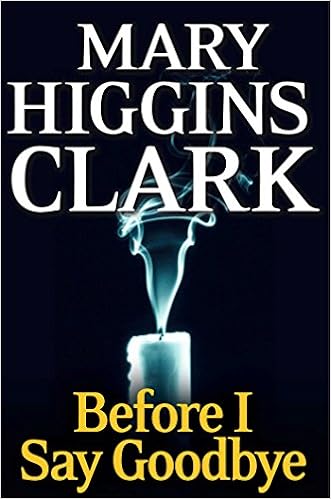
Before I Say Good-Bye by Mary Higgins Clark

Reviewed by Gerti

Mary Higgins Clark’s novel “Before I Say Good-Bye” is about a woman with more psychic powers than sense. Protagonist Cornelia (Nell) MacDermott has spent her life hearing from the dead. Her parents came to visit her after they had died in a tragic place crash. Also during her childhood, she sensed that her grandmother came to see her after she passed. But her grandfather, who raised her after those deaths, is skeptical about this whole psychic thing, and since Mac is a blustery but powerful New York politician, Nell generally plays along with him. That is, until her husband is killed in a boating tragedy, and she is left wondering why she can’t “sense” his presence. Mac wants her to leave it alone since he hopes Nell will run for his congressional seat. But Nell is wracked with guilt because of a fight she had with her husband before he left on that boat trip.

Fortunately for Nell, she has a great aunt named Gert who not only believes in psychics, she consorts with people with extra-sensory perception. She convinces her niece to see a medium who says she’s received a message from Adam Cauliff, Nell’s husband. He was an architect and, using money he borrowed from Nell’s trust fund, he had purchased a NYC property that is just about to pay big dividends. Adam was going to design the new building for that spot, and build it along with primo Manhattan real-estate developer Peter Lang.

But Bonnie the medium tells Nell that she sees Peter Lang dripping with blood, and Nell wonders if he wasn’t the man behind her husband’s boat accident. Lang was supposed to be on board the vessel that day, meeting with a number of other developers, but Lang got into an accident on the way there, and never made the meeting. Clark wants us to believe this is highly suspicious.

She also throws a number of other suspects our way – the son of the woman who sold the property, who not only has a long criminal history, but thinks Adam paid his mom less than she deserved for the piece of land. Then of course there’s the firm where Adam used to work, which is being investigated for bid rigging. Did Adam know more than they wanted revealed about their dirty dealings? And then there’s Adam’s secretary, whom he took with him when he left the previous architectural firm. She knew all about their business, too. She was also on the boat, so maybe she was the intended target of the explosion? There are other people on the suspect list, too, and Clark even goes into the lives of the cops who are investigating the explosion. And then there’s the kid who saw the boat blow up from a tourist craft nearby.


In the end, we find that the psychic was in co-hoots with the husband, who isn’t dead at all, but who was also stringing along his mousey secretary, who was in love with him, in order to make a mint of money. My critique - sometimes Clark loves writing so much that she writes too much. For me, “Before I Say Good-Bye” is one story where fewer characters might have made it more suspenseful.

Friday, April 29, 2016

A Million Little Pieces  by James Frey

Reviewed by Gerti

I remember a few years ago when Oprah still had a show on broadcast TV that she was busy picking novels to be part of her book club. This novel, “A Million Little Pieces” by James Frey, was one that she chose. People raved about it and its author, so when it was revealed that he had made up parts of it (which should be expected in a work of fiction, no?) he was vilified.

So when I saw it on the book sale shelf at the library, many years after all the hubbub, I decided to see what all the fuss was about. What I found was that any sensible person reading this book could see that elements of it were fictional. But that doesn’t take away from the fact that it is a riveting work, if a bit too long.

The main character is supposed to be James, who as a relatively young man has become addicted to a great many things. So when he wakes up in an airplane and doesn’t remember how he got there, or where he’s going, or how he’s gotten so physically wrecked, it comes as no surprise. His wealthy but often absent parents decide to take him to the best treatment center in the country, which is in the middle of nowhere. James has no clothes with him, or anything else, so generous souls give him a winter coat and some clothes and books. But basically, he’s at this treatment center on his own with no resources.

He makes friends, he makes enemies, he is a good doobie, he is a bad ass. James basically does whatever he feels is right at the moment. He isn’t much of a rule follower, but has a deep sense of ethics, and a fascinating story to tell his counselors. He totally dismisses the 12 steps process that Alcoholics Anonymous uses, and thinks the reliance on a superior power, for him, is foolish. However, he finally finds a text called Tao Te Ching to which he does relate, and that helps him sober up to the point where his parents can come to the center and the family can find out where James’ life and their relationship went south.


This is a fascinating book for anyone, no matter what weaknesses they have as human beings, as it ostensibly gives some insight into the lives of people who have let their weaknesses totally control them. But the question of addiction is larger than James’ desire for alcohol and drugs. “A Million Little Pieces” is a story about friends, enemies, co-workers, counselors and freaks – in short, everyone. It shows the evil that people do to themselves when they don’t care about the outcome, and the evil that even good-intentioned people do. Frey’s writing is brilliant, almost a new style of literature, and I highly recommend this book to anyone interested in addiction, self-abuse, broken families and ultimately, the human condition itself. A great read.