Brand New at the Library!

Monday, January 4, 2016


Jane Austen: Obstinate Heart  by Valerie Grosvenor Myer

Reviewed by Gerti

Having read all of Jane Austen’s novels and letters, I felt it was about time to do some in-depth research on the great British author’s life. The first biography that caught my interest was that by Valerie Grosvenor Myer, as it had the intriguing phrase “Obstinate Heart” attached to her name. What it seems Jane was most obstinate about was refusing to marry without love, and although Myer doesn’t pin things down as much as I’d like, she implies that several different men proposed to Jane and were turned down.

Why would that be the focus of my reading this 200+ page bio? I think that Jane’s own romances formed the basis for the plots of her 6 finished novels, especially as they concerned the love matches made by her heroines. Many of the novels include proposals, but they are each very different, and I read the book to try and investigate that issue – whether the novel proposals were so different because Jane herself had received nearly a half dozen varied offers of marriage.

The book is thorough in many ways, talking about where Jane lived and how she got from one location to another, usually travelling via the kindness of friends and family, as she rarely had enough money to pay for her own conveyance. That too harkens back to her novels like “Sense and Sensibility” and “Mansfield Park”, in which her heroines have limited resources and are often dependent on the largesse of relatives. But just like the featured ladies in her novels refused to marry for money although it would make their lives and the lives of their families easier, Jane refused at least one proposal that would have made her the mistress of a large country house and ended her monetary woes.

Of course, near the end of her life, Jane was making a healthy amount of money from her writing, but by then her health had been compromised. She died at age 41 from what is believed to be an adrenal gland disease. She died before 2 of her novels were even published, and I enjoyed learning that it was her brother Henry who named those works “Northanger Abbey” and “Persuasion.” In short, I loved learning details of Jane Austen’s life, even if Myer’s writing was sometimes dry and her paragraphs occasionally seemed misplaced, as if they had been tacked into the story without a concern about flow or continuity. It almost felt as though there had not been a final edit to this book, as odd facts would pop up during a discussion of something entirely different, which was jarring.


Unlike other critics however I enjoyed Myer trying to connect Jane’s novels with her life experiences, as it is something I do, too. I only wish we had more facts available about Austen’s life to fill in the time gaps that exist, and I sincerely wish that her sister Cassandra had not destroyed so many of her letters! Still, Myer has put together an educational, fact-filled and satisfying biography, and I recommend it.

Monday, December 28, 2015


The Shadow of Your Smile by Mary Higgins Clark
Reviewed by Gerti

In “The Shadow of Your Smile”, bestselling author Mary Higgins Clark has written yet another suspenseful tale with interesting, characters – some likable, and some you love to hate. In the former category is the protagonist, Dr. Monica Farrell, who of course takes care of sick kids, but comes from a less than privileged background. Her father was adopted, and he never learned who his parents were, although he was the spitting image of his former boss (!), millionaire Alexander Gannon. The Gannon fortune is currently being squandered by Gannon’s nephews and other board members of the Gannon Foundation, so much so that they can no longer meet their grant commitments to the hospital where Monica works.

You can already see the direction the story is taking – Farrell will be related to Alexander Gannon, and the rightful heir to the fortune. But other interesting characters populate the story, like Olivia Morrow, an 82-year-old woman who knows the secret of Monica’s ancestry, but fails to act before she is killed. In fact, the plot is littered with bodies, many of whom Monica knows, like her former friend and stalker who also wants to tell her that he’s found out about her relationship to the Gannon family.

There is a vague religious aspect to this novel as well, with Monica witnessing a spontaneous cure of a child’s brain tumor that his family attributes to their praying to a nun the Catholic Church is considering making a saint. The religious woman, named Sister Catherine, was related to Olivia Morrow, so she’s conflicted about confessing to the world what she knows about Sister Catherine giving birth to a child. Yes, she got pregnant by Alexander Gannon, and they gave the baby away. All the pieces of the plot fit neatly into place, so neatly in fact that the book is pretty predictable.

The writing is still clever, the action-like scenes from a soap opera, with thwarted romance and police detectives lurking around each corner. I always love Clark’s writing, and do like that the outcome of the story is predictable to some extent, since it means that the trail was laid properly. What I don’t like is minor – we are lead to believe that one of the board members (and one of the nephews) is more evil than the other, but the reverse turns out to be true. So it turns out there is not one murderer, but several, and that is what I find implausible. If only one character had gone rogue to preserve their piece of the Gannon fortune, I would understand. But by the time several normally upstanding citizens are poisoning people and putting pillows on their faces, it just seems like science fiction rather than suspense.


“The Shadow of Your Smile” is a pleasant enough read if you don’t mind escapist literature. But I found the tale of a nun who had a baby and a cadre of high-society killers stretch the bounds of credibility. Still, I enjoyed reading it. 

Monday, December 21, 2015

Homicide in hardcover : a bibliophile mystery.


Homicide in Hardcover: a Bibliofile Mystery by Kate Carlisle
Reviewed by Gerti

I love books and so does the main character in Kate Carlisle's "Homicide in Hardcover," we just love them in different ways.  I love to read (and review!) them, and protagonist Brooklyn Wainwright loves to restore them.  This book is certainly good reading if you are interested in finding out all about the tools and equipment used to do just that.

It is less entertaining, or at least was for me, if you are interested in real characters in real settings.  Or real good writing!  There are very few books that I stop reading (perhaps one or tow during my lifetime), but I was very close to doing that after trying to plow through this novel's first chapter.  Starting with the fact that I found the main characters name pretty obnoxious (not that anyone named Gerti should even try to make THAT argument!) I also hated her life details even from the start.  It felt like I was reading a rehash of recent alternative mystery series with occupational hooks like "This Pen for Hire" (by Laura Levine)or the Hannah Swensen mysteries by Joanne Fluke, which involve a lady who runs a bakery, but just happens to find dead bodies everywhere.

"Homicide in Hardcover" is formulaic like that.  Take a heroine with a vocation, in this case repairing rare and expensive books for people, and throw a dead body in front of her.  In this case, that of her former mentor in the business, Abraham Karastovsky.  Of course, you need to have the heroine cross the path of a difficult but gorgeous man, with whom she begins a relationship.  And then toss in a few stereotypical baddies, like a woman who wears tight leather and speaks with a foreign accent.  Add some odd parents, in this case hippies who run a winery, and some equally eccentric neighbors.  In Levine's case, a gay man with super sensitive hearing.  In this case, a pair of lesbians with a cat and house pants which need tending.  Can you see how this is all beginning to sound familiar?

Of the three writers, Levine, is the best, but I enjoy Fluke's recipes as well.  That leaves Carlisle as the odd woman out, although apparently she does have quite a following because a number of books in the Bibliophile series have been published.  I just don't think I'll be reading another one, as I found so much of this so implausible.  Solves the murder, inherits millions, and ends up with a hunky Brit with a Bentley?  Come on!  If I'm going to be reading fantasy, I'd prefer to visit outer space.  And if I want comedy, I'll read Levine or Evanovich, who are much funnier writers.  In the end, I just didn't like any of the characters enough to want to spend time with them again.


Friday, December 18, 2015

The boys in the boat : nine Americans and their epic quest for gold at the 1936 Berlin Olympics

The Boys in the Boat: Nine Americans and Their Epic Quest for Gold at the 1936 Berlin Olympics
 by Daniel James Brown
Reviewed by Gerti

The subtitle to Daniel James Brown's book "The Boys in the Boat" is "Nine Americans and Their Epic Quest for Gold at the 1936 Berlin Olympics."  Unlike my son, who ruined the ending for me by telling me who won the race (when I was more than 500 pages in!) I will not tell you, although even if you know, the book is still worth reading.  Brown's book is a heart-filled work of fiction that will leave you breathless until the end.  It is much more than a simple sports story!

The heart of the book is the life story of Joe Rantz, who went to the University of Washington and was a member of its storied rowing crew.  Rantz is a character with whom most readers will fall in love.  I certainly did.  He is a young man who had the worst life imaginable.  His mother died when he was young.  Hank, his father, abandoned him, and Joe went to live with a relative.  When his father finally came back to his senses (and his son), he found a second wife, a lady named Thula, who despised Joe.  When she and Hank began to have children of their own, Thula convinces him to move to Seattle, and leave Joe behind.  Alone.  During the depression.  In a half-finished house with little food.  Yes, it is heart-breaking to see how cold-hearted a woman she was!

But Joe never quits.  There was a story called "Unbroken" about another Olympic athlete who had to face inhuman conditions, and Joe is made of the same stuff.  Although abandoned, Joe finds a way to stay alive, feed himself, and works hard enough to send himself to college.  At Washington, it is his ability to survive punishment that makes him great at a sport like rowing.  He also has to endure ridicule of fellow students because he always wears the same sweater.  It is the only one he has.  Can you imagine that?  But Joe does not give up or fee sorry for himself; he just works harder.  And of course, Joe finds himself seated in a boa with other poor but scrappy fellows like himself.  And then he goes to the Olympics with them, against all odds, while the rich-boy rowers stay home.

Rowing itself is another character in the book, and the way Brown describes what it demands of its athletes is epic.  We meet Joe's coach, his crew mates, and spend a lot of time with George Yeoman Pocock, who designs and builds the boat the boys race in.  He was another poor boy with impossibly high standards for himself who made good in the US.  He inspires Joe when he is faltering, and it is quickly evident that he does more for the team than make their boats.

The only part of the book I find distracting is Brown's decision to politicize the Olympics.  Everyone knows Hitler was bad.  Nazis were bad.  We get it.  Brown is at his best when he's talking about the sport and describing the lives of these gifted rowers, not weighing us down with redundant history.  He doesn't use overkill talking about the depression or the dust bowl, but he does with Hitler.  To me, the "Boys in the Boat" are the fascinating part, and Brown would have done better to abandon his political agenda and tell the tales alluded to by his title.

Monday, December 14, 2015


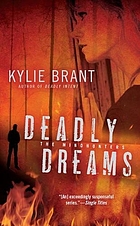
Deadly dreams : the Mindhunters

Deadly Dreams: The Mindhunters by Kylie Brant
Reviewed by Gerti

"Deadly Dreams" is the 2nd of the Mindhunter books that I have read by Kylie Brant, and I have to say, I like it better than the last one, "Waking the Dead".  Brant seems more focused on the genre here, although there is still some heat between the two main characters who are trying to track down a cop killer.  Brant used to write intimate romance books, but in "Deadly Dreams," her clear and accessible style works beautifully telling a grim story of immolation and revenge.

The protagonist is a former Philadelphia cop named Maris Chandler, who move to the Mindhunters, but then left the business of crime-fighting completely after a tragic case where a little boy died.  She is teamed up with Nate McGuire, the detective in charge of a special Philadelphia Police Department task force trying to catch a killer targeting cops, past and present.  Risa has special skills though--she has psychic dreams that enable her to get a jump on those clues sought by other detectives.

Nat McGuire is the tall, dark, and handsome type, but he has not ime for romance because he has spent years taking care of the autistic son of his alcoholic sister, Kristen.  Still, he finds himself drawn to Risa, who likewise has not time for love, since she's still dealing with the trauma of failing t save a ittle boy who had been kidnapped.  She's also dealing with her boss, Mindhunter CEO, Adam Raiker, who keeps dropping in on her unexpectedly as he is also being stalked by a killer who has tried to bring him down several times.  The FBI has supposedly tracked the assassin down, but they've erred, and Raiker is shot again.  Chandler is traumatized, and after a long night at the hospital, heads home to sleep, only to awaken to her home on fire, as the cop killer now perceives her special skills as a threat to his discovery.

Chandler survives, but the close call makes McGuire reveal is feelings about her, and leads to her spending the night at his place.  Yes, there is a sex scene, but it's all secondary to the couple working on the crime spree, and eventually, they get it figured out.  Now Chandler just has to get to the last kidnapped cop in time, before the killer has the chance to set him on fire.

This book has a great plot, and moves along at a fast pace.  It is markedly better than the previous book of her that I read, her writing is good enough to get me to track down some of her other crime novels, and find out more about this diverse group of criminologists called "the Mindhunters".  I have already checked out one of the blurbs on the cover which says Brant is destined to become a star.  She IS if she can keep writing them like this!  "Deadly Dreams" will keep you up late into the night, reading!


Monday, December 7, 2015


The Suspicion at Sanditon (Or, The Disappearance of Lady Denham) 
A Mr. & Mrs. Darcy Mystery by Carrie Bebris
Reviewed by Gerti

Carrie Bebris has made her career turning the adventures of Jane Austen's beloved characters from " Pride and Prejudice", Fitzwilliam Darcy and his bride Elizabeth Bennett, into sleuths.  This series has worked out well for her, but like many of her fans, I wondered what would happen when she finished the 6th book in the series, since Jane Austen only ever finished 6 novels.  "The Suspicion at Sanditon" (Or, The Disappearance of Lady Denham) solves that mystery for her fans.

Luckily for Bebris, Austen left several fragmentary novels, and "Sanditon" was one of them.  So here, her husband and wife mystery team makes their way to the seaside town on the rise, Sanditon.  They meet the characters that Austen originally penned, Miss Charlotte Heywood, the Parker family with it's several peculiar siblings, and the wealthy widow, Lady Denham.  But here the mystery commences when the childess widow goes missing during a dinner party to which all the characters have been invited.  So many suspects, and much misdirection as several other dinner guests also go missing!  Finally, under the Darcy's careful attention, the mystery is solved, while romances are made (and dissolved!) and fortunes are gained (and lost!)

The mystery began many decades before when the daughter of Sanditon House's resident hermit went missing.  The girl's name was Ivy Woodcock, and while she is now the principle mystery in the village of Sanditon, she also has a deep connection to Sanditon House and its resident family, the Hollises.  The son of the house was in love with her before she went missing, and his father disapproved, of course.  So was there foul play, or something even more interesting?  The neighboring house, inhabited by the equally wealthy Denham family, is hoping to get a share of the inheritance, since Lady Denham married their father, now also deceased.  An a Hollis is also hanging around, hoping that the old lady will think kindly about the original residents of the house in which she now dwells, and return the place to that family.

Yes, there are many suspects, and the truth, as Bebris finds it, is even more peculiar.  Bebris' writing is wonderful as always, and really carries with it the tone of Austen's orginal.  Unlike so many authors, she can adopt the style of the wildly popular British author without getting bogged down in her sometimes convoluted syntax and antiquated terminology.  Bebris does a fine job of modernizing this work so it doesn't sound like another Regency romance writers has pounded it out, but what she can't help is that so few Austen fans really know the characters from Sanditon.  I've read all of Austen, but was much happier in the mysteries derived from "Pride and Prejudice" or "Sense and Sensibility" than in this less familiar world.  And there are so many characters in Susten's work that Bebris has to include them all, which made it all kind of confusing to this reader.  Too many Parker's, and too many Denham's, and how many generations do we have to go back to get to Ivy?  In short, I enjoyed the book just to hang out with Darcy and Elizabeth for a time, but would probably have to read it again to get every nuance straight, so it's probably my least favorite Darcy mystery set Bebris has written.


Tuesday, December 1, 2015


The Mysterious Death of Miss Jane Austen by Lindsay Jayne Ashford
Reviewed by Gerti

So many books have been published that deal with characters in the novels of Jane Austen, a great British author who died in 1817, but very few of the Austen related novels deal with her life in a fictional way.  "The Mysterious Death of Miss Jane Austen" is one that does, and it is a very good book, one that might appeal to Austen's myriad fans.

Lindsay Ashford's premise is that not only was Jane Austen poisoned, which is what accounts for her untimely death at 42, but there was a serial poisoner in her family.  That person, whom the narrator, Anne Sharp uncovers by her own observational skills and Jane's clues, is Mary Austen.  She is able to marry into the Austen family through Jane's older brother, James, after his first wife dies.  And unlike her sister Martha Lloyd, who uses her knowledge of herbs to cure people, Mary uses her gift to ill them to further her own greed and lust.

Governess Anne Sharp meets Jane Austen in 1805 when she is watching the children of another of Jane's brothers, Edward, who was adopted by a wealthier but childless side of the family.  Hence, he has an estate called Godmersham, while his sisters and his mother are left nearly penniless after the death of the Reverend Austen.  Anne wonders that Edward lets his relatives be so poor when he has so much, but the key lies in Edward's wife, Elizabeth, who is too busy being snobby to be generous to Austen's family, whom she considers beneath her.  Elizabeth has other flaws as well, as Anne discovers that Elizabeth is sleeping with Jane's charming brother Henry, and in fact seems to have had several children by him, all while remaining married to Edward.

Henry is in fact so charming, that while he married a wealthy older cousin to the Austen's, he is also cuckolding brother, James, by sleeping with Mary.  it's all very complicated unless you know the family relationships (and yes, this book could use a family tree in it somewhere).  Mary supposedly poisons James' first wife to get him to marry her, although she is unattractive and a bit of a shrew, and poisons Elizabeth, in order to have Henry for herself.  Eliza (Henry's wife) also dies, and strangely, so does James, Mary's husband.  Now the road would be clear for Henry to marry Mary, but he does not, and that makes her very angry.  Anne realizes that Mary poisoned Jane whom she was nursing during that last month of her life.  Mary and Jane had never gotten along before, so it seems odd to Anne that Mary would be so attentive during Jane's illness.  Then she realizes the connection between all the other strange family deaths.

While this novel seems well written, it also seems a little implausible to me that the poisoner is Mary.  Ashford does float other suspects, like Henry himself, since he always seems to be hanging around women, and I even thought gentle Cassandra, Jane's sister, might be behind things for a bit.  But it's an interesting book that Ashford has written, even if I don't buy her conclusion.