Brand New at the Library!

Friday, December 18, 2015

The boys in the boat : nine Americans and their epic quest for gold at the 1936 Berlin Olympics

The Boys in the Boat: Nine Americans and Their Epic Quest for Gold at the 1936 Berlin Olympics
 by Daniel James Brown
Reviewed by Gerti

The subtitle to Daniel James Brown's book "The Boys in the Boat" is "Nine Americans and Their Epic Quest for Gold at the 1936 Berlin Olympics."  Unlike my son, who ruined the ending for me by telling me who won the race (when I was more than 500 pages in!) I will not tell you, although even if you know, the book is still worth reading.  Brown's book is a heart-filled work of fiction that will leave you breathless until the end.  It is much more than a simple sports story!

The heart of the book is the life story of Joe Rantz, who went to the University of Washington and was a member of its storied rowing crew.  Rantz is a character with whom most readers will fall in love.  I certainly did.  He is a young man who had the worst life imaginable.  His mother died when he was young.  Hank, his father, abandoned him, and Joe went to live with a relative.  When his father finally came back to his senses (and his son), he found a second wife, a lady named Thula, who despised Joe.  When she and Hank began to have children of their own, Thula convinces him to move to Seattle, and leave Joe behind.  Alone.  During the depression.  In a half-finished house with little food.  Yes, it is heart-breaking to see how cold-hearted a woman she was!

But Joe never quits.  There was a story called "Unbroken" about another Olympic athlete who had to face inhuman conditions, and Joe is made of the same stuff.  Although abandoned, Joe finds a way to stay alive, feed himself, and works hard enough to send himself to college.  At Washington, it is his ability to survive punishment that makes him great at a sport like rowing.  He also has to endure ridicule of fellow students because he always wears the same sweater.  It is the only one he has.  Can you imagine that?  But Joe does not give up or fee sorry for himself; he just works harder.  And of course, Joe finds himself seated in a boa with other poor but scrappy fellows like himself.  And then he goes to the Olympics with them, against all odds, while the rich-boy rowers stay home.

Rowing itself is another character in the book, and the way Brown describes what it demands of its athletes is epic.  We meet Joe's coach, his crew mates, and spend a lot of time with George Yeoman Pocock, who designs and builds the boat the boys race in.  He was another poor boy with impossibly high standards for himself who made good in the US.  He inspires Joe when he is faltering, and it is quickly evident that he does more for the team than make their boats.

The only part of the book I find distracting is Brown's decision to politicize the Olympics.  Everyone knows Hitler was bad.  Nazis were bad.  We get it.  Brown is at his best when he's talking about the sport and describing the lives of these gifted rowers, not weighing us down with redundant history.  He doesn't use overkill talking about the depression or the dust bowl, but he does with Hitler.  To me, the "Boys in the Boat" are the fascinating part, and Brown would have done better to abandon his political agenda and tell the tales alluded to by his title.

Monday, December 14, 2015


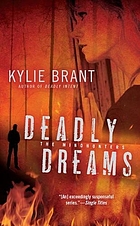
Deadly dreams : the Mindhunters

Deadly Dreams: The Mindhunters by Kylie Brant
Reviewed by Gerti

"Deadly Dreams" is the 2nd of the Mindhunter books that I have read by Kylie Brant, and I have to say, I like it better than the last one, "Waking the Dead".  Brant seems more focused on the genre here, although there is still some heat between the two main characters who are trying to track down a cop killer.  Brant used to write intimate romance books, but in "Deadly Dreams," her clear and accessible style works beautifully telling a grim story of immolation and revenge.

The protagonist is a former Philadelphia cop named Maris Chandler, who move to the Mindhunters, but then left the business of crime-fighting completely after a tragic case where a little boy died.  She is teamed up with Nate McGuire, the detective in charge of a special Philadelphia Police Department task force trying to catch a killer targeting cops, past and present.  Risa has special skills though--she has psychic dreams that enable her to get a jump on those clues sought by other detectives.

Nat McGuire is the tall, dark, and handsome type, but he has not ime for romance because he has spent years taking care of the autistic son of his alcoholic sister, Kristen.  Still, he finds himself drawn to Risa, who likewise has not time for love, since she's still dealing with the trauma of failing t save a ittle boy who had been kidnapped.  She's also dealing with her boss, Mindhunter CEO, Adam Raiker, who keeps dropping in on her unexpectedly as he is also being stalked by a killer who has tried to bring him down several times.  The FBI has supposedly tracked the assassin down, but they've erred, and Raiker is shot again.  Chandler is traumatized, and after a long night at the hospital, heads home to sleep, only to awaken to her home on fire, as the cop killer now perceives her special skills as a threat to his discovery.

Chandler survives, but the close call makes McGuire reveal is feelings about her, and leads to her spending the night at his place.  Yes, there is a sex scene, but it's all secondary to the couple working on the crime spree, and eventually, they get it figured out.  Now Chandler just has to get to the last kidnapped cop in time, before the killer has the chance to set him on fire.

This book has a great plot, and moves along at a fast pace.  It is markedly better than the previous book of her that I read, her writing is good enough to get me to track down some of her other crime novels, and find out more about this diverse group of criminologists called "the Mindhunters".  I have already checked out one of the blurbs on the cover which says Brant is destined to become a star.  She IS if she can keep writing them like this!  "Deadly Dreams" will keep you up late into the night, reading!


Monday, December 7, 2015


The Suspicion at Sanditon (Or, The Disappearance of Lady Denham) 
A Mr. & Mrs. Darcy Mystery by Carrie Bebris
Reviewed by Gerti

Carrie Bebris has made her career turning the adventures of Jane Austen's beloved characters from " Pride and Prejudice", Fitzwilliam Darcy and his bride Elizabeth Bennett, into sleuths.  This series has worked out well for her, but like many of her fans, I wondered what would happen when she finished the 6th book in the series, since Jane Austen only ever finished 6 novels.  "The Suspicion at Sanditon" (Or, The Disappearance of Lady Denham) solves that mystery for her fans.

Luckily for Bebris, Austen left several fragmentary novels, and "Sanditon" was one of them.  So here, her husband and wife mystery team makes their way to the seaside town on the rise, Sanditon.  They meet the characters that Austen originally penned, Miss Charlotte Heywood, the Parker family with it's several peculiar siblings, and the wealthy widow, Lady Denham.  But here the mystery commences when the childess widow goes missing during a dinner party to which all the characters have been invited.  So many suspects, and much misdirection as several other dinner guests also go missing!  Finally, under the Darcy's careful attention, the mystery is solved, while romances are made (and dissolved!) and fortunes are gained (and lost!)

The mystery began many decades before when the daughter of Sanditon House's resident hermit went missing.  The girl's name was Ivy Woodcock, and while she is now the principle mystery in the village of Sanditon, she also has a deep connection to Sanditon House and its resident family, the Hollises.  The son of the house was in love with her before she went missing, and his father disapproved, of course.  So was there foul play, or something even more interesting?  The neighboring house, inhabited by the equally wealthy Denham family, is hoping to get a share of the inheritance, since Lady Denham married their father, now also deceased.  An a Hollis is also hanging around, hoping that the old lady will think kindly about the original residents of the house in which she now dwells, and return the place to that family.

Yes, there are many suspects, and the truth, as Bebris finds it, is even more peculiar.  Bebris' writing is wonderful as always, and really carries with it the tone of Austen's orginal.  Unlike so many authors, she can adopt the style of the wildly popular British author without getting bogged down in her sometimes convoluted syntax and antiquated terminology.  Bebris does a fine job of modernizing this work so it doesn't sound like another Regency romance writers has pounded it out, but what she can't help is that so few Austen fans really know the characters from Sanditon.  I've read all of Austen, but was much happier in the mysteries derived from "Pride and Prejudice" or "Sense and Sensibility" than in this less familiar world.  And there are so many characters in Susten's work that Bebris has to include them all, which made it all kind of confusing to this reader.  Too many Parker's, and too many Denham's, and how many generations do we have to go back to get to Ivy?  In short, I enjoyed the book just to hang out with Darcy and Elizabeth for a time, but would probably have to read it again to get every nuance straight, so it's probably my least favorite Darcy mystery set Bebris has written.


Tuesday, December 1, 2015


The Mysterious Death of Miss Jane Austen by Lindsay Jayne Ashford
Reviewed by Gerti

So many books have been published that deal with characters in the novels of Jane Austen, a great British author who died in 1817, but very few of the Austen related novels deal with her life in a fictional way.  "The Mysterious Death of Miss Jane Austen" is one that does, and it is a very good book, one that might appeal to Austen's myriad fans.

Lindsay Ashford's premise is that not only was Jane Austen poisoned, which is what accounts for her untimely death at 42, but there was a serial poisoner in her family.  That person, whom the narrator, Anne Sharp uncovers by her own observational skills and Jane's clues, is Mary Austen.  She is able to marry into the Austen family through Jane's older brother, James, after his first wife dies.  And unlike her sister Martha Lloyd, who uses her knowledge of herbs to cure people, Mary uses her gift to ill them to further her own greed and lust.

Governess Anne Sharp meets Jane Austen in 1805 when she is watching the children of another of Jane's brothers, Edward, who was adopted by a wealthier but childless side of the family.  Hence, he has an estate called Godmersham, while his sisters and his mother are left nearly penniless after the death of the Reverend Austen.  Anne wonders that Edward lets his relatives be so poor when he has so much, but the key lies in Edward's wife, Elizabeth, who is too busy being snobby to be generous to Austen's family, whom she considers beneath her.  Elizabeth has other flaws as well, as Anne discovers that Elizabeth is sleeping with Jane's charming brother Henry, and in fact seems to have had several children by him, all while remaining married to Edward.

Henry is in fact so charming, that while he married a wealthy older cousin to the Austen's, he is also cuckolding brother, James, by sleeping with Mary.  it's all very complicated unless you know the family relationships (and yes, this book could use a family tree in it somewhere).  Mary supposedly poisons James' first wife to get him to marry her, although she is unattractive and a bit of a shrew, and poisons Elizabeth, in order to have Henry for herself.  Eliza (Henry's wife) also dies, and strangely, so does James, Mary's husband.  Now the road would be clear for Henry to marry Mary, but he does not, and that makes her very angry.  Anne realizes that Mary poisoned Jane whom she was nursing during that last month of her life.  Mary and Jane had never gotten along before, so it seems odd to Anne that Mary would be so attentive during Jane's illness.  Then she realizes the connection between all the other strange family deaths.

While this novel seems well written, it also seems a little implausible to me that the poisoner is Mary.  Ashford does float other suspects, like Henry himself, since he always seems to be hanging around women, and I even thought gentle Cassandra, Jane's sister, might be behind things for a bit.  But it's an interesting book that Ashford has written, even if I don't buy her conclusion.   


Friday, November 27, 2015


The Incredible Adventures of Daniel Boone's Kid Brother, Squire by W. Fred Conway
reviewed by Gerti

By size and weight, this seems like a throw-away pamphlet, but W. Fred Conway’s work on Squire Boone has more substance than it would appear at first glance. He takes the story of the Boone family, especially famous brother Daniel and less-famous sibling Squire, from their early days in the Yadkin Valley of North Carolina, through Squire’s burial in Boone Caverns, which he discovered while hiding from Indians in southern Indiana.

The story is almost apochryphal, with Daniel Boone constantly getting into scrapes, captured by Indians, etc. and his baby brother coming to his rescue. The first story told by Conway shows how several other companions of the Boone boys were killed or lost in the Kentucky woods, but the Boone boys always managed to survive their trials and return to their wives back in Yadkin. So competent were they as woodsmen, that they were able to explore the country separately for a year and then keep an appointment to meet at noon on a specific July day in a hidden encampment.

The Boone’s traversed much of Kentucky, and would eventually help found several forts against Indian attacks, including Fort Painted Stone near Shelbyville, Fort Boonesborough near Winchester, and Fort Harrod, near Harrodsburg. Squire was an important figure in the history of Indiana as well, since he founded the first Baptist Church in the state, near Laconia. He was a self-ordained Baptist minister, who also performed the first marriage west of the Appalachians, with the bride one of three teenaged girls he saved after Indians abducted her. He is also considered one of this country’s first environmentalists, as he was very concerned, despite bringing many settlers here, about maintaining the wonderful wilderness in our region, too. He even spoke to that point while a delegate in Kentucky’s first legislative assembly.

Squire’s enduring legacy, however, seems to be Squire Boone Village near Corydon, Indiana. He built a gristmill there with his son after going broke when some land speculation deals fell through. They used the water flowing out of the caves to power the mill, and apparently, it still grinds grain the way it did two centuries ago. Nowadays the tourist attraction “village” also has a bakery, and soap and candle-making displays. You can see his burial casket, or at least the monument erected by the Daughters of the American Revolution in his honor, as both Daniel and Squire were made honorary Army Captains by a special act of Congress.

While not as laudable as it once seemed, Squire Boone clearly fought many battles with the Native Americans in order to settle the wilderness that became the states of Indiana and Kentucky. He saved many settlers lives, and even came up with primitive fire extinguishers made from rifles to deal with flaming arrows shot into forts. Squire was an educated man who believed in God, knew the woods, and had many skills valuable in the new territories, acting as a carpenter, a miller and a gunsmith during his lifetime.


While Conway’s language is sometimes awkward, he tells a good tale about a fascinating historical figure of great regional importance. This book would be appreciated by any child, teen or adult with an interest in the early battles that created our state and, ultimately, our nation. It’s a shame Squire Boone is not as well known as his brother.

Monday, November 23, 2015


Descent by Jay Bonansinga
reviewed by Gerti

I love the television series “The Walking Dead” on AMC, but I don’t like reading graphic novels, so Jay Bonansinga’s book “Descent” is a wonderful way to check in on my favorite characters and settings, as well as see some great “what happens next” action about a place the television show left behind.

In “The Walking Dead” series, the town of Woodbury has been destroyed after a character named “The Governor” messed with and captured several members of Rick Grimes group. Rick is the protagonist of the TV series, and has gathered around him a group of like-minded individuals since the zombie apocalypse. But he is very protective of “his people,” and has to rescue them when they are captured, no matter the consequences. Lucky for Rick, his group is very skilled at extraction and weapon use, so the citizens of this small Georgia town are no match for him. The town’s defenses are breached, which is bad news as it allows zombies, an ever-present enemy in the story, to enter the town at will.

This book begins after the Governor has left Woodbury, and the town and its citizens left to their fates. A woman named Lilly Caul has become the de facto new leader. She is trying to run things differently than the Governor, but fate is against her. Zombies are no longer wandering around one by one, which makes them easy to destroy, but in something called a superherd, and one of those is headed straight for her town. Fortunately, a new family has arrived in the haven that is Woodbury, and one of its members will do any to save her children, even if it means sacrificing herself to do it. First crisis averted!

An even greater threat, however, comes from a young boy whom the Woodbury survivors saved from starvation outside its walls. He convinces the group that his church group is surrounded in a nearby town, and that they must save them. Thanks to the discovery of an underground network of tunnels, remnants from the Underground Railroad days in the South, the group is able to free the other humans, led by a charismatic preacher named Jeremiah. Over time, Lilly willingly hands the reins of power over to him so she can concentrate on her romantic needs, totally unaware that the religious group in fact has made a suicide pact and they are just waiting for the right time to take the townsfolk with them.


The book is a terrific read. I loved meeting the new characters, and Lilly is a great, if flawed, protagonist. I often wondered with the TV series why Rick’s band didn’t come back to Woodbury once their prison shelter was destroyed, but I am glad that some author realized the town was still viable as a haven from “the biters.” Bonansinga writes in a clear, yet exciting way, and I felt swept along with the action. His characters are also clearly drawn and different enough that I felt they were real people. Bravo to Bonansinga for creating a believable group of human survivors and putting them in dramatic new situations! Can’t wait to read more by this author. 

Monday, November 16, 2015


Empire by Orson Scott Card
reviewed by Gerti

For those who have read Orson Scott Card’s classic science fiction novel “Ender’s Game”, the book “Empire” will sound familiar. The hero here is not a small boy, but a seasoned war veteran, who understands that conflicts are not only fought with weapons, but also with words and deeds. When we first see Reuben Malich, the soldier is stationed in an Arab country. He sees and survives an ambush with rare and almost prescient intelligence. This special knowledge gets him recruited for other anti-terrorist missions. Which is why it is no surprise that when Reuben comes back home, his Princeton history professor selects him as a verbal sparring partner.

The debate between Reuben and his teacher, Averell Torrent, about whether the United States is like Rome before the days of empire becomes the central theme and core question of the book. Card’s point, which is brilliantly made, is that the US is like Rome before it became an empire, and our various political divisions now are just prelude to one strong leader seizing power and uniting the country. In this book, that leader is Torrent. What Reuben doesn’t know at the beginning stage, is that the professor’s siren call has been heard by many people, some of them with the money and connections to bring such a change about.

I don’t want to ruin the plot for you, but Reuben gets involved in this conspiracy to end democracy in the US based on some paper he wrote about the best way to kill the President. His new assistant, Captain Bart Coleman, is with him the day they see scuba diver’s heading toward DC intending to fire rocket launchers at the White House. Reuben and Cole (his nickname), are able to prevent one assassin from firing his weapon, but another’s weapon has already gone off, killing the President, the Secretary of Defense, and several other important people who had gathered in one place. Reuben is a suspect, especially after a trip to NYC with Cole occurs during the first battle in a war to take over that city.

Reuben’s jeesh, which is Arabic for posse, try to help him figure out who is setting him up, and who is behind all the high tech weaponry they see in New York. These soldiers Reuben formerly fought with have a cadre of special skills, and together with Cole, they help uncover a conspiracy to make his former college history professor America’s new dictator. After he is killed, Reuben’s wife Cecily and Cole continue to gnaw away at the extent of the conspiracy, but stop when they realize how dangerous it is to oppose this country’s new leader.


A tremendous book which will probably be especially appealing to those who love conspiracy theories. I’m not a big fan of war or politics, but this book was so well written by Card, and the characters were so well defined, that it was a joy to read up until the end. I hated that protagonist Reuben died three-quarters of the way through, though, and constantly expected him to show back up.